“After more than a decade training golden retrievers and working with hundreds of first-time dog owners, I can tell you with absolute certainty: the first year is the one that shapes everything. Get it right, and you get a dog who is calm, confident, and the joy of every room they walk into. Get it wrong — even with the best intentions — and you spend the next decade untangling anxiety, bad habits, and health problems that didn’t have to happen.” — Certified Professional Dog Trainer (CPDT-KA), 12+ years specializing in golden retriever puppy behavior
You brought home this fluffy, golden bundle of joy. And now you’re standing in your kitchen at 2 a.m., Googling ‘why won’t my golden retriever puppy stop crying.’
Sound familiar? You are not failing. You are a new puppy parent — and golden retrievers, as wonderful as they are, come with a very specific set of needs that most first-time dog owners simply aren’t warned about in advance.
Here’s the good news: once you know these 7 puppy care tips, the chaos starts to calm. You start to feel like you actually know what you’re doing. And your golden retriever puppy? They start to thrive.
Whether you just brought home an 8-week-old fluffball or you’re preparing for the big day, this is the complete new puppy owner guide you wish someone had handed you on day one. Let’s get into it.
Why Golden Retrievers Are Different From Other Puppies
📊 Golden retrievers rank #3 in AKC breed popularity in the United States — and have held a top-5 spot for over 30 consecutive years. (American Kennel Club, 2026)
Golden retrievers are one of the most beloved dog breeds for a reason. Their golden retriever temperament — gentle, intelligent, deeply loyal, and almost impossibly eager to please — makes them a dream companion. They are also, by nature, highly social, emotionally sensitive, and driven by routine.
But those same qualities that make them so lovable also make them uniquely vulnerable to poor early care. Understanding golden retriever breed characteristics from the start isn’t just interesting — it directly shapes how you train, feed, and socialize your puppy.
A golden retriever raised with proper nutrition, early training, and socialization becomes the calm, confident dog everyone at the dog park wants to pet. A golden retriever who doesn’t get that foundation? They can develop puppy separation anxiety, destructive behaviors, and health problems that last a lifetime.
The 7 puppy care tips below are built specifically around what golden retrievers need — not generic advice for ‘any dog.’
Tip #1 — Feed Your Golden Retriever Puppy the Right Food at the Right Time
Nutrition is the absolute foundation of your puppy’s health. What you feed your golden retriever in their first year directly impacts bone development, coat quality, immune system strength, and long-term energy levels. This is the area where most first-time dog owners accidentally make their biggest mistake.

What to Look for on the Label
Always choose a large-breed puppy formula that meets AAFCO (Association of American Feed Control Officials) standards for ‘growth’ or ‘all life stages.’ This matters more for golden retrievers than most breeds.
Golden retrievers are a large breed. Feeding them a generic puppy food — or worse, adult dog food — causes them to grow too fast, which puts serious, long-term stress on developing joints and is a leading cause of hip dysplasia.
What to look for when comparing best puppy food brands:
- Real meat (chicken, beef, or fish) listed as the first ingredient
- DHA (docosahexaenoic acid) for brain and eye development
- Calcium and phosphorus in controlled, large-breed-appropriate ratios
- No artificial colors, preservatives, or unspecified ‘meat by-products’
The debate around raw diet vs kibble puppies is real — and worth understanding. Kibble formulated for large breeds is the safest, most reliable option for most new owners. Raw feeding can work, but it requires significant nutritional knowledge to balance correctly and should only be done under veterinary guidance. For most puppy moms, a high-quality kibble from brands like Royal Canin, Hill’s Science Diet, or Purina Pro Plan Large Breed Puppy is the most practical and proven choice.
Feeding Schedule by Age — and Your Golden Retriever Puppy Growth Chart
Dog nutrition for puppies isn’t just about what you feed — it’s about how often. Overfeeding is a major problem with golden retrievers, who will eat far more than they should if given the chance.
- 8–12 weeks: 4 small measured meals per day
- 3–6 months: 3 meals per day
- 6–12 months: 2 meals per day (transition to adult schedule)
Track your puppy’s weight weekly against the golden retriever puppy growth chart by week. At 8 weeks, most golden retrievers weigh 8–12 lbs. By 6 months, they should be around 40–50 lbs. Significant deviation from these benchmarks — either direction — is a reason to call your vet.
Pro Tip: Measure every meal with a proper measuring cup. Free-feeding your golden retriever puppy — leaving food out all day — is one of the most common mistakes in golden retriever puppy care and a direct path to obesity, joint problems, and a dog who ignores recall commands (because they’re never truly hungry enough to be motivated by food rewards).
“I’ve seen this play out in my practice hundreds of times. A dog comes in at 18 months with early joint inflammation. Nine times out of ten, when I ask about their puppy diet, the owner says they were free-feeding. It’s completely avoidable.” — Dr. Samantha Okafor, DVM, canine nutrition specialist
Tip #2 — Schedule Vet Visits Early, Often, and Strategically
📊 65% of first-time dog owners report feeling unprepared for the medical needs of their new puppy in the first 3 months. (ASPCA Pet Ownership Survey, 2023)
Your puppy’s first puppy vet checkup should happen within 48–72 hours of bringing them home — even if they appear perfectly healthy. Early detection of parasites, congenital conditions, and infections can be the difference between a small problem and a devastating one.
But the first visit isn’t just about checking boxes. It’s about establishing a relationship with a veterinarian who will know your dog, building your puppy’s positive associations with the vet clinic, and setting your long-term health roadmap.
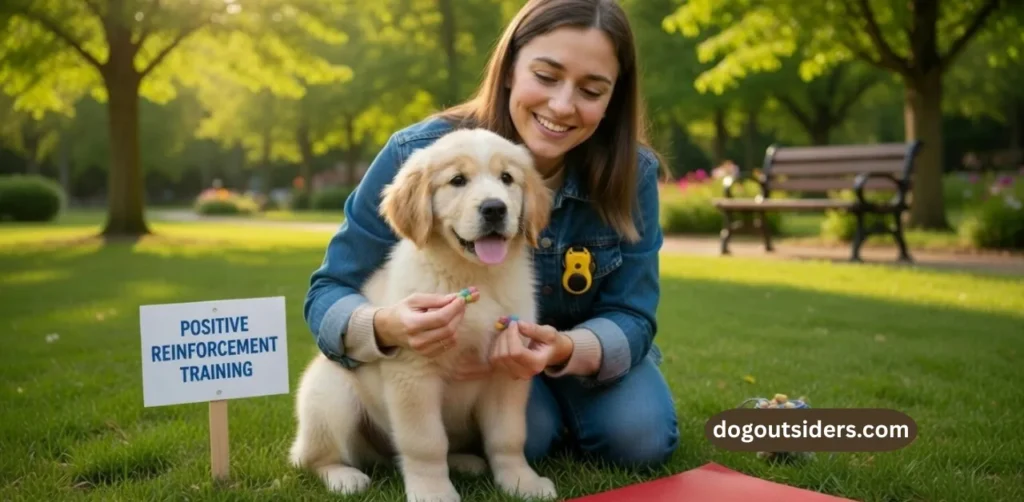
Puppy Vaccination Schedule — What You Need and When
The puppy vaccination schedule for golden retrievers follows a standard large-breed protocol:
- 6–8 weeks: DHPP (Distemper, Hepatitis, Parvovirus, Parainfluenza) — core vaccine
- 10–12 weeks: DHPP booster
- 14–16 weeks: DHPP booster + Rabies (required by law in most states)
- 12–16 months: Annual booster cycle begins
- Optional: Bordetella (kennel cough), Leptospirosis, Lyme — based on lifestyle and region
The puppy immune system is vulnerable and developing throughout this entire window. Do not skip boosters, and do not assume one visit ‘takes care of it.’ Each shot builds on the last.
What to Ask at Your First Vet Appointment
Don’t leave the first visit without asking these questions:
- What is the recommended spay/neuter timing for golden retrievers? (Current evidence suggests waiting until 18–24 months for large breeds due to hormonal impact on joint development — ask specifically about when to spay or neuter your golden retriever)
- Which heartworm, flea, and tick prevention protocol do you recommend for our region?
- Should we discuss dog dental care for our puppy at this stage?
- What are the breed-specific health screenings I should plan for golden retrievers? (Hip dysplasia, elbow dysplasia, cardiac issues, and certain cancers have elevated rates in this breed)
American Veterinary Medical Association (AVMA) — avma.org. Core vaccination guidelines reviewed and updated annually. Always cross-reference with your local vet who knows your region’s specific disease risks.
Tip #3 — Start Training the Day You Bring Them Home
There is no such thing as ‘too early’ when it comes to golden retriever training basics. The window between 8 and 16 weeks is a neurological goldmine — your puppy’s brain is forming new connections at a pace it will never match again in their lifetime. Every experience is a lesson. Make them good ones.
📊 Puppies who begin reward-based training before 12 weeks of age show significantly faster command acquisition and lower rates of adult behavioral problems than those who begin after 6 months. (Journal of Veterinary Behavior, 2022)
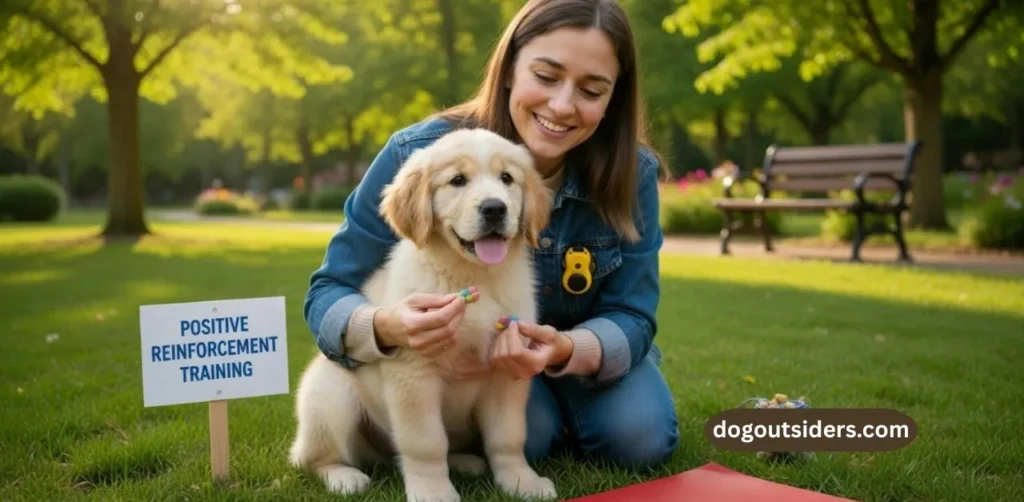
The First 5 Commands + Golden Retriever Puppy Training Schedule Week by Week
These five commands form the foundation of every well-behaved dog:
- Sit — the gateway command; easiest to teach first, builds confidence
- Stay — impulse control; critical for safety
- Come — recall; could save their life
- Leave it — prevents resource guarding and dangerous eating
- Down — calm submission; essential for managing a large, excited dog
For your golden retriever puppy training schedule week by week, keep sessions to 3–5 minutes, 2–3 times daily. Golden retrievers have a short attention span in puppyhood — short, frequent sessions outperform long single sessions every time. By week 8, focus on Sit and Come. By week 10, add Stay and Leave It. By week 12, introduce Down and leash training golden retriever fundamentals.
Positive Reinforcement: The Science + Puppy Obedience Classes
Positive reinforcement dog training isn’t just a philosophy — it’s the most evidence-backed method available. Studies from the University of Bristol and the AVSAB consistently show that reward-based training produces faster learning, lower stress responses, and stronger human-dog bonds than correction-based methods.
Use high-value, tiny treats (small pieces of boiled chicken, commercial training treats under 2 calories each) and enthusiastic verbal praise. Golden retrievers are emotionally attuned — they need to feel your approval, not just receive food.
Enrolling in puppy obedience classes near you is one of the highest-ROI investments you can make as a new golden retriever owner. Not just for the training — but for the socialization with other puppies, the professional guidance on breed-specific behavior, and the confidence you’ll gain as a handler.
Don’t forget puppy proofing your home before training begins. Electrical cords, toxic houseplants, small objects that can be swallowed, unsecured trash cans — all of these become training obstacles and safety hazards the moment your puppy has freedom in the house.
Real Example: Jessica from Austin started clicker training her golden retriever puppy, Maple, on day one. By week 6, Maple could sit, stay, and come reliably — before her puppy class even started. ‘The early consistency was everything,’ Jessica told me. ‘Other puppies in our class who started training later were still struggling with Sit at 14 weeks.’
As a CPDT-KA certified trainer who has worked with hundreds of golden retrievers, I can tell you that the owners who start training immediately — even imperfectly — consistently end up with calmer, more obedient adult dogs than those who wait. Imperfect early training beats perfect delayed training every single time.
Tip #4 — Create a Sleep Schedule and Daily Routine (This Changes Everything)
Golden retriever puppies sleep 16–18 hours per day. That is not laziness. That is biology — sleep is when their brains consolidate learning, their bodies produce growth hormones, and their nervous systems develop.
Disrupting your puppy’s sleep schedule — keeping them stimulated when they need to rest, or allowing them to determine their own schedule — is one of the fastest ways to create an anxious, reactive dog.

Sample Daily Routine for an 8-Week-Old Golden Retriever + Exercise Needs
- 7:00 AM — Wake up, immediate outdoor potty break (no exceptions, even in rain)
- 7:15 AM — Breakfast (measured portion)
- 7:30–8:15 AM — Playtime + 5-minute training session (Sit, Come)
- 8:15–10:30 AM — Crate nap (golden time for you to have coffee in peace)
- 10:30 AM — Potty break
- 10:45 AM–12:00 PM — Exploration, light socialization, sniff walk
- 12:00–2:00 PM — Nap
- 2:00 PM — Potty + Lunch
- 2:15–4:00 PM — Playtime, training session #2, brief leash walk
- 4:00–5:30 PM — Crate nap
- 5:30 PM — Potty + Dinner
- 6:00–8:00 PM — Calm family time, gentle play, light training
- 8:00 PM — Final potty break + bedtime in crate
On golden retriever exercise needs: at 8 weeks, your puppy should not be doing long walks or high-impact exercise. A common guideline from veterinary physiotherapists is the ‘5-minute rule’ — 5 minutes of structured exercise per month of age, twice daily. So at 8 weeks: 10 minutes max. At 4 months: 20 minutes. Overdoing it stresses developing joints.
What about the golden retriever puppy that won’t sleep through the night? Most puppies begin sleeping 6+ hour stretches between 12–16 weeks. A white noise machine, a worn t-shirt in the crate (your scent), and a consistent bedtime routine accelerate this process significantly.
Tip #5 — Tackle Biting and Nipping Before It Becomes a Problem
Every single golden retriever owner will warn you: the biting phase is real. At 8–16 weeks, puppies are teething, exploring with their mouths, and learning social rules. Biting is completely normal — but how you respond to it determines whether it fades by 5 months or persists into adulthood.
Why Golden Retriever Puppies Bite — And How to Calm a Hyperactive Puppy
Golden retriever puppies bite because they are:
- Teething (those tiny needle teeth are actively pushing through gum tissue — it hurts them too)
- Playing (littermates taught them that biting is how you interact)
- Overtired (an overtired golden retriever puppy becomes hyperactive and mouthy — this is a major sign they need a nap, not more play)
When do golden retriever puppies stop biting and nipping? With consistent redirection, most golden retrievers significantly reduce biting by 4–5 months as teething resolves. Puppies who attend puppy classes where they play with other dogs under 16 weeks develop bite inhibition the fastest — because other puppies yelp back, which is the natural corrective signal.
What works for stopping the biting:
- Say ‘ouch’ calmly and immediately stop all play — freeze, don’t react dramatically
- Turn your back for 30 seconds (removal of attention is the most powerful consequence for a social dog)
- Redirect to a chew toy and praise the moment they bite the toy instead of you
- Never use your hands as toys — ever
- Enroll in puppy obedience classes where supervised play with other puppies teaches natural bite inhibition
To know how to calm a hyperactive golden retriever puppy: before trying any training intervention, check if your puppy is simply overtired. Overtired puppies cannot learn. Put them in their crate for a mandatory nap first. Ninety percent of ‘hyperactivity’ in puppies is actually over-tiredness that manifests as wild behavior.
Tip #6 — Monitor for Early Signs of Health Issues
📊 Golden retrievers have a 60% lifetime cancer rate — the highest of any dog breed. Early detection through regular vet visits and attentive daily monitoring is the single most important tool owners have. (Golden Retriever Lifetime Study, Morris Animal Foundation, 2023)
Golden retrievers are generally hardy, happy dogs — but they are not invincible. And because they are stoic animals who tend to mask pain and discomfort, knowing the early warning signs can genuinely save their life.
Signs of a healthy golden retriever puppy: bright eyes, pink gums, shiny coat even at 8 weeks, consistent appetite, regular formed stools, and playful engaged energy alternating with deep sleep. These are your baseline. Anything that deviates significantly from this baseline for more than 24 hours is a reason to call your vet.
5 Warning Signs + Dental Care + When to Discuss Spay/Neuter
Warning signs that require a vet visit:
- Lethargy or sudden low energy lasting more than 24 hours
- Refusing food for more than one full meal
- Vomiting or diarrhea persisting beyond 24 hours, or with blood present
- Limping or reluctance to bear weight on any leg
- Bloated, hard, or distended belly — this is a potential emergency. Go to the vet or emergency clinic immediately, as bloat (GDV) can be fatal within hours
Dog dental care for puppies is massively overlooked. Begin desensitizing your puppy to having their mouth touched in the first week home. By month two, introduce a puppy-safe toothbrush and enzymatic toothpaste. Dental disease affects over 80% of dogs by age 3 — and in golden retrievers, it can contribute to heart and kidney disease.
On when to spay or neuter your golden retriever: recent research, including studies from UC Davis, suggests that early spay/neuter (before 12 months) in golden retrievers significantly increases the risk of joint disorders and certain cancers compared to waiting until 18–24 months. Discuss this timeline specifically with your vet — do not assume the standard 6-month recommendation applies to your golden.
Credible Source: Morris Animal Foundation Golden Retriever Lifetime Study — morrisanimalfoundation.org — the largest lifetime health study of any single dog breed. Essential reading for every golden retriever owner.
Tip #7 — Socialize Your Puppy During the Critical Window (This Is Not Optional)
The socialization window for puppies closes at approximately 16 weeks. This is a neurological fact, not a training philosophy. During this window, your puppy’s brain is forming its template for ‘what is normal and safe in the world.’ Experiences during this time — good and bad — leave impressions that last a lifetime.
📊 Dogs who receive proper socialization before 16 weeks are 70% less likely to develop fear-based behaviors and anxiety disorders as adults. (American Veterinary Society of Animal Behavior, 2023)
A well-socialized golden retriever is the calm, confident, joyful dog you dream of bringing to family gatherings, on hikes, and to dog-friendly cafés. A poorly socialized one — even with the sweetest genetics — can become fearful, reactive, or develop severe puppy separation anxiety that requires professional intervention.
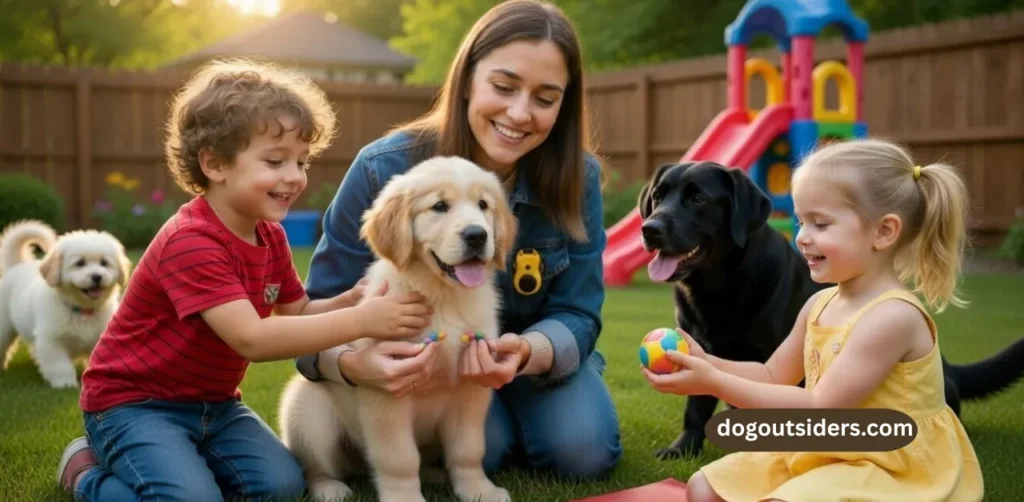
The Socialization Checklist Before 16 Weeks + Managing Puppy Separation Anxiety
This golden retriever puppy socialization checklist covers the key exposures:
- People: 100+ different people — men, women, children, elderly, people with hats, beards, glasses, uniforms, strollers
- Surfaces: Grass, gravel, tile, carpet, wood floors, metal grates, wet pavement, stairs
- Sounds: Traffic, vacuum, thunder (use YouTube), fireworks recordings, crowd noise, babies crying
- Vehicles: Car rides (at least 5 times — make them positive with treats)
- Animals: Friendly, vaccinated adult dogs in controlled environments
- Handling: Ears touched, paws held, mouth opened, nails handled — by you and by gentle strangers
- Environments: Pet stores, outdoor café patios, friends’ homes, parks, elevators, escalators
- Vet clinic: Visit twice just for fun — treats, no shots. Prevents lifelong vet anxiety
To prevent puppy separation anxiety: from week one, practice short departures. Leave the room for 2 minutes while your puppy is in their crate. Return calmly. Extend to 5 minutes, 10 minutes, 30 minutes. Never make arrivals and departures dramatic. A calm, matter-of-fact energy teaches your puppy that being alone is temporary and safe.
AVSAB Position Statement: The American Veterinary Society of Animal Behavior states that the risks of behavior problems from inadequate socialization outweigh the risks of disease exposure during the socialization period, even before the full vaccine series is complete. Safely expose your puppy — carefully chosen environments — don’t wait.
The Bonus Tip Every Dog Mom Needs: Grooming, Mental Stimulation, and Being Present
Physical exercise is necessary. But golden retriever mental stimulation is what turns a chaos-causing puppy into a genuinely calm companion.
Golden retrievers were bred to work — specifically to use their nose and their brain to find and retrieve. A golden retriever who doesn’t use their brain will use your furniture to express their frustration.
10–15 minutes of mental enrichment per day dramatically reduces destructive behaviors:
- Snuffle mats and puzzle feeders (makes every meal a brain exercise)
- ‘Find it’ games — hide treats around the house and let them search
- Best toys for golden retriever puppy mental stimulation: Kong stuffed with frozen kibble, Licki Mats, treat-dispensing balls, tug ropes for interactive play
- ‘Which hand?’ game — builds focus and patience
- New tricks — golden retrievers love learning new things and become visibly proud of themselves
On golden retriever grooming routine: start young. Introduce brushing, ear cleaning, nail handling, and bath time as early as possible — ideally in the first week home. Golden retrievers are known for golden retriever shedding management being a real challenge — their double coat sheds seasonally and year-round.
- Brush 3–4 times per week minimum (daily during heavy shedding seasons)
- Check and clean ears weekly (golden retrievers are prone to ear infections due to floppy ears)
- Trim nails every 3–4 weeks
- Learn how to groom a golden retriever puppy at home — a slicker brush + metal comb + deshedding tool covers 90% of your grooming needs
And finally — the dog mom must have that no product can give you: your presence. Golden retrievers bond deeply with their primary caregiver. Time spent on the floor with your puppy, learning their signals, their preferences, their tells — this is the foundation of everything. You are not just raising a dog. You are building a relationship.
Final Thoughts — You’ve Got This, Dog Mom
Raising a golden retriever puppy is one of the most rewarding, exhausting, hilarious, heart-filling things you will ever do. There will be chewed shoes, 3 a.m. wake-ups, and moments where you question every decision you’ve ever made.
But there will also be the first time your puppy runs to the door when they hear your car. The morning they sleep through the night for the first time. The moment at the dog park when someone says ‘wow, your dog is so well-behaved — what’s your secret?’
These 7 tips give you the foundation. The rest is built one consistent, loving day at a time.