
Here are 15 cozy dog bedroom ideas to create a perfect space at home:
- Under-stairs dog den with built-in bed
- Corner nook with washable cushion and curtain
- Crate cover station with storage shelving
- Window seat dog bed with natural light access
- Mudroom dog station with leash hooks and feeding area
- Closet conversion into a dog sleeping room
- Pallet bed frame with memory foam insert
- Elevated dog bedroom with ramp access
- Built-in bench with hidden dog sleeping space
- Laundry room dog corner with anti-slip mat
- Living room dog nook with wall art and name sign
- Outdoor-inspired indoor dog room with turf and wood
- Minimalist dog bedroom with neutral tones
- Luxury velvet dog bedroom with canopy frame
- Shared bedroom dog station with crate and blanket tower
Each idea below includes setup tips, what your dog will love about it, and how to make it work in your specific space.
Ideas #1–5: Budget-Friendly Dog Bedrooms (Under $100)
You don’t need to spend much to create a space your dog will genuinely love. These five ideas use simple materials, existing home features, and minimal investment.
1. Under-Stairs Dog Den
The space beneath your staircase is the most naturally den-like area in most homes — enclosed on three sides, slightly elevated from the main room, and naturally quiet.
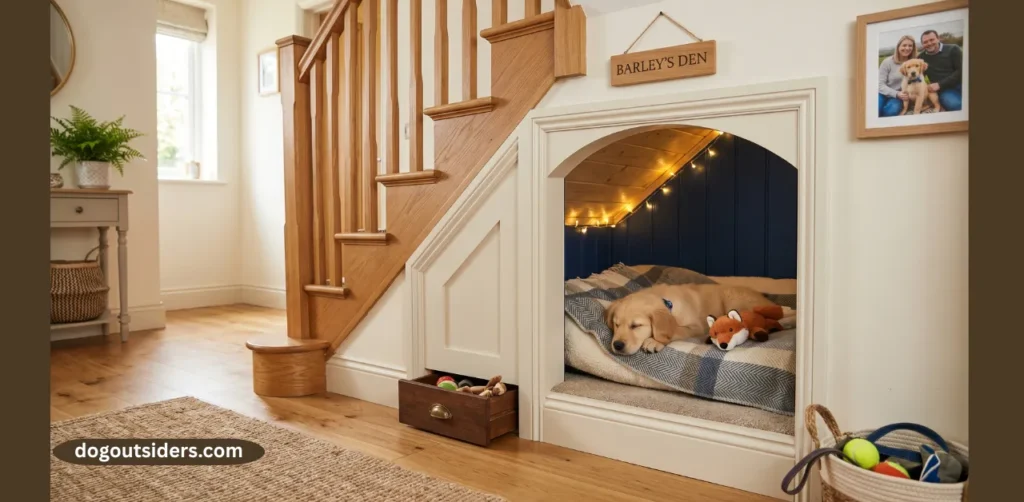
Line it with a washable bolster bed, add a small LED light strip for ambiance, and hang a curtain or simple gate at the entrance. Your dog will move in before you finish the curtain rod.
2. Corner Nook With Washable Cushion and Curtain
Pick the quietest corner of a room your dog already gravitates toward. Place a waterproof-based cushion, add a small side shelf for their water bowl, and hang a semi-sheer curtain from a tension rod to create the sense of enclosure.
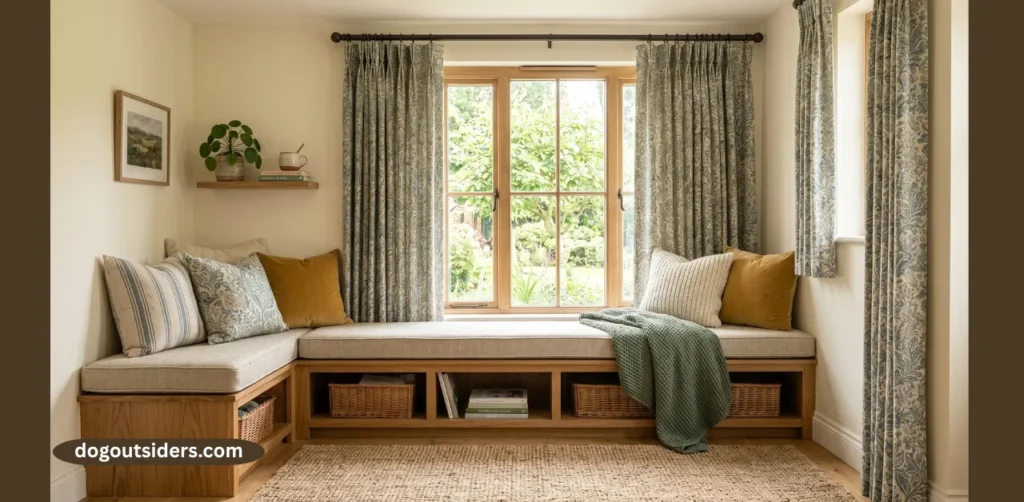
Cost: Under $40. Impact: Enormous. Dogs love corners because they provide natural back and side coverage.
3. Crate Cover Station With Storage Shelving
If your dog already has a crate, you’re halfway there. Add a fitted crate cover (available in neutral canvas or wicker-effect prints), and build a simple shelving unit alongside it to store leashes, treats, and grooming supplies.
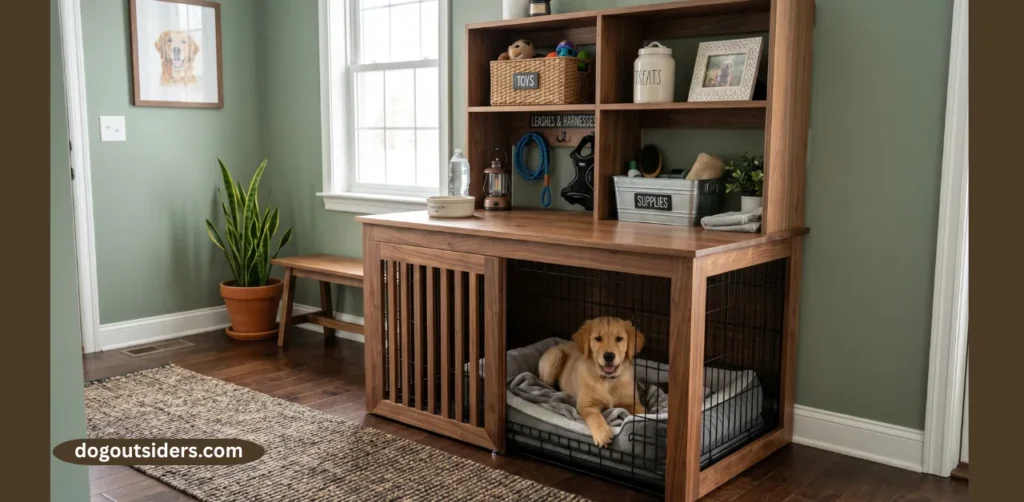
The crate becomes a bedroom; the shelving makes it a functional station. It’s the most practical budget dog bedroom on this list.
4. Window Seat Dog Bed With Natural Light
Dogs are sun-seekers. A window seat dog bed positioned to catch morning or afternoon light gives your dog warmth, entertainment (window watching), and comfort in one.
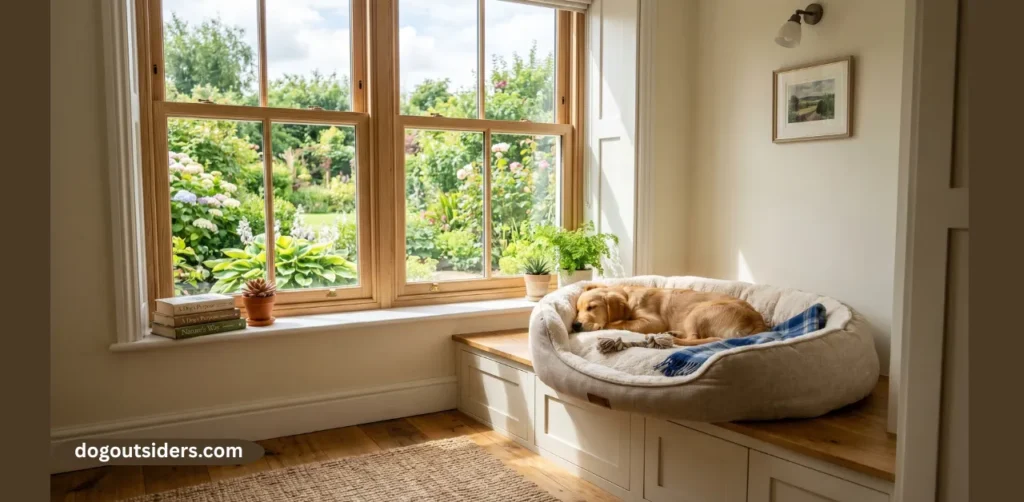
Use a waterproof foam insert cut to the window seat dimensions, cover with a washable fleece, and add a non-slip mat underneath. Total cost: $30–$60 depending on the foam.
5. Mudroom Dog Station With Leash Hooks and Feeding Area
If you have a mudroom or utility entrance, it’s an ideal dog bedroom location. Add a raised dog bed or bolster mattress, install two hooks for leashes and a harness at one side, and place the feeding bowls nearby.
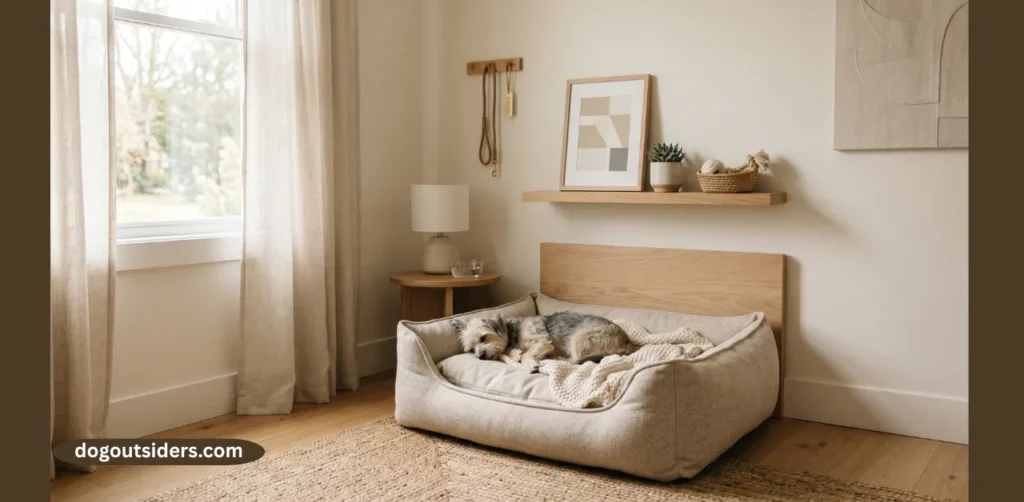
It keeps dog gear contained, creates a clear routine space, and makes arrivals and departures calmer for everyone.
Ideas #6–10: Mid-Range Dog Bedroom Setups ($100–$400)
These setups require a small investment but produce a genuinely impressive, functional dog bedroom that will last for years.
6. Closet Conversion Into a Dog Sleeping Room
A spare closet — even a small coat closet — converts into a beautiful dog bedroom with surprisingly little work. Remove the hanging rod, install a low platform bed, add a small fan or ventilation gap, and paint the interior a calm, warm tone.
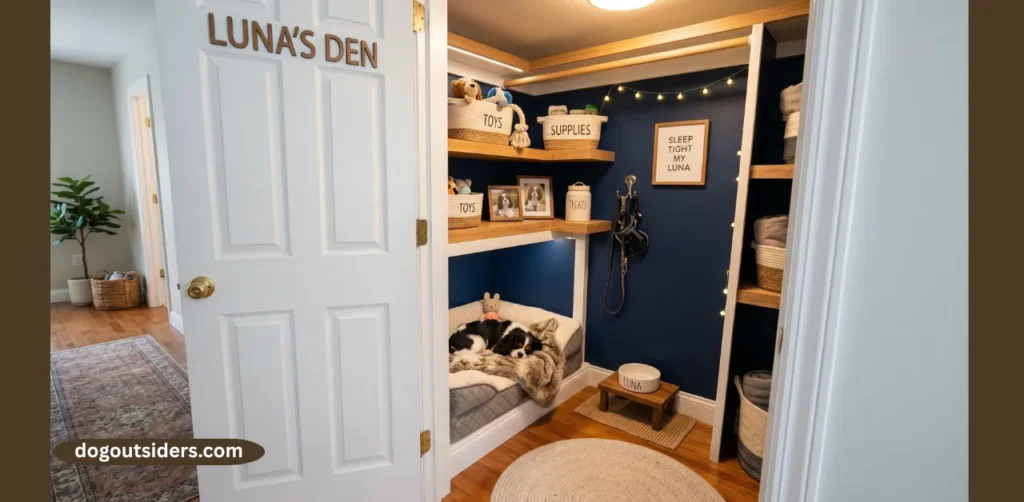
Dogs treat it like a private room. Owners treat it like a design achievement. It genuinely is both.
7. Pallet Bed Frame With Memory Foam Insert
Wooden pallets are available free from hardware stores and garden centers. Sand smooth, stain or paint to match your décor, and cut a memory foam insert to size for the top.
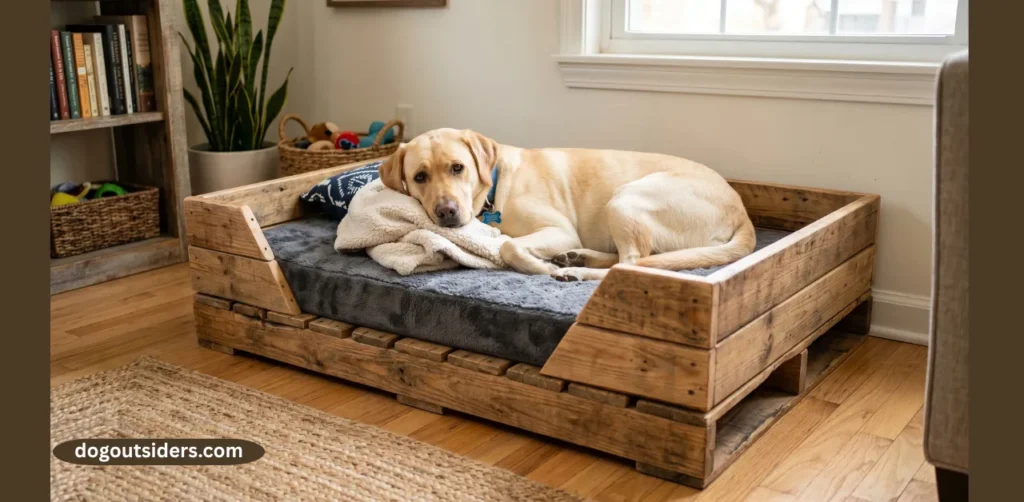
The result is an elevated, stylish dog bed frame that costs $20–$40 in materials and looks like it cost $300. Memory foam is especially valuable for large breeds or senior dogs managing joint issues.
8. Elevated Dog Bedroom With Ramp Access
For medium to large dogs, an elevated sleeping platform — built from a simple wood frame or repurposed low furniture — gives them the height and vantage point dogs instinctively prefer.
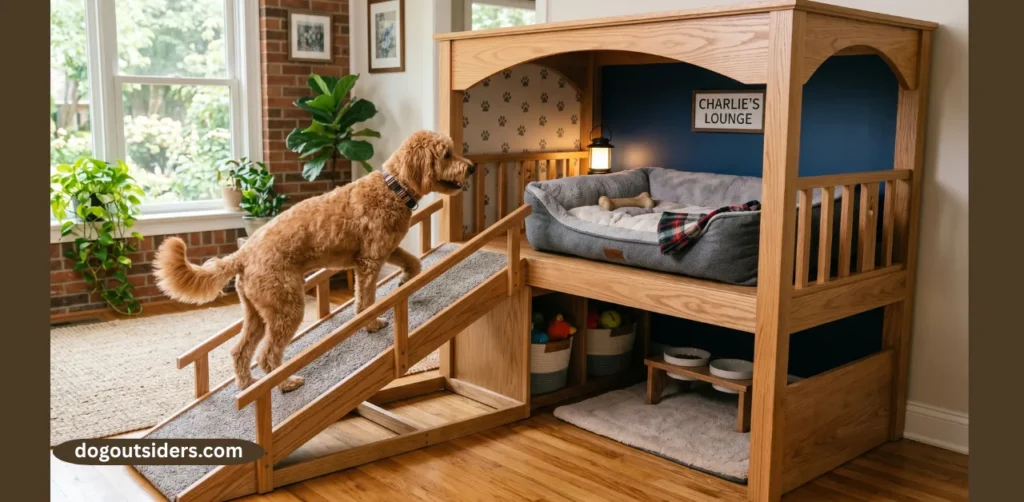
Add a gentle ramp (not stairs) for easy access, especially for older dogs or breeds prone to joint issues. The elevation also keeps them away from cold floors in winter.
9. Built-In Bench With Hidden Dog Sleeping Space
Many mudrooms and entryways have built-in bench seating. With a simple modification — a cut-out entrance panel and an interior cushion — the space beneath the bench becomes a fully enclosed dog den.
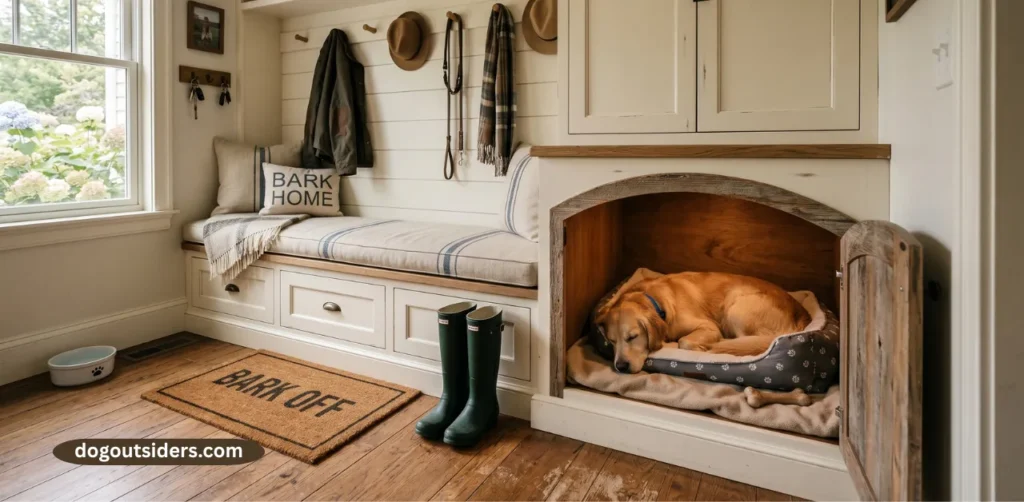
From the outside, it looks like regular home furniture. From the inside, your dog has a cave-like bedroom that ticks every den instinct box.
10. Laundry Room Dog Corner With Anti-Slip Mat
Laundry rooms are often underused, relatively quiet, and easy-to-clean — making them ideal for a dog corner. Place a raised cot-style bed (elevated off the cold floor), add an anti-slip mat, and hang a hook for their towel.
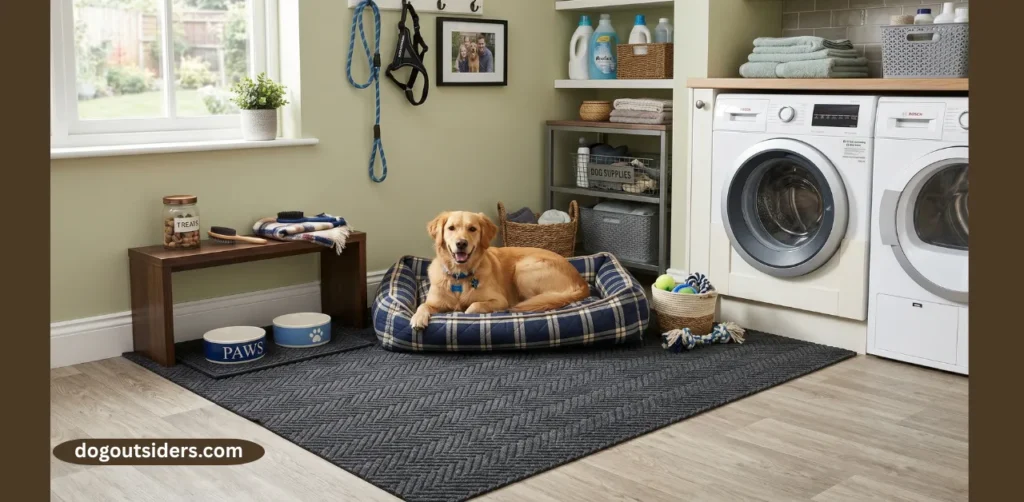
The ambient heat from the dryer keeps the space warm in winter. The easy-clean floors handle any accidents without damage.
Ideas #11–15: Luxury Dog Bedroom Spaces ($400+)
These ideas turn dog ownership into genuine interior design. They’re investment pieces — but for the dog owner who wants to do something truly special.
11. Living Room Dog Nook With Wall Art and Name Sign
Transform a living room alcove or fireplace recess into a dedicated dog nook — complete with a custom cushion, painted backdrop, LED recessed lighting, and a personalized name sign above the entrance.
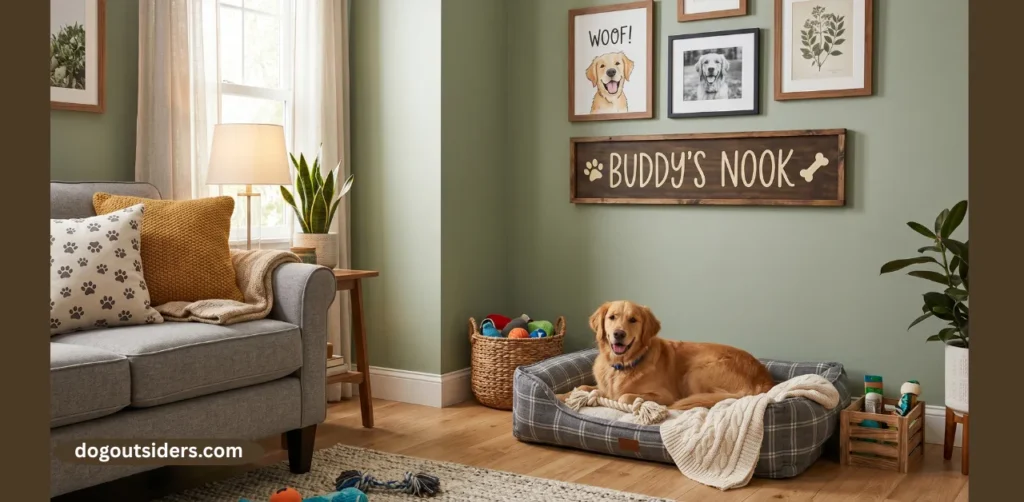
Include a small art print or framed dog illustration on the adjacent wall. The result is a space that feels intentional, personal, and beautiful — because it is.
12. Outdoor-Inspired Indoor Dog Room With Turf and Wood
For active dogs, an outdoor-themed indoor dog room delivers the sensory experience of the garden inside. Install artificial turf flooring (washable), natural wood wall paneling, and a raised wooden dog bed frame.
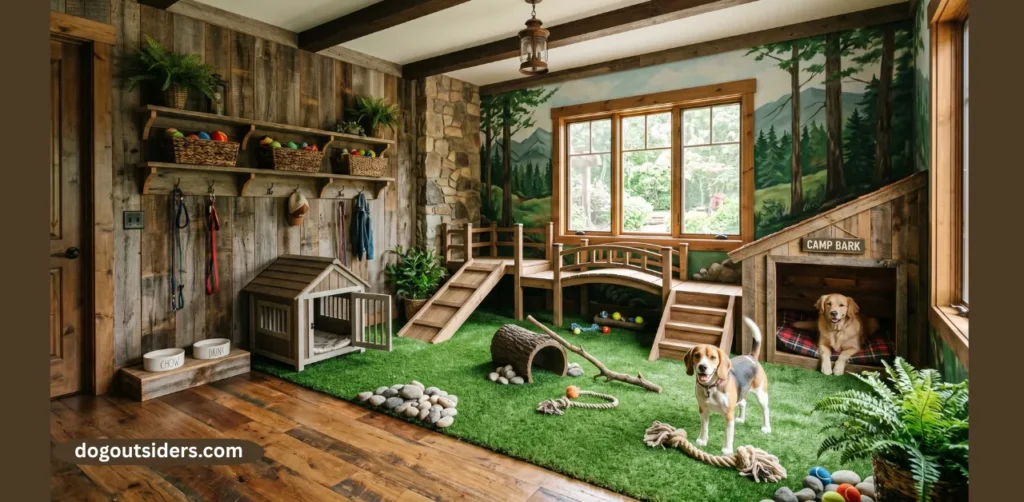
Add a chew-friendly rope toy holder and a water fountain. Dogs who struggle to settle indoors often respond brilliantly to this kind of naturalistic environment.
13. Minimalist Dog Bedroom With Neutral Tones
Minimalism works beautifully for dog spaces — especially in modern apartments. Choose a low-profile bed frame in natural oak or walnut, use a single-color washable cover in oatmeal or grey, and keep accessories to one toy basket and one water bowl.
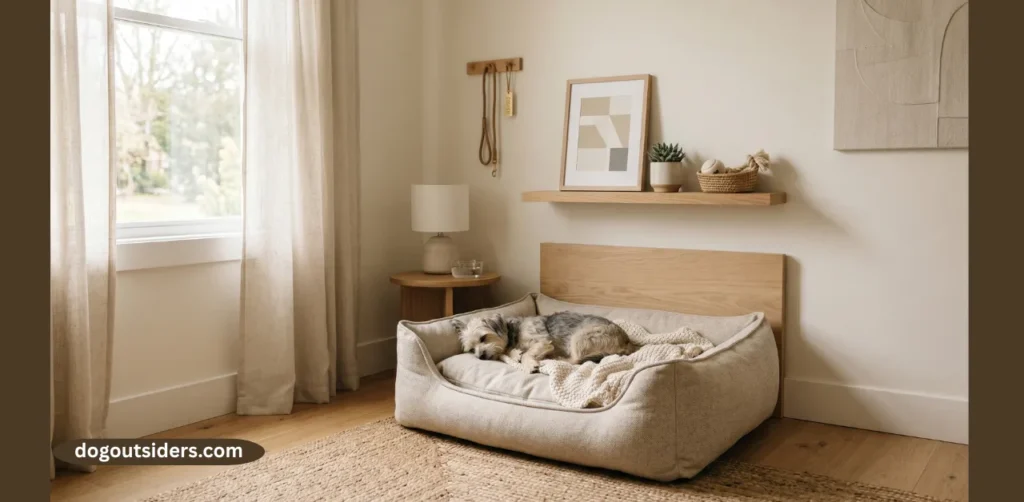
No clutter. No visual noise. Just a calm, clean space that dogs find naturally settling.
14. Luxury Velvet Dog Bedroom With Canopy Frame
The most indulgent idea on the list — and a favorite among small breed owners who genuinely treat their dog like royalty. A four-post canopy frame (custom or adapted from a doll’s house bed for small breeds) draped with soft velvet fabric and lined with a memory foam mattress.
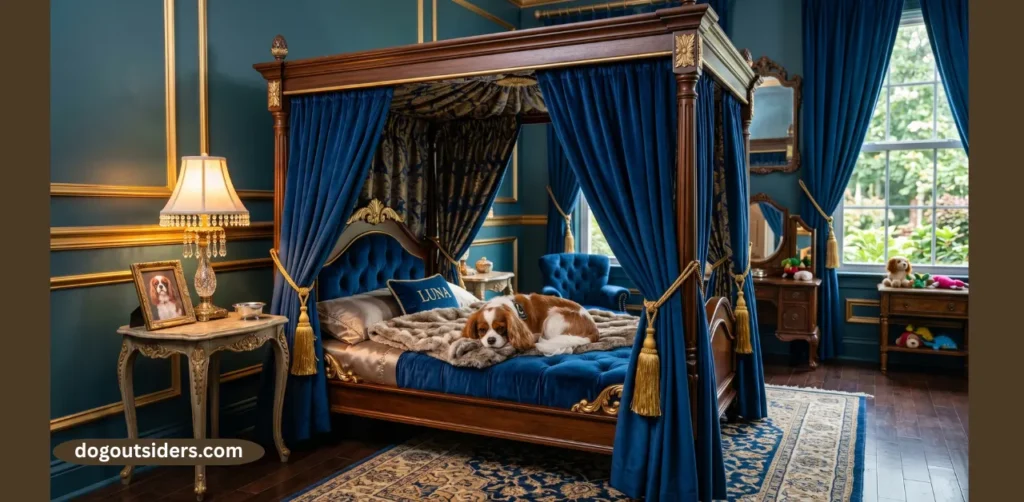
Add monogrammed throw pillows and a small side table with a matching water bowl. Yes, it’s extra. That’s the point.
15. Shared Bedroom Dog Station With Crate and Blanket Tower
For owners who want their dog nearby at night but not on the bed, this setup is ideal. Place a covered crate at the foot of the bed, add a folded blanket tower of coordinating colors alongside, and layer a fitted cot bed on top of the crate cover for a double-decker effect.
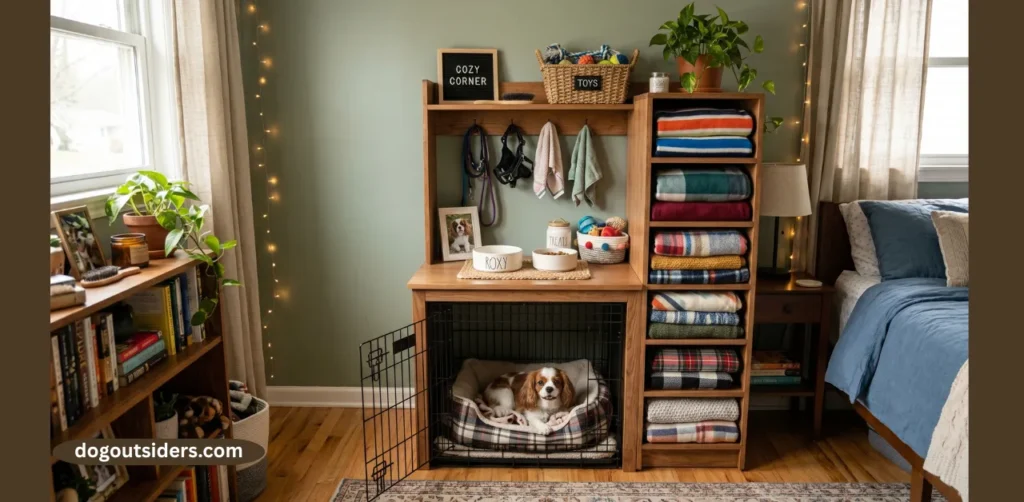
It integrates the dog into the bedroom aesthetic without compromising the owner’s bed. Dogs who are anxious at night settle faster in this setup because of the owner’s proximity.
Dog Bedroom Budget Comparison Table
| Element | Budget (Under $50) | Mid-Range ($50–$200) | Luxury ($200+) |
|---|---|---|---|
| Bed/Mattress | Waterproof foam cushion | Memory foam bolster | Orthopaedic memory foam + frame |
| Enclosure | Curtain on tension rod | Crate with cover | Built-in cabinetry or closet |
| Flooring | Anti-slip mat | Washable rug | Artificial turf or hardwood |
| Feeding area | Bowls on a mat | Raised stand + mat | Custom built-in station |
| Lighting | No change | LED strip, warm tone | Recessed LED or wall sconce |
| Personalization | Printed name sign | Custom cushion cover | Engraved signage, wall art |
How Do You Create a Dog Bedroom?
Creating a dog bedroom starts with choosing a quiet, low-traffic corner or room and adding a comfortable, washable bed sized for your dog’s breed. Include their favorite toy, a water bowl, and familiar-scented items. Keep the space consistent — dogs thrive on routine and their own territory. Good ventilation and easy-to-clean flooring complete a functional dog bedroom.
Step-by-step setup:
- Choose the location — quiet, accessible, away from heavy foot traffic
- Select the bed size — measure your dog lying fully stretched and add 30cm
- Add the enclosure — curtain, crate cover, or built-in frame for den feeling
- Place water and one familiar toy — not too many items; dogs prefer calm spaces
- Establish the routine — direct your dog there consistently for rest and downtime
- Clean weekly — washable covers are non-negotiable for hygiene and your dog’s comfort
What Is a Dog Room Called?
A dog room is most commonly called a dog den, dog nook, or dog station — depending on its size and setup. Dedicated full rooms are sometimes called a pet room or dog suite. Smaller built-in setups are often called dog nooks or dog corners. All refer to a designated, comfortable space created specifically for a dog.
The term “dog den” reflects the behavioral science behind the design — dens tap into a dog’s natural instinct for enclosed, safe resting spaces. Whatever you call it, what matters is that it’s consistent, comfortable, and unambiguously your dog’s own.
What Smell Do Dogs Absolutely Hate?
Dogs have an extremely sensitive sense of smell and strongly dislike citrus scents, vinegar, alcohol, chili pepper, and strong essential oils like eucalyptus and tea tree. When designing a dog bedroom, avoid scented candles, harsh cleaning sprays, and plug-in air fresheners near their sleeping area. Unscented or lavender-based products are the safest choices for a calm dog space.
This matters more than most owners realize when designing a dog bedroom. What smells pleasant or neutral to humans can be overwhelming and genuinely stressful for a dog, whose nose is estimated to be 10,000 to 100,000 times more sensitive than a human’s. (Source: AKC.org)
Scents to keep away from your dog’s bedroom:
- Citrus (lemon, orange, grapefruit) — strongly aversive to most dogs
- Eucalyptus and tea tree oil — toxic in concentrated form; avoid entirely
- Strong cleaning sprays, bleach-based products — use enzyme cleaners instead
- Plug-in air fresheners — the continuous chemical exposure near their breathing space is problematic
- Cigarette smoke — highly stressful and harmful
Dog-calming scents that can enhance the bedroom:
- Lavender — shown in studies to have a mild calming effect on dogs (Source: NCBI)
- Chamomile — similarly calming in small amounts
- Vanilla — neutral and often associated with owner-scent comfort
Where Should a German Shepherd Puppy Sleep at Night?
A German Shepherd puppy should sleep in a crate placed near the owner’s bedroom for the first few weeks. This reduces anxiety and builds the handler bond without encouraging co-sleeping dependency. Once reliably crate-trained, the crate can be moved to a dedicated dog space. Consistency in sleep location is especially important for this highly routine-dependent breed.
For GSD owners building out a dedicated dog bedroom, starting with the crate near your bed and gradually transitioning it to the dog’s permanent space over 2–4 weeks creates the smoothest adjustment. For a complete list of what German Shepherd owners need to set up a successful home environment, the essential items every GSD owner should have is a useful companion resource.
What NOT to Put in a Dog Bedroom
Most guides focus on what to include. This one is equally important — because several well-intentioned choices actually make dog bedrooms less comfortable or less safe.
Avoid these in your dog’s bedroom:
- Scented candles or wax melts — overwhelming to a dog’s sensitive nose; some wax types are toxic if chewed
- Essential oil diffusers — many essential oils are toxic to dogs, especially tea tree, eucalyptus, and clove
- Too many toys — a cluttered space is stimulating, not calming; keep one or two favorites in rotation
- Low-quality foam that off-gasses — cheap memory foam releases chemicals that aren’t safe for a dog sleeping on it all day; choose CertiPUR-US certified foam
- Raised water bowls without stability — tipping water creates mess and can stress anxious dogs
- Cold tile or hardwood without insulation — bare cold floors stress joints, especially for large breeds and seniors
- Loud, high-traffic locations — placing the dog bedroom near the front door or TV creates perpetual overstimulation
- Your worn clothing as bedding — while your scent is comforting initially, old clothing can become a resource-guarded item and interfere with crate training
Dog Bedroom Setup Checklist
Use this before you consider the space finished:
Location:
- Quiet — away from front door, TV, and heavy foot traffic
- Accessible — your dog can reach it easily at all times
- Ventilated — good airflow; not stuffy or overheated
- Temperature-stable — not near external walls that get cold in winter
Comfort:
- Bed sized correctly — dog can fully stretch without hanging off the edge
- Washable cover — can be laundered at least weekly
- Den-effect present — at least two sides enclosed (corner, crate, curtain)
- Floor insulation — mat or rug between dog and hard floor
Hygiene:
- Easy-to-clean flooring within and around the space
- No scented products within 1 metre of sleeping area
- Water bowl accessible and stable
- Regular cleaning schedule established
Essentials:
- One or two familiar toys — not a full toy box
- A piece of your clothing or a familiar-scented blanket for new setups
- Your dog has been directed to the space consistently for 3–5 days
Safety:
- No electrical cords within reach
- No toxic plants nearby
- No small objects that could be swallowed
- Flooring is non-slip
Your Dog Deserves This Space
Creating a cozy dog bedroom is one of the simplest, most meaningful things you can do for your dog. It doesn’t have to be the under-stairs conversion or the velvet canopy — it can be a clean corner with a washable cushion and a curtain.
What matters is that it’s consistent. That it’s theirs. And that every time they walk into it, they feel what dogs are supposed to feel in their den: safe.
Save this guide and bookmark the checklist for when you’re ready to set it up. Share it with another dog owner who might be thinking about doing the same.
And if you’re a German Shepherd owner thinking about what else your dog needs at home, the complete list of what every GSD owner needs covers the full picture — from gear to training foundations to sleep setup. 🐾
Frequently Asked Questions About Cozy Dog Bedrooms
Creating a dog bedroom starts with a quiet, low-traffic location and a washable bed correctly sized for your dog’s breed. Add a water bowl, one or two familiar toys, and an enclosure element — a curtain, crate cover, or corner positioning — to trigger your dog’s den instinct. Establish the routine consistently for 3–5 days and your dog will claim it as their own.
A dog room is commonly called a dog den, dog nook, or dog station depending on its size. Larger dedicated rooms are sometimes called a pet suite or dog room. Smaller integrated setups are called dog corners or dog nooks. The term “dog den” is most accurate behaviorally — it reflects the enclosed, secure resting space that dogs instinctively seek out and feel safest in.
Dogs strongly dislike citrus, vinegar, chili pepper, alcohol, eucalyptus, and tea tree oil. Their sense of smell is up to 100,000 times more sensitive than a human’s, making even mild scents overwhelming in a sleeping space. Avoid all plug-in air fresheners, scented candles, and harsh cleaners near your dog’s bedroom. Use enzyme-based cleaners and unscented or lavender products instead.
A German Shepherd puppy should sleep in a crate near the owner’s bedroom for the first few weeks. Proximity to the owner reduces anxiety and builds the handler bond without creating co-sleeping dependency. Once settled in the crate, gradually transition it to a dedicated dog space. GSDs are highly routine-dependent — consistent sleep location from day one makes the biggest difference.
A dog bedroom needs a correctly sized washable bed, a stable water bowl, one or two familiar toys, and an enclosure element to create a den-like feeling. Keep the space calm — avoid too many items, scented products, and loud nearby appliances. A small familiar-scented blanket speeds up the settling process significantly, especially for anxious dogs or newly adopted pets.
The best flooring for a dog bedroom is washable, non-slip, and easy to clean. Rubber-backed washable rugs, vinyl plank flooring, and anti-fatigue mats are all excellent choices. Avoid bare tile or hardwood in cold climates — they stress joints, especially in large breeds and senior dogs. For dedicated dog rooms, washable artificial turf adds traction and natural sensory appeal.
Prevent dog bedroom odour by washing bedding covers weekly, using enzyme-based cleaners on any accidents, ensuring good ventilation, and avoiding synthetic air fresheners that mask rather than neutralize odors. Wash the bed itself monthly. Dogs with skin conditions or ear infections may create more odor — if the smell persists despite cleaning, a vet check is worthwhile to rule out an underlying health issue.