Summer is here — and if you’re scrambling to keep your dog cool, happy, and well-fed while juggling a packed schedule, you’re in the right place.
Most busy dog owners feel a quiet guilt this time of year. You know the kibble-only routine isn’t cutting it in the heat. You’ve Googled “healthy summer dog meals” and found either one complicated recipe or a list of treats that aren’t really meals at all.
According to the American Kennel Club, dogs can benefit greatly from fresh, whole-food additions to their diet — especially in summer when hydration and nutrient density become more critical. (Source: AKC)
This guide gives you 7 quick & healthy summer dog meals for busy owners — each one prep-ready in under 15 minutes, dog-safe, and nutritionally sound. No culinary degree required.
Let’s get your dog eating well this summer.
Why Summer Nutrition Matters for Your Dog
Most owners don’t realize this: dogs often eat less in summer.
Hot weather naturally suppresses appetite — in dogs just like in people. Your dog may seem disinterested in food, pushing their bowl away or eating only half a portion. This is normal, but it means the food they do eat needs to work harder nutritionally.
Summer also raises your dog’s hydration needs significantly. Dogs regulate body temperature through panting, which depletes moisture fast. Dry kibble alone won’t bridge that hydration gap.
If you’ve noticed your dog refusing meals but still accepting treats, you’re not alone. It’s a common frustration — and there’s usually a reason behind it. Learn more in our guide on why your dog might refuse meals in summer.
Fresh, moisture-rich meals solve two problems at once: they appeal to a heat-reduced appetite and add hydration through food.
What Food Cools Dogs Down?
Foods with high water content — like cucumber, watermelon, and zucchini — help cool dogs down by boosting internal hydration. Lean proteins like chicken and turkey are also easier to digest in heat than heavy red meats. Incorporating these ingredients into your dog’s meals naturally supports temperature regulation.
7 Quick & Healthy Summer Dog Meals for Busy Owners
Here are 7 complete meals — not snacks, not treats — built for the summer season and sized for busy schedules:
- Chicken & Cucumber Cool Bowl — lean protein with hydrating, crunchy veggies
- Sardine & Sweet Potato Mash — omega-rich and energy-sustaining
- Turkey & Watermelon Freeze Bites — refreshing, low-calorie, and freezer-friendly
- Egg & Broccoli Scramble — protein-packed and ready in 5 minutes
- Brown Rice & Pumpkin Bowl — gentle on digestion when heat affects the gut
- Banana & Greek Yogurt Frozen Cup — probiotic-rich and irresistibly cool
- Salmon & Spinach Power Bowl — anti-inflammatory and coat-boosting
Each recipe below includes ingredients, a quick prep method, and a serving note.
Meal 1: Chicken & Cucumber Cool Bowl
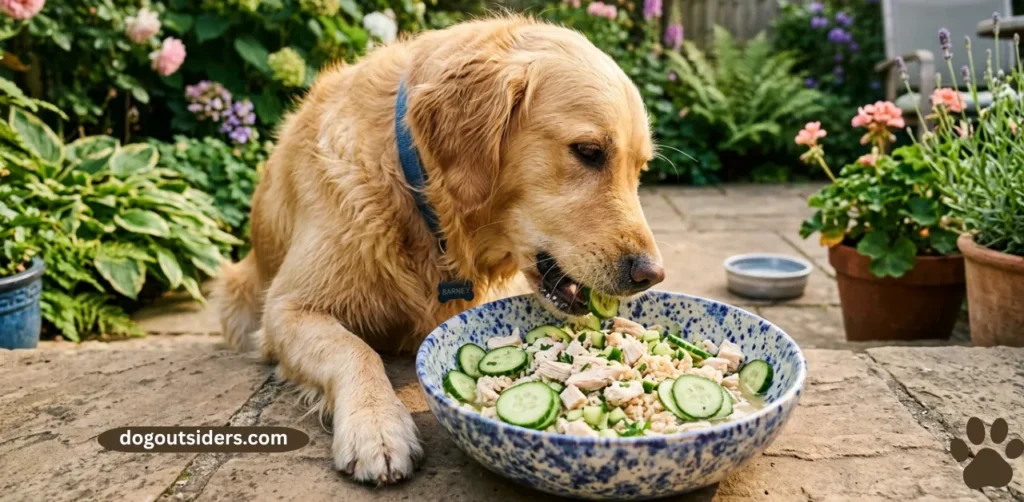
Why it works: Chicken is a lean, easily digestible protein. Cucumber is 96% water — a natural hydration booster.
Ingredients:
- ½ cup cooked, shredded chicken breast (no seasoning)
- ¼ cup sliced cucumber
- 1 tablespoon plain cooked brown rice (optional)
Prep: Boil or bake chicken plain. Cool completely. Shred and mix with raw cucumber slices. Serve at room temperature or slightly chilled.
Serving note: Adjust portion to your dog’s size. This works as a full meal for small dogs or a protein topper for larger breeds.
Meal 2: Sardine & Sweet Potato Mash
Why it works: Canned sardines in water (no salt, no oil added) are packed with omega-3 fatty acids. Sweet potato provides sustained energy and antioxidants.
Ingredients:
- 1–2 canned sardines in water (drained)
- ¼ cup cooked mashed sweet potato
- A few drops of water to mix
Prep: Mash together and serve cool. You can batch-prep the sweet potato at the start of the week.
Serving note: Sardines are rich — limit to 2–3 times per week.
Meal 3: Turkey & Watermelon Freeze Bites
Why it works: Ground turkey is gentle protein. Watermelon (seeds and rind removed) is 92% water and naturally sweet.
Ingredients:
- ½ cup cooked ground turkey (unseasoned)
- ¼ cup watermelon, cubed and deseeded
- Optional: a swirl of plain pumpkin purée
Prep: Mix turkey with watermelon chunks. Freeze in silicone molds for 2–3 hours. Serve frozen as a meal or high-value snack.
For more summer snack ideas that pair well with these meals, check out our guide to 7 nutritious summer snacks for puppies and adult dogs.
Meal 4: Egg & Broccoli Scramble
Why it works: Eggs are one of the most complete protein sources for dogs. Broccoli provides vitamins C and K — though it should be given in moderation.
Ingredients:
- 1 whole egg, scrambled plain (no butter, no oil)
- 2 small broccoli florets, steamed
- Optional: a pinch of cooked quinoa
Prep: Scramble egg in a dry non-stick pan. Steam broccoli separately. Combine and cool before serving.
Curious about broccoli portions and safety? Read our full breakdown of broccoli benefits for dogs before serving.
Serving note: Broccoli should make up less than 10% of your dog’s daily food intake.
Meal 5: Brown Rice & Pumpkin Bowl
Why it works: Summer heat and dehydration can upset your dog’s digestive system. Brown rice and plain pumpkin are both gut-stabilizing foods recommended by vets for digestive issues. (Source: PetMD)
Ingredients:
- ½ cup cooked brown rice
- 2 tablespoons plain canned pumpkin (not pie filling)
- ¼ cup low-sodium chicken broth (to add moisture)
Prep: Mix warm rice with pumpkin. Add a splash of broth. Serve warm or at room temperature.
Serving note: Great for dogs with sensitive stomachs during hot months.
Meal 6: Banana & Greek Yogurt Frozen Cup
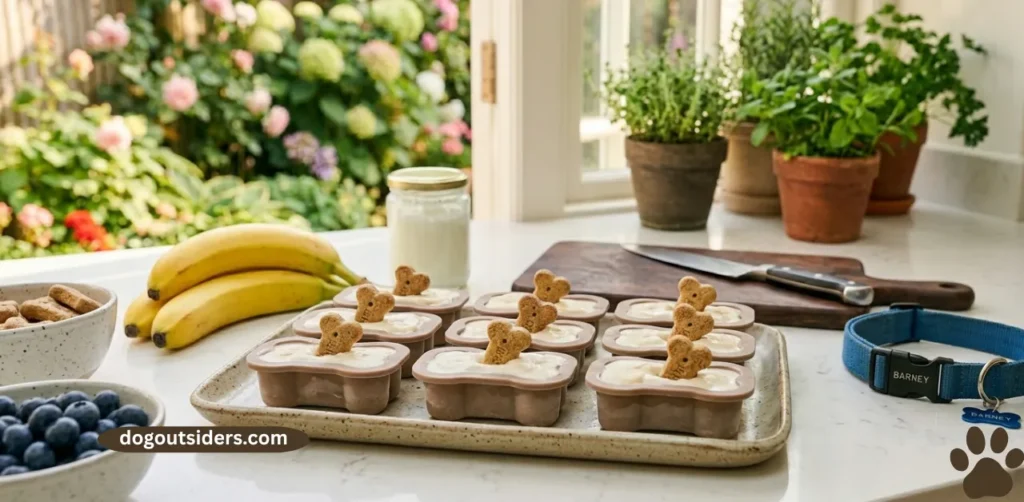
Why it works: Bananas provide potassium and natural sweetness. Plain Greek yogurt offers probiotics that support gut health. (Source: AKC)
Ingredients:
- ½ ripe banana, mashed
- 2 tablespoons plain, unsweetened Greek yogurt (no xylitol)
- Optional: a few blueberries on top
Prep: Mix banana and yogurt. Pour into a silicone cup or ice cube tray. Freeze for 3–4 hours. Serve frozen.
Before adding banana to your dog’s regular routine, it’s worth reading about whether bananas are safe for dogs and how much is appropriate.
Serving note: Use as a meal supplement, not a full meal replacement. Portion for size.
Meal 7: Salmon & Spinach Power Bowl
Why it works: Salmon is rich in EPA and DHA — omega-3s that reduce inflammation and support healthy skin and coat through summer. Spinach provides iron and vitamins A, B, and C.
Ingredients:
- ¼ cup cooked salmon (boneless, no seasoning)
- 1 tablespoon finely chopped raw spinach
- ¼ cup cooked brown rice or plain pasta
Prep: Flake cooked salmon over rice. Add spinach. Mix and serve.
Want to add a crunchy topper? You might be interested in whether freeze-dried strawberries are safe for dogs — they work beautifully as a finishing touch.
Serving note: Limit salmon to 2–3 times per week. Always use fully cooked salmon — never raw.
Best Dog-Safe Summer Ingredients
Knowing which ingredients are safe makes meal prep fast and stress-free. Here’s your quick reference:
| Ingredient | Safe for Dogs? | Summer Benefit |
|---|---|---|
| Cucumber | ✅ Yes | High water content, cooling |
| Watermelon (no seeds/rind) | ✅ Yes | 92% water, hydrating |
| Blueberries | ✅ Yes | Antioxidants, low calorie |
| Banana | ✅ Yes (moderation) | Potassium, energy |
| Broccoli | ✅ Yes (under 10%) | Vitamins C & K |
| Sweet potato | ✅ Yes | Fiber, antioxidants |
| Plain Greek yogurt | ✅ Yes (no xylitol) | Probiotics |
| Sardines (water-packed) | ✅ Yes (2–3x/week) | Omega-3, anti-inflammatory |
| Grapes / Raisins | ❌ Never | Toxic — kidney failure |
| Onions / Garlic | ❌ Never | Toxic — destroys red blood cells |
| Avocado | ❌ Never | Contains persin — harmful |
| Xylitol (sweetener) | ❌ Never | Extremely toxic |
Looking for fresh ingredients at an accessible price? Our article on fresh market ingredients for dog meals breaks down costs and sourcing options.
Ingredients to Always Avoid in Summer
Summer adds extra risk to certain foods. Never serve these, especially in heat:
- Grapes and raisins — even small amounts cause kidney failure in dogs (Source: AVMA)
- Onions and garlic — destroy red blood cells, toxic even in powder form
- Avocado — contains persin, harmful to dogs
- Macadamia nuts — neurological symptoms within 12 hours
- Xylitol — found in peanut butter and yogurt brands — rapidly fatal
- Salty or spicy foods — worsen dehydration in summer heat
Always check labels on any packaged ingredient you use.
Time-Saving Meal Prep Tips for Busy Dog Owners
You don’t need to cook fresh every single day. Here’s how to prep all 7 meals in under 30 minutes on Sunday:
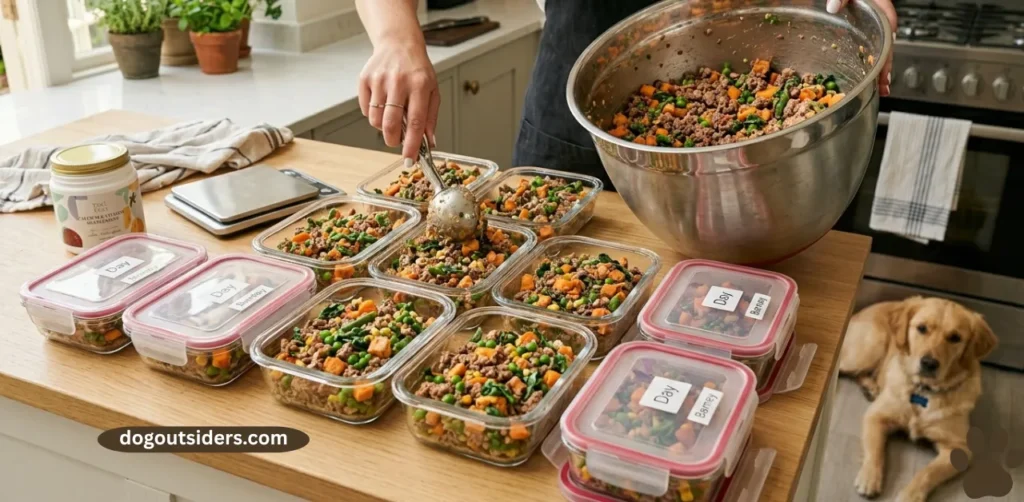
The 30-Minute Sunday System:
- Boil or bake a batch of chicken breast — shred and portion into containers
- Cook a pot of brown rice — portion out for 3–4 meals
- Bake sweet potatoes — mash and store in a sealed container
- Freeze your Turkey Watermelon Bites and Banana Yogurt Cups — ready all week
- Open and portion sardines — seal remaining in the fridge for 1–2 days max
- Chop cucumber, spinach, and broccoli — store in airtight bags
Storage tip: Refrigerate meals for up to 3 days. Freeze individual portions for up to 2 weeks.
How Long Can You Store Homemade Dog Food?
Homemade dog food keeps in the refrigerator for up to 3 days in sealed containers. Frozen meals last up to 2 weeks without loss of nutritional value. Always thaw frozen meals fully before serving. Discard anything that smells sour or has changed in texture — summer heat accelerates spoilage even in the fridge.
Homemade Meals vs. Kibble in Summer
Is homemade food better than kibble for dogs in summer? Homemade meals offer higher moisture content and fresher nutrients — both beneficial in summer. However, kibble provides complete, balanced nutrition in a convenient format. The best approach for most busy owners is a hybrid: high-quality kibble as the base with fresh food toppers from this list added 3–5 times per week.
| Factor | Homemade Meals | Quality Kibble |
|---|---|---|
| Moisture content | High (supports hydration) | Low (~10%) |
| Prep time | 10–30 minutes | None |
| Nutritional completeness | Requires planning | Guaranteed complete |
| Cost | Variable | Consistent |
| Summer suitability | High | Moderate |
| Palatability in heat | Higher (fresh smells appeal) | Lower |
Bottom line: You don’t have to choose. Add one or two fresh summer meals per week and watch your dog’s energy and enthusiasm improve.
Common Mistakes to Avoid When Feeding Dogs in Summer
Even well-meaning owners make these errors. Here’s what to watch for:
❌ Serving food that’s too warm — Hot food in summer heat is unappealing and potentially problematic. Always cool meals to room temperature before serving.
❌ Using seasoned or store-bought meat — Deli chicken, flavored sardines, or marinated proteins contain salt and additives harmful to dogs.
❌ Overfeeding rich proteins daily — Salmon and sardines are excellent but rich. Rotate them rather than serving daily.
❌ Skipping the xylitol check — Always read yogurt and peanut butter labels. Xylitol is deadly for dogs and appears in many “healthy” human foods.
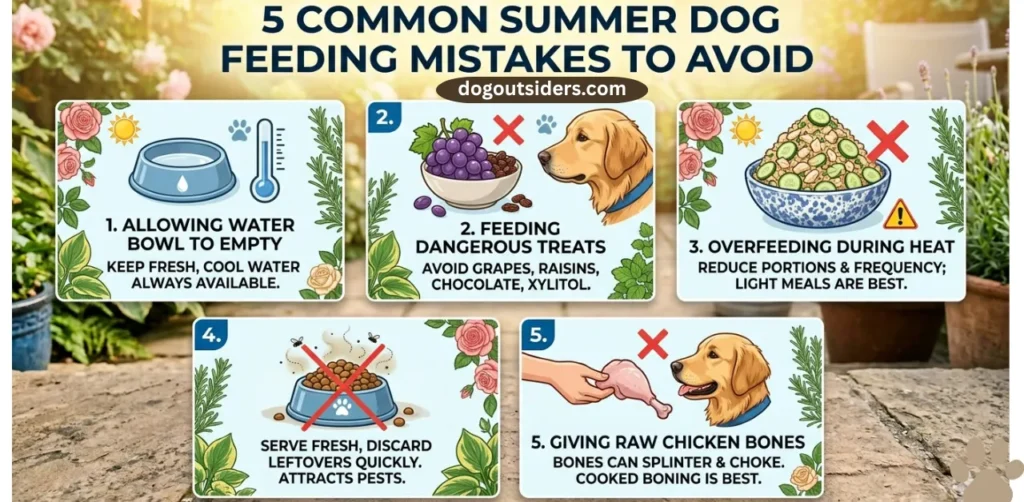
❌ Ignoring portion adjustment — If your dog is less active in summer heat, they may need slightly smaller portions. Watch body weight and adjust.
❌ Not washing produce — Fruits and vegetables can carry pesticide residue. Always rinse thoroughly.
What Should Dogs Not Eat in Hot Weather?
Dogs should avoid salty foods, processed meats, grapes, raisins, onions, garlic, avocado, and anything containing xylitol — especially in hot weather. Heat already stresses the body; these foods add additional toxin load or worsen dehydration. Stick to whole, plain ingredients and always double-check with your vet if you’re unsure.
The meals in this article have been reviewed for ingredient safety against guidelines published by the American Kennel Club (AKC), the ASPCA Animal Poison Control Center, and PetMD’s nutritional resources. Always consult your veterinarian before making dietary changes, particularly for puppies, senior dogs, or dogs with health conditions.
Your Summer Dog Feeding Checklist ✅
Print this or screenshot it for your fridge:
- Use only plain, unseasoned proteins
- Cool all food before serving — never serve warm in summer
- Check every yogurt and peanut butter label for xylitol
- Remove all seeds and rinds from watermelon
- Keep broccoli under 10% of the meal
- Limit sardines and salmon to 2–3x per week
- Store fridge meals for max 3 days
- Freeze extra portions within 24 hours of making
- Adjust portions if your dog is less active in heat
- Always provide fresh water alongside every meal
You’ve Got This — And So Does Your Dog
Feeding your dog well in summer doesn’t require hours in the kitchen or a degree in canine nutrition. It requires a few real ingredients, a Sunday prep session, and the seven meals in this guide.
Start with one meal this week — the Chicken & Cucumber Bowl is the easiest. See how your dog responds. Then rotate through the list as the summer goes on.
If you’re looking for more warm-weather inspiration, don’t miss our full guide to 7 nutritious summer snacks for puppies and adult dogs — perfect for between-meal moments.
Bookmark this page, share it with a fellow dog owner who’s struggling in the heat, and come back any time you need a quick, healthy idea. Your dog is lucky to have someone who cares this much.
Frequently Asked Questions
Feed your dog moisture-rich, light meals in summer. Good options include shredded chicken with cucumber, plain cooked salmon with leafy greens, or a banana and Greek yogurt frozen cup. Avoid heavy red meats and salty foods that worsen dehydration. Always ensure fresh water is available alongside every summer meal.
Foods with high water content cool dogs down most effectively. Cucumber, watermelon (seeds removed), and zucchini all support internal hydration and help regulate body temperature. Lean proteins like chicken and turkey are also easier to digest in heat than fatty cuts. Freezing meals adds an extra cooling effect when served on hot days.
Homemade food provides higher moisture and fresh nutrients — both valuable in summer. However, kibble is nutritionally complete and convenient. The best strategy for busy owners is a hybrid approach: quality kibble as a base, with fresh homemade toppers added three to five times per week during summer months.
Dogs should avoid grapes, raisins, onions, garlic, avocado, salty processed foods, and anything containing xylitol during hot weather. These foods are toxic year-round but particularly harmful in summer when the body is already under heat stress. Always check ingredient labels on yogurt and peanut butter for hidden xylitol.
Yes, but it requires care. Homemade dog food must provide complete nutrition — protein, carbohydrates, healthy fats, vitamins, and minerals. Feeding a single recipe daily can cause nutritional imbalances over time. Rotate between the seven meals in this guide weekly and consult your vet to confirm the diet meets your dog’s specific needs.
Add moisture-rich foods like cucumber, watermelon, zucchini, and low-sodium broth to your dog’s meals. Freezing water-based meals into cubes or molds also increases fluid intake during eating. Beyond food, always provide a clean bowl of fresh water — refill it multiple times daily in summer, especially after outdoor activity.
Yes, dogs can safely eat watermelon in summer — it’s 92% water and a natural hydration booster. Always remove all seeds and the rind before serving. Seeds can cause intestinal blockage, and the rind is difficult to digest. Serve chilled or frozen in small cubes as part of a summer meal or as a refreshing between-meal treat.