Bringing home a puppy is one of the most exciting things you’ll ever do — and one of the most overwhelming.
You’ve got a tiny, curious creature depending entirely on you, and suddenly you’re Googling “how often should I feed my puppy” at 2 a.m. while they cry in their crate. Sound familiar?
According to the American Veterinary Medical Association (AVMA), the first few weeks with a new puppy are the most critical period for establishing lifelong habits — both for the dog and the owner. (Source: AVMA)
The good news? A few simple but powerful puppy care hacks can make the difference between a chaotic first month and a confident, connected start. These aren’t generic tips you’ve heard before — these are the practical shortcuts experienced dog owners wish someone had told them on day one.
Whether you’re bringing home a Labrador, a Husky, or a mixed breed, these hacks apply to every new puppy owner. For breed-specific puppy care tips, check out our guide on breed-specific puppy care tips.
Puppy Care Hacks Every New Dog Owner Must Know
Top puppy care hacks for new dog owners:
- Set a consistent feeding schedule from day one
- Start crate training immediately — not eventually
- Puppy-proof every room before their arrival
- Use the 2-hour potty rule without exception
- Survive the first night with a calm, structured plan
- Socialize your puppy before 16 weeks
- Add mental stimulation to every single day
- Use positive reinforcement only — always
- Schedule your first vet visit within 48 hours
- Learn the signs that show your puppy is adjusting well
How Do You Take Care of a Puppy for Beginners?
Taking care of a puppy begins with four basics: consistent feeding, crate training, early socialization, and a vet visit within the first 48 hours. New owners should establish a daily routine immediately — puppies thrive on predictability. Start simple, stay consistent, and reward every good behavior with praise or treats.
If you’re feeling overwhelmed, that’s completely normal. Every experienced dog owner started exactly where you are right now. The hacks below will give you a clear, step-by-step path forward.
Hack #1 — Set a Feeding Schedule From Day One
Puppies don’t thrive on free feeding — they thrive on consistency. An unpredictable feeding schedule leads to unpredictable bathroom habits, energy spikes, and anxiety.
Set fixed meal times starting on day one and stick to them every single day.
How Often Should a New Puppy Eat?
| Age | Meals Per Day | Portion Size |
|---|---|---|
| 8–12 weeks | 4 meals/day | Small, frequent |
| 3–6 months | 3 meals/day | Moderate |
| 6–12 months | 2 meals/day | Standard |
| 12+ months | 2 meals/day | Adult portion |
According to PetMD, puppies under 12 weeks need four small meals daily to maintain stable blood sugar and support rapid growth. (Source: PetMD)
Pro Hack: Feed your puppy at the same times as your own meals. It’s easier to remember, and it builds a predictable routine naturally.
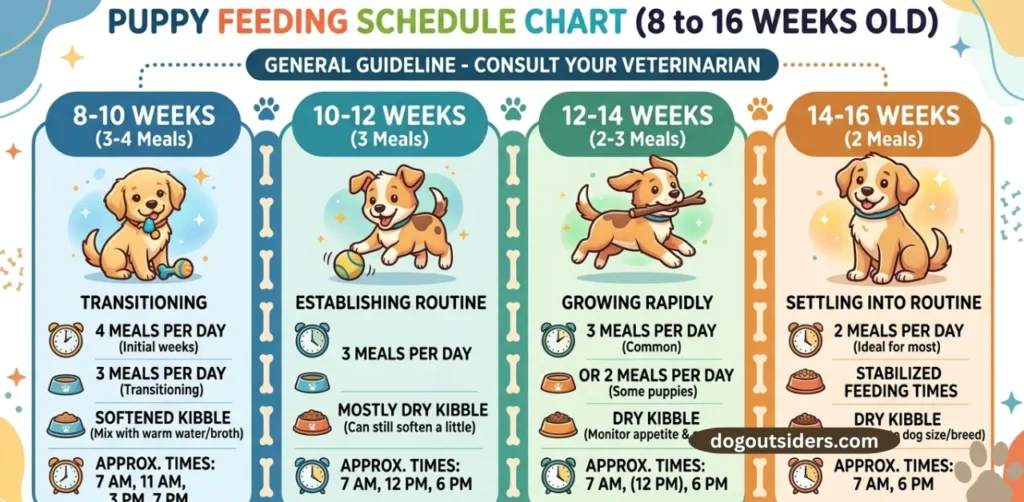
- Morning meal: 7:00 AM
- Midday meal: 12:00 PM
- Afternoon meal: 5:00 PM
- Evening meal: 8:00 PM (reduce for potty training success)
Hack #2 — Puppy-Proof Your Home Before Arrival
Most new owners puppy-proof after something goes wrong. By then, it’s already a chewed power cord, a swallowed sock, or an emergency vet visit.
The hack? Do it before the puppy ever walks through the door.
Room-by-Room Puppy Proofing Checklist
Kitchen:
- Move cleaning products to high cabinets
- Secure trash can with a locking lid
- Remove toxic foods from counter reach
Living Room:
- Cover or hide electrical cords
- Remove small objects from floor level
- Block access under sofa (puppies get stuck)
Bedroom:
- Keep shoes inside the closet
- Remove small jewellery from nightstands
- Secure any low-hanging blind cords
Bathroom:
- Keep toilet lid closed always
- Store medications in locked cabinets
- Remove rubber bath mats (chewing hazard)
Puppy-proofing also means keeping your home manageable. Once your puppy arrives, keeping your home clean with a new puppy becomes a daily priority — that guide will save you hours every week.
Hack #3 — Start Crate Training Immediately
Many new owners avoid the crate because it “feels mean.” This is one of the most expensive mistakes you can make.
A properly introduced crate becomes your puppy’s safe space — not a punishment. It prevents destructive behavior, accelerates potty training, and gives your puppy a place to decompress.
Crate Training vs. Free Roaming: Which Is Better for Puppies?
| Factor | Crate Training | Free Roaming |
|---|---|---|
| Potty Training Speed | Much faster | Slower |
| Destructive Behavior | Prevented | High risk |
| Safety When Unsupervised | Secure | Dangerous |
| Anxiety Development | Reduced | Can increase |
| Sleep Quality | Better | Unpredictable |
| Recommended for New Puppies | ✅ Yes | ❌ No |
The hack: Make the crate the best place in the house. Toss in treats randomly throughout the day. Feed meals inside with the door open. Your puppy will choose to go in voluntarily within days.
How Do You Potty Train a Puppy Fast?
Potty train fast by taking your puppy outside every 2 hours, after every meal, and after every nap. Always use the same outdoor spot — scent recognition helps them understand the purpose. Reward immediately after they eliminate outside. Never punish indoor accidents. Most puppies show reliable results within 2–4 weeks of consistent routine. (Source: AKC)
Hack #4 — The 2-Hour Potty Rule
Young puppies physically cannot hold their bladder for more than 2 hours. If you’re waiting longer, accidents will happen — and it’s not the puppy’s fault.
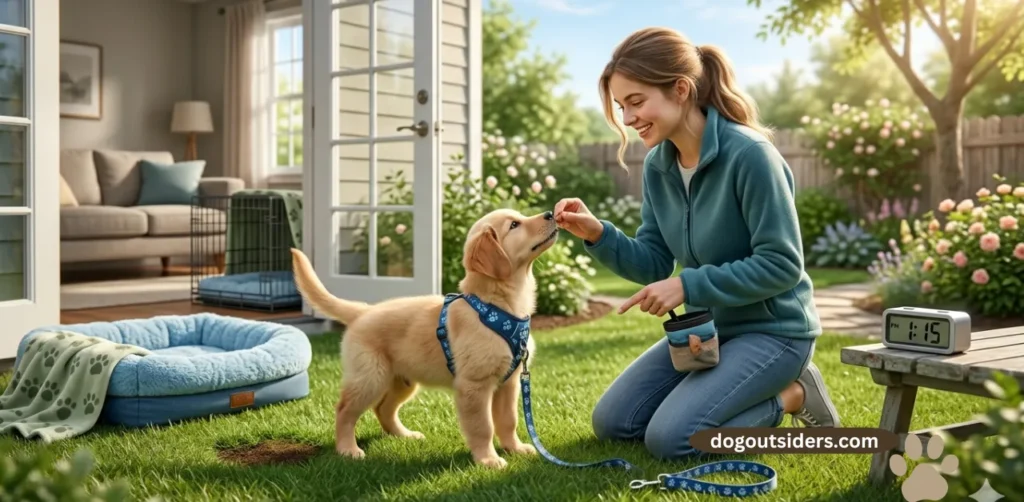
The Rule:
- Take puppy out every 2 hours (set a phone alarm)
- Always go out after meals, naps, and play sessions
- Use ONE consistent outdoor spot
- Say a cue word like “go potty” each time
- Reward with treats and praise immediately after success
For a complete week-by-week training breakdown, our structured week-by-week training schedule gives you the full roadmap from day one through month three.
What Should I Do the First Night With My New Puppy?
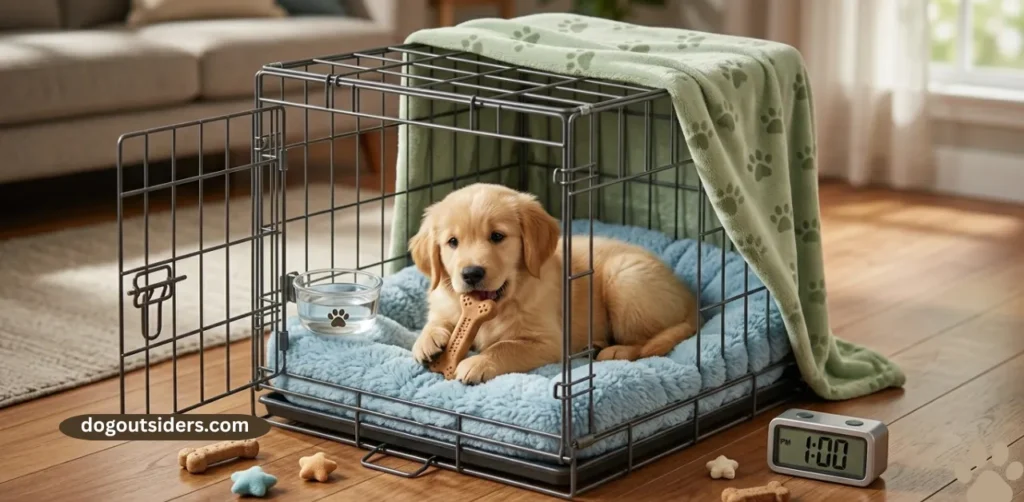
The first night, place your puppy’s crate near your bed with a warm blanket and a ticking clock to mimic their mother’s heartbeat. Expect some crying — this is completely normal. Do not bring the puppy into your bed. Take them outside every 3–4 hours for a bathroom break, and keep all interactions calm and quiet.
Hack #5 — The First Night Survival Plan
Here’s the exact routine that works:
9:00 PM — Final meal of the day (if applicable)
9:30 PM — Last outside potty trip
10:00 PM — Settle puppy in crate near your bed
10:00 PM — Place warm water bottle under blanket
10:00 PM — Leave a worn t-shirt inside (your scent calms them)
2:00 AM — Quiet potty trip outside (no play, no talking)
2:15 AM — Back in crate, lights off
6:00 AM — Morning potty trip + first meal
Expect two to three nights of adjustment crying. It gets dramatically easier by night four.
What NOT to do on night one:
- Do not turn lights on or engage excitedly
- Do not bring the puppy into your bed (hard to undo)
- Do not respond to every whimper (teach patience)
- Do not skip the midnight potty break
Hack #6 — Socialize Before 16 Weeks
The socialization window closes at approximately 16 weeks of age. After that, your puppy’s brain becomes significantly less receptive to new experiences. Whatever they haven’t been exposed to before 16 weeks may become a source of fear or reactivity for life.
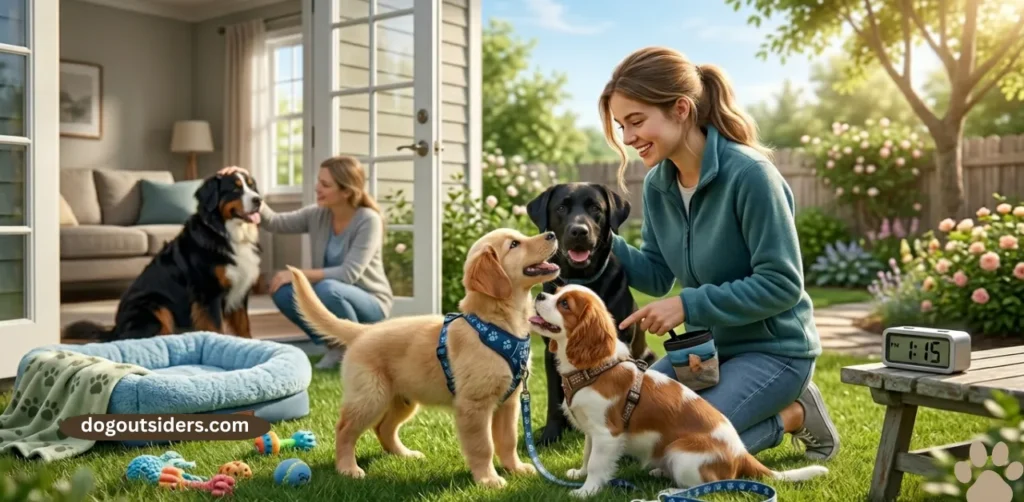
This is not an opinion — it is documented veterinary science. According to the American Kennel Club, the critical socialization period for puppies runs from approximately 3 to 16 weeks of age. (Source: AKC)
Socialization Checklist Before 16 Weeks:
- Different people (hats, beards, uniforms, children)
- Other vaccinated dogs and puppies
- Car rides
- Household sounds (vacuum, TV, blender)
- Different floor textures (grass, gravel, tile)
- Light crowds and outdoor environments
- Being handled (ears, paws, mouth)
Important: Socialize before full vaccination only in controlled, low-risk environments. Consult your vet on safe socialization before the full vaccine series is complete.
Hack #7 — Use Mental Stimulation Every Day
This is the hack that almost no beginner guide mentions — and it’s one of the most powerful tools you have.
A physically tired puppy can still be destructive. A mentally tired puppy sleeps soundly and behaves beautifully.
5-Minute Brain Games for Puppies:
- Sniff Hunt — Hide kibble around the room, let them find it
- Muffin Tin Puzzle — Put treats under tennis balls in a muffin tin
- Name Learning — Teach your puppy the names of their toys
- Which Hand? — Hide a treat in one hand, teach them to find it
- Training Sprints — 3-minute sit/stay/come sessions
Ten minutes of mental stimulation equals thirty minutes of physical exercise for a puppy’s brain. Start this early and your evenings become noticeably calmer.
Hack #8 — Use Positive Reinforcement Only
Punishment-based training doesn’t just fail — it actively damages your relationship with your puppy and increases anxiety-related behaviors.
Research published by the National Institutes of Health confirms that reward-based training produces faster learning, better retention, and healthier behavioral outcomes in dogs compared to aversive methods. (Source: NIH/NCBI)
Positive Reinforcement Done Right:
- Reward within 2 seconds of the correct behavior
- Use high-value treats for new skills (real chicken, cheese)
- Use verbal praise + treats together initially
- Fade treats gradually as behavior becomes reliable
- Never reward fear-based compliance
If you’re working with a strong-willed or stubborn breed, read our guide on training a strong-willed puppy for breed-specific positive reinforcement strategies.
Hack #9 — Schedule Your First Vet Visit Within 48 Hours
Your puppy needs a baseline health check within the first 48 hours of coming home — not because something is wrong, but because you need to know their starting health status before any problems can develop.
What Your First Vet Visit Covers:
- Full physical examination
- Parasite check (worms, fleas, ticks)
- Vaccine record review + schedule setup
- Microchip if not already done
- Nutritional guidance for their age + breed
- Behavioral Q&A with your vet
Bring any documentation from the breeder or shelter. Ask your vet specifically about the WSAVA vaccination guidelines — these are the internationally accepted standards for puppy vaccine schedules. (Source: WSAVA)
Hack #10 — Know the Signs Your Puppy Is Adjusting Well
Most new owners watch for problems. The real hack is knowing what good adjustment looks like — so you stop worrying unnecessarily.
Signs Your Puppy Is Thriving:
✅ Eating consistently at meal times
✅ Exploring their environment with curiosity (not fear)
✅ Sleeping 16–18 hours per day (this is healthy and normal)
✅ Engaging in play sessions
✅ Making eye contact with you
✅ Showing excitement at the sight of their leash or food bowl
✅ Settling in their crate without prolonged crying after day 3
Signs to Watch and Discuss With Your Vet:
⚠️ Refusing food for more than 24 hours
⚠️ Lethargy beyond normal sleep patterns
⚠️ Vomiting or diarrhea lasting more than 12 hours
⚠️ Hiding constantly and refusing interaction
⚠️ Swollen abdomen or visible discomfort
Common Puppy Care Mistakes New Owners Make
Even well-intentioned owners fall into these traps. Knowing them in advance saves you weeks of backtracking.
| Mistake | Why It Backfires | The Fix |
|---|---|---|
| Free feeding all day | No potty schedule possible | Set fixed meal times |
| Skipping crate training | Destructive behavior + anxiety | Start on day one |
| Waiting to socialize | Fear + reactivity issues | Start before 16 weeks |
| Reacting to every whimper | Teaches demand behavior | Distinguish needs vs. wants |
| Using punishment | Damages trust, increases anxiety | Positive reinforcement only |
| Skipping vet visit | Health issues go undetected | Book within 48 hours |
Your Puppy Journey Starts Now
Every experienced dog owner you admire was once exactly where you are — overwhelmed, excited, and Googling at midnight.
These 10 puppy care hacks aren’t just tips. They’re the shortcuts that turn a stressful first month into a confident foundation — for your puppy, and for you.
Save this guide. Bookmark it. Share it with anyone who’s about to bring a puppy home for the first time.
And when you’re ready to go deeper, explore our complete library of puppy care and training guides at dogoutsiders.com — from breed-specific training schedules to advanced bonding techniques, we’ve got every stage of your puppy’s journey covered.
Disclaimer: This article is for informational purposes only and does not substitute professional veterinary advice. Always consult a licensed veterinarian for health-related decisions about your puppy.
Frequently Asked Questions
The most important first steps are setting a feeding schedule, starting crate training, booking a vet visit within 48 hours, and beginning basic socialization. Puppies need consistency above all else — establish a predictable daily routine from the very first day to reduce anxiety and accelerate training progress significantly.
Puppies aged 8–12 weeks need four meals daily. From 3–6 months, reduce to three meals. After 6 months, two meals per day is standard. Always measure portions based on your puppy’s weight and the feeding guidelines on their food packaging. Consistent mealtimes also make potty training dramatically faster and more predictable.
Young puppies under 12 weeks should not be left alone for more than 2 hours at a time. As they grow, this increases gradually — but no puppy under 6 months should be alone for more than 4 hours. If you work full-time, arrange a midday check-in, dog walker, or puppy daycare to prevent distress and accidents.
Stop puppy biting by ending playtime immediately when teeth touch skin — stand up, cross your arms, and remove all attention for 30 seconds. Redirect biting to appropriate chew toys. Never use your hands as toys. Consistency from every household member is essential. Most puppies reduce biting significantly by 4–5 months with consistent redirection and bite inhibition training.
Puppies can begin basic training as early as 7–8 weeks of age. Start with simple commands like sit, stay, and come using positive reinforcement and short 3–5 minute sessions. The earlier you start, the easier it becomes — young puppies are in their peak learning window and respond faster than older dogs to new commands and routines.
Yes, puppies sleep better in a dark, quiet environment — similar to how humans do. A nightlight is acceptable if it helps you check on them, but avoid bright lights near their sleeping area. Darkness signals rest time and helps establish a consistent sleep-wake rhythm. A covered crate can also reduce visual stimulation and help puppies settle faster at night.
A healthy puppy has bright, clear eyes, a shiny coat, a cold and moist nose, consistent appetite, regular bowel movements, and high energy during awake periods. They should be curious and engaged with their environment. Any sudden changes in energy, appetite, or bathroom habits lasting more than 24 hours warrant a call to your veterinarian immediately.