You love your dog. But sometimes — maybe after your dog runs to your partner the moment they walk in, or ignores you at the park despite months of training — you start to wonder if the feeling is mutual.
That question stings more than most dog owners admit. And if you’ve searched for how to make your dog loyal, you’re probably past generic advice like “just spend time together.” You want to know what actually works, and why.
Here’s the good news: canine loyalty is not fixed. It is built — through consistent behavior, emotional attunement, and a few science-backed strategies that most owners never use. According to the American Kennel Club, the dog-human bond is one of the most extensively studied relationships in behavioral science, and the findings consistently show that loyalty follows from trust — not just time. (Source: AKC)
This guide covers exactly how to make your dog loyal to you, why some methods work better than others, and what to do if your dog seems more bonded to someone else.
Why Are Dogs Loyal? What Science Actually Says
Dog loyalty isn’t magic. It’s biology.
When a dog and owner make eye contact during a positive interaction, both brains release oxytocin — the same bonding hormone that strengthens relationships between parents and children. This creates a feedback loop: the more you engage your dog meaningfully, the stronger the chemical bond becomes on both sides.
Research published in Science found that mutual gazing between dogs and their owners increased urinary oxytocin levels in both species — a finding that reshaped how scientists understand the dog-human relationship. (Source: Nagasawa et al., Science, 2015)
This isn’t just interesting science. It’s practical. It means that how you interact with your dog matters far more than how much time you passively spend together.
Loyalty vs. Obedience — Why the Difference Matters
Many dog owners confuse obedience with loyalty. They are not the same thing.
Obedience is a trained response — your dog sits when you say “sit” because they’ve learned that compliance brings reward or avoids discomfort. It’s a conditioned behavior.
Loyalty is an emotional orientation — your dog seeks you out, checks on you, stays close, and shows genuine distress when separated. It comes from trust and attachment, not training alone.
A dog can be perfectly obedient and still not be loyal. Punishment-based training can produce obedience — but it produces fear-compliance, not genuine bonding. Dogs trained primarily through avoidance learn to comply, not to connect.
The goal of this guide is to help you build the second thing — not just a dog that follows commands, but a dog that genuinely chooses you.
Does Feeding a Dog Make It Loyal?
Feeding alone does not create lasting loyalty in dogs. While food creates a positive association, true canine loyalty is built through a combination of consistent care, play, training, and emotional attunement — not just meals. Studies show that dogs bond most strongly with the person who engages them most meaningfully, not simply the one who fills the bowl. Feeding is a starting point, not the full picture.
How Do Dogs Choose Who They Are Loyal To?
Dogs choose their primary person based on who provides the most consistent care, positive interaction, and emotional security. Research shows that dogs are drawn to people who make frequent eye contact, speak in calm tones, and engage in play and training.
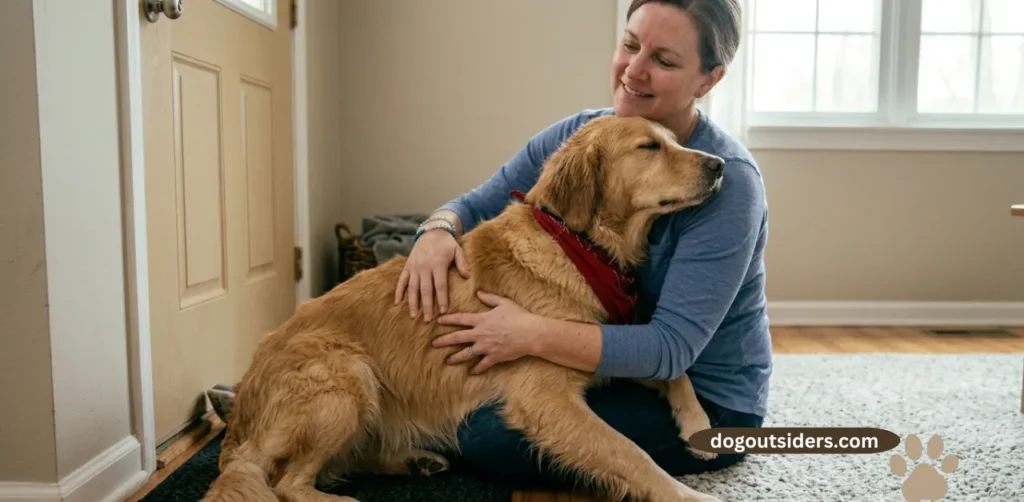
The person who feeds, walks, and trains the dog most consistently almost always becomes the one the dog bonds with most deeply. Familiarity built through meaningful daily interaction is the deciding factor.
How to Make Your Dog Loyal to You: 7 Proven Tips
How to Make Your Dog Loyal to You:
- Spend dedicated one-on-one time with your dog daily.
- Use positive reinforcement — reward good behavior immediately.
- Establish a consistent daily routine your dog can predict.
- Make eye contact and speak calmly to build emotional connection.
- Be the primary provider of food, walks, and play.
- Train together regularly — shared learning deepens the bond.
- Never use punishment-based methods that erode trust.
These seven tips work as a system. Skipping any one of them — especially Tip 7 — reduces the effectiveness of the others. Here’s what each looks like in practice.
Tip 1 — Dedicate Daily One-on-One Time
Set aside 15–30 minutes every day for focused interaction with your dog. Not passive time — not sitting in the same room while you scroll your phone — but active, present engagement.
This could be a game of fetch, a training session, a walk where you’re fully attentive, or even just sitting on the floor giving focused attention.
Consider the example of a family where a stay-at-home parent and a working spouse both own the same dog. The working spouse spent an hour playing with the dog every evening — focused, active play. The stay-at-home parent was physically present all day but mostly passive. The dog bonded more strongly with the working spouse. Presence alone is not enough. Engagement is what builds loyalty.
Tip 2 — Use Positive Reinforcement Consistently
Positive reinforcement means rewarding the behavior you want — immediately after it happens. The reward can be a treat, praise, a quick game, or physical affection, depending on what your dog values most.
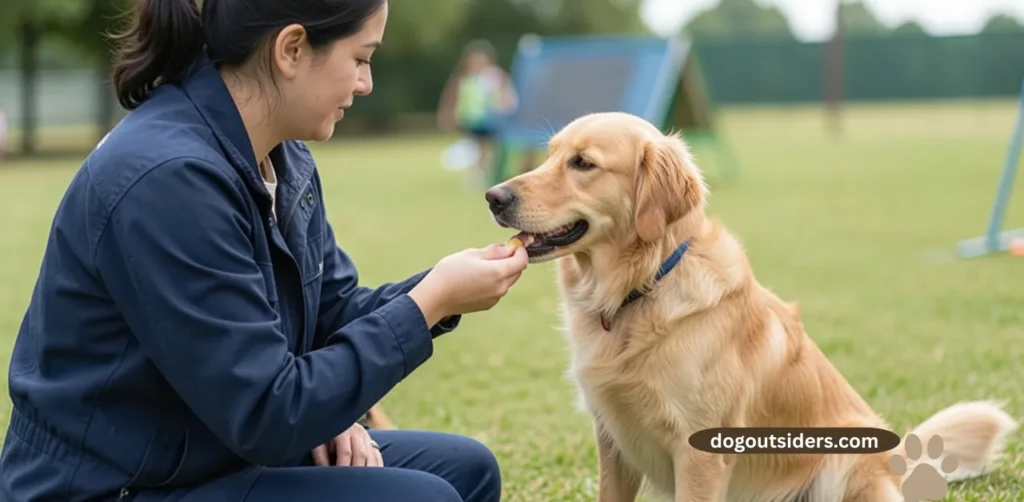
The key word is immediately. Dogs do not connect delayed rewards with specific behaviors. The reward must happen within 1–2 seconds of the desired action.
The American Kennel Club strongly endorses reward-based training as the most effective and relationship-preserving method for building the dog-owner bond. (Source: AKC.org)
Consistency matters just as much as immediacy. Rewarding a behavior sometimes and ignoring it other times creates confusion, not reliability.
Tip 3 — Build a Predictable Daily Routine
Dogs are creatures of pattern. When they can predict your behavior — when walks happen, when meals arrive, when training sessions occur — they relax into trust. You become a stable, reliable presence in their world.
That predictability is itself a form of care. It tells your dog: you can count on me.
Feed, walk, and train at consistent times. Even minor variations in routine can cause mild stress in dogs with anxious attachment styles. The more predictable you are, the more secure your dog feels around you. Learning more about becoming your dog’s pack leader can help you understand how structure reinforces your dog’s trust.
Tip 4 — Make Eye Contact and Speak Calmly
Remember the oxytocin research? You can activate it deliberately.
Practice brief, soft eye contact with your dog during positive moments — during petting, play, or after a successful training command. Don’t stare them down (which dogs read as a threat) — simply hold calm, gentle eye contact for 2–3 seconds, then look away.
Pair this with a calm, low speaking voice. Dogs are highly attuned to vocal tone. A calm, steady voice communicates safety; an urgent, loud, or high-pitched voice can trigger arousal or anxiety that makes bonding harder.
Tip 5 — Be the Primary Provider of Care
Loyalty follows care. The person who feeds, walks, grooms, and takes the dog to the vet most consistently becomes that dog’s primary attachment figure.
If you want to be your dog’s person, take ownership of these tasks. You don’t have to do them exclusively, but you should be the primary driver of each.
This is particularly important in multi-person households. If you’re competing for your dog’s loyalty with a partner or family member, audit who is actually providing the majority of care — and adjust accordingly.
Tip 6 — Train Together Regularly
Training isn’t just about commands. It’s about communication.
Every training session is a structured conversation between you and your dog — one where they learn to pay attention to you, read your cues, and respond. That attentiveness transfers into everyday life as loyalty.
Aim for 3–5 training sessions per week, each lasting just 5–10 minutes. Short, frequent sessions outperform long, infrequent ones for both skill acquisition and bonding. Check out our guide to training games that strengthen your bond for activity ideas you can start today.
Tip 7 — Never Use Punishment-Based Methods
This is the one tip that undoes all the others if ignored.
Punishment — yelling, physical corrections, or intimidation — does not teach your dog what you want. It teaches them that you are a source of fear and unpredictability. Dogs cannot build loyal attachment to someone they fear.
The AVMA’s position on companion animal behavior counseling emphasizes that aversive training methods can damage the human-animal bond and increase fear and anxiety in dogs. (Source: AVMA.org)
If your dog does something wrong, redirect rather than punish. Show them what you want instead of punishing what you don’t.
How to Build Trust With Your Dog (The Foundation of Loyalty)
Loyalty is the outcome. Trust is the foundation.
Trust is built through hundreds of small consistent moments — the times you kept your routine when your dog expected it, the times you stayed calm when they were scared, the times you let them approach at their own pace instead of forcing interaction.
Here’s what trust-building looks like in practice:
- Let them approach you first in new or stressful situations — especially early in the relationship
- Respect avoidance signals — if your dog moves away, don’t chase or force interaction
- Stay calm during stressful events (thunderstorms, vet visits) — your emotional state directly influences theirs
- Follow through on your cues — if you call your dog and they come, always make that a positive experience
How Long Does It Take for a Dog to Bond With Its Owner?
For a puppy raised from a young age, a strong bond typically forms within 3–6 months of consistent positive interaction. For an adult dog rehomed to a new family, expect 2–6 months for a preliminary bond and up to 12 months for full secure attachment — especially if the dog has a history of instability or neglect.
The speed of bonding depends on consistency, not intensity. A calm, predictable owner who shows up daily builds a stronger bond faster than an erratic but enthusiastic owner who lavishes attention irregularly.
Why Is My Dog More Loyal to Someone Else?
Your dog may not seem loyal because the bond hasn’t been properly established yet. Loyalty in dogs develops through consistent positive interaction, shared routines, and being the primary source of care, play, and safety. If another person in the household fulfills these roles more consistently, your dog will naturally orient toward them. Increasing your one-on-one time and leading training sessions helps rebuild that attachment over time.
This is one of the most common — and most painful — dynamics in multi-person households. The dog is not being disloyal. The dog is simply bonded to the person who has, so far, done more of the bonding work.
The practical fix is simple: start doing more. Take over feeding for a few weeks. Lead the training sessions. Be the one at the other end of the leash on walks.
Dogs don’t hold grudges. They respond to what is happening now — not what happened before. You can always rebuild and strengthen the bond.
Rescue Dogs Need a Different Approach
If you’ve adopted a rescue dog that seems distant or avoidant, the approach above needs to be adjusted significantly.
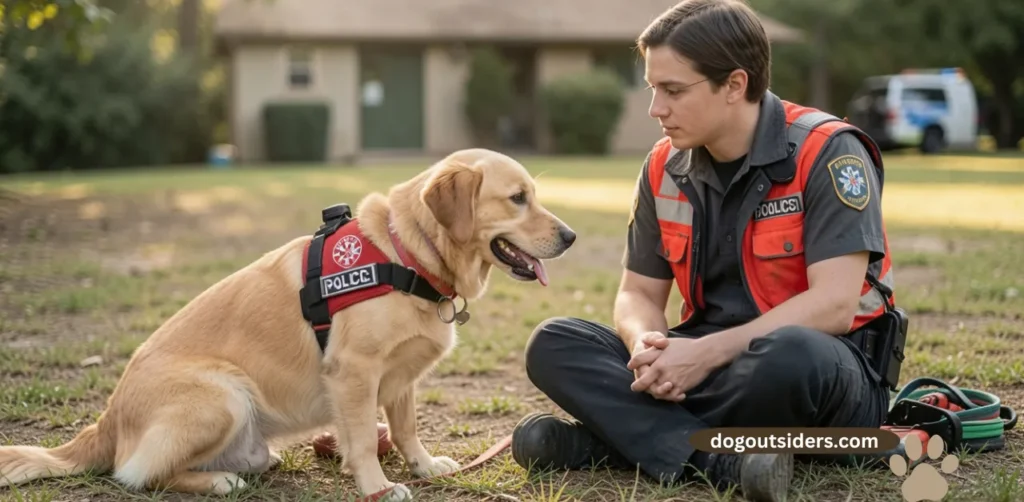
Rescue dogs may have experienced trauma, neglect, or repeated rehoming — all of which create insecure or avoidant attachment patterns. Pushing interaction, overwhelming them with affection, or using punishment-based corrections early in the relationship can set back trust-building by weeks or months.
What works with rescue dogs:
- Let them set the pace — offer proximity but don’t force contact
- Create a consistent safe space (a crate or dedicated corner they can retreat to)
- Use food interaction as a gentle bridge in the early weeks
- Keep the environment calm and predictable — no sudden loud noises or fast movements
- Avoid punishment entirely — this is non-negotiable for traumatized dogs
Our full guide to how to bond with a rescue dog covers the specific stages of rescue dog trust-building in detail.
Common Mistakes That Destroy Dog Loyalty
Even well-intentioned owners make these mistakes — and they quietly erode the bond over time:
❌ Punishing your dog after the fact — If more than 2 seconds have passed, your dog cannot connect the punishment to the behavior. You’re just frightening them for no reason they understand.
❌ Being inconsistent with rules — Allowing a behavior one day and punishing it the next creates anxiety, not trust. Dogs need consistency to feel secure.
❌ Giving attention only when convenient — Dogs notice when they’re only paid attention to on your schedule. Sporadic, attention-when-I-feel-like-it patterns create insecure attachment.
❌ Using the dog’s name when correcting — If “Max” is always followed by “No!” or frustration, your dog will start to avoid responding to their name altogether.
❌ Forcing interactions — Hugging a dog that’s pulling away, picking up a dog that’s trying to leave, or restraining a dog during grooming without counter-conditioning all teach the dog that you override their choices — which undermines trust fundamentally.
❌ Expecting fast results after trauma or neglect — Rescue dogs, anxious dogs, and previously mistreated dogs need significantly more time and patience. Expecting quick bonding sets both of you up for frustration.
Signs Your Dog Is Loyal to You (And How to Keep It That Way)
Signs your dog is loyal include following you from room to room, making frequent eye contact, leaning against you, greeting you enthusiastically after absence, checking back on you during outdoor activities, and sleeping near you. A loyal dog will also show mild anxiety when you leave and visible relief when you return. These behaviors signal secure attachment, which is the foundation of genuine canine loyalty.
Loyalty behaviors vs. obedience behaviors — how to tell the difference:
| Behavior | Loyalty Signal | Obedience Signal |
|---|---|---|
| Follows you room to room | ✅ Loyalty — voluntary proximity | ❌ Not obedience-related |
| Sits on command | ❌ Not loyalty-related | ✅ Trained response |
| Checks back during off-leash walks | ✅ Loyalty — voluntary attentiveness | ❌ Not obedience-related |
| Comes when called | Could be either — depends on motivation | ✅ Trained recall |
| Seeks physical contact unprompted | ✅ Loyalty — attachment-driven | ❌ Not obedience-related |
| Stays calm when you’re calm | ✅ Loyalty — emotional attunement | ❌ Not obedience-related |
Use this table to honestly assess where your dog currently sits. Loyalty behaviors are voluntary — they happen because the dog wants to be near you, not because they’ve been trained to comply.
Understanding why your dog follows you everywhere can help you interpret these signals more accurately.
Monthly Dog Loyalty Habits Checklist
Use this checklist each month to maintain and strengthen your dog’s loyalty:
- Daily one-on-one engaged playtime at least 5 days this week
- 3–5 positive reinforcement training sessions (5–10 minutes each)
- Consistent feeding, walk, and bedtime routine maintained
- At least 3 calm eye contact moments practiced this week
- Dog led all grooming sessions with positive reinforcement
- No punishment-based corrections used — only redirection
- Dog’s safe space (crate or bed) kept available and respected
- One new activity or game introduced to maintain novelty and engagement
- Dog’s stress signals (yawning, lip-licking, avoidance) acknowledged and respected
Your Dog Already Wants to Bond With You
Canine loyalty isn’t something you force. It’s something you earn — through consistency, kindness, and understanding how your dog experiences the world.
The seven tips in this guide aren’t complicated. But they require showing up for your dog every day in small, intentional ways. Over time, those moments accumulate into something real — a dog that chooses you, checks on you, and settles near you not because they’re trained to, but because you’ve become their anchor.
Bookmark this guide and revisit the monthly checklist regularly — it’s the easiest way to keep track of whether you’re maintaining the habits that build lasting loyalty.
And if your dog is a rescue, or if the bond feels like it’s starting from zero, explore our in-depth resource on reading your dog’s body language — understanding what your dog is communicating is one of the fastest ways to accelerate trust.
Frequently Asked Questions About Dog Loyalty
Make your dog loyal by spending consistent daily one-on-one time, using positive reinforcement training, establishing a predictable routine, and being the primary provider of food, walks, and play. Loyalty is built through repeated meaningful interaction over time — not through a single dramatic gesture. Start by leading one training session per day and taking over your dog’s feeding routine this week.
Your dog likely isn’t disloyal — the bond simply hasn’t been fully established yet. Dogs orient toward whoever provides the most consistent care, play, and positive interaction. If someone else in your household fulfills these roles more frequently, your dog will naturally gravitate toward them. The fix is straightforward: increase your one-on-one time, take over daily care tasks, and lead your dog’s training sessions consistently.
Dogs choose their primary person based on who provides the most consistent care, positive interaction, and emotional security. Frequent calm eye contact, a steady speaking tone, regular play, and leading training sessions all strengthen a dog’s attachment to a specific person. The person who is most predictably present and meaningfully engaged in the dog’s daily life almost always becomes the dog’s primary loyalty figure.
Feeding alone does not create lasting dog loyalty. Food creates a positive association, but true canine loyalty requires consistent play, training, emotional attunement, and shared routines — not just meals. Research shows dogs bond most strongly with whoever engages them most meaningfully. Feeding is a useful bonding tool only when paired with calm interaction during meal preparation and delivery, not as a standalone strategy.
Puppies typically form a strong bond within 3–6 months of consistent positive interaction. Adult dogs rehomed to a new family usually develop a preliminary bond within 2–4 months, with full secure attachment taking up to 12 months — especially for rescue dogs with a history of trauma or instability. Consistency matters more than intensity: daily calm engagement builds the bond faster than irregular but enthusiastic attention.
You cannot train loyalty the same way you train a “sit” command — loyalty is an emotional bond, not a conditioned behavior. However, consistent training sessions are one of the most effective ways to build loyalty because they create structured communication, attentiveness, and shared success between dog and owner. Positive reinforcement training builds trust, and trust is the foundation from which genuine canine loyalty grows naturally.
Signs of a loyal dog include following you from room to room, making frequent unprompted eye contact, leaning against you, greeting you enthusiastically after separation, checking back on you during off-leash activities, and choosing to sleep near you. These behaviors reflect secure emotional attachment — the dog is near you by choice, not by command. A loyal dog also shows mild distress when you leave and clear relief when you return.