You adore your little chihuahua. You’d do anything to keep them happy, healthy, and safe. But what if some of the things you’re doing every single day — out of love — are actually making things worse?
Chihuahuas are one of the most misunderstood dog breeds on the planet. They’re tiny, they’re feisty, and they come with a very specific set of needs that most new owners don’t find out about until something goes wrong.
As a dog behavior consultant who has worked with hundreds of small breed owners over the past decade, I’ve watched well-meaning chihuahua moms unknowingly create anxiety, aggression, and health problems — simply because nobody warned them.
That changes today.
Here are 8 things you should never do with a chihuahua — and exactly what to do instead.
#1 — Never Let Them Jump Off High Furniture
This one seems harmless. Your chi leaps off the couch like they own the place, and it’s honestly adorable. But here’s what’s happening behind the scenes.
Chihuahuas have fragile, slender leg bones — especially their patellas (kneecaps). According to the American Kennel Club, chihuahuas are one of the breeds most prone to luxating patella, a condition where the kneecap slips out of place. Repeated high jumps accelerate this damage dramatically.
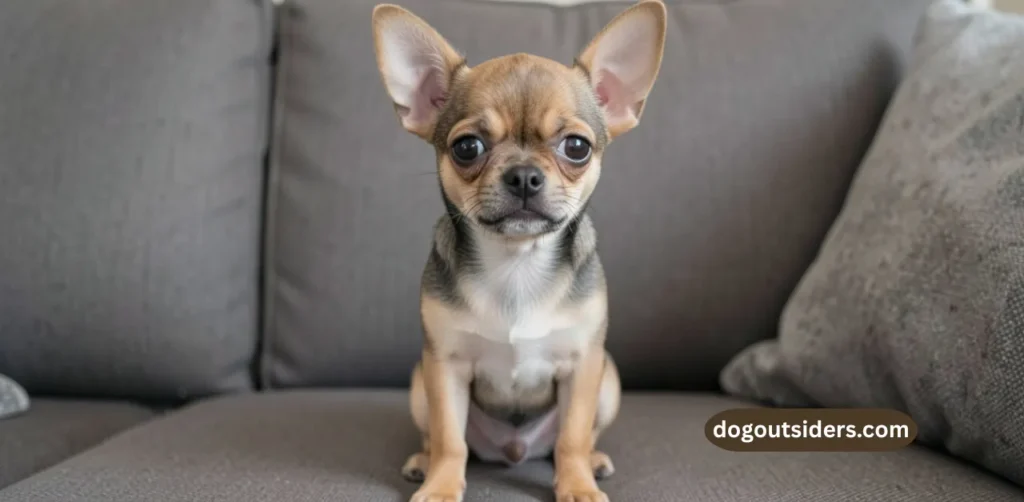
“I didn’t think twice about letting my chi, Bella, jump off the bed every morning,” says Maria, a chihuahua owner from Texas. “By age 4, she needed a $3,000 surgery. The vet told me the daily jumps were a major factor.”
What to do instead: Invest in small pet stairs or a ramp. They cost $15–$40 and could save you thousands in vet bills — and your dog a lifetime of pain.
Pro Tip: If your chihuahua already jumps constantly, redirect them with stairs training using high-value treats. It takes less than a week.
#2 — Never Skip Socialization As a Puppy
This is the mistake that creates the stereotypical “aggressive little chihuahua.” The one that lunges at strangers, barks at other dogs, and bites visitors. Sound familiar?
Chihuahuas have a critical socialization window between 3 and 14 weeks of age. During this time, their brain is literally wiring itself to understand what is “safe” and what is “dangerous.” If they only meet a handful of people and never experience different environments, they grow up seeing the world as a threat.
Certified animal behaviorist Dr. Patricia McConnell has written extensively about how under-socialized small dogs develop fear-based aggression that is much harder to reverse in adulthood.
What to do instead:
- Introduce your chihuahua puppy to at least 100 different people, sounds, and environments in their first 3 months
- Carry them to crowded places before vaccines are complete (you can hold them safely)
- Enroll in a puppy socialization class specifically designed for small breeds
Remember: a well-socialized chihuahua is a joy. An under-socialized one is a daily stressor.
#3 — Never Ignore Signs of Hypoglycemia
This is the one that can turn fatal fast — and most new chihuahua owners don’t even know it exists.
Hypoglycemia (low blood sugar) is extremely common in chihuahuas, especially puppies under 6 months. Because they’re so small, they have minimal fat reserves and their blood sugar can crash rapidly if they miss a meal, get too cold, or experience stress.
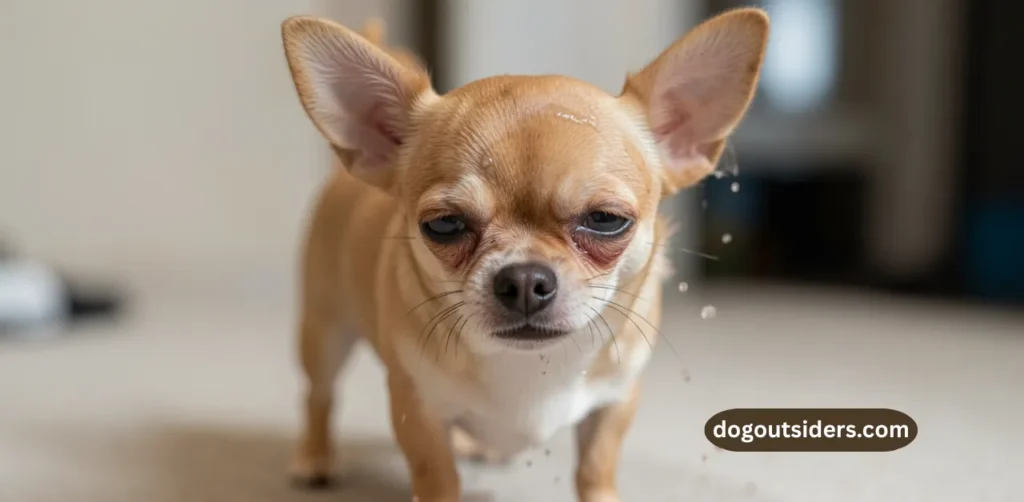
Warning signs include:
- Trembling or shaking
- Weakness or lethargy
- Glassy, unfocused eyes
- Pale gums
- Seizures (in severe cases)
A study published in the Journal of Veterinary Emergency and Critical Care confirmed that toy breed hypoglycemia is one of the most common small dog emergencies, and delay in treatment is the leading cause of fatality.
What to do instead: Feed your chihuahua 3–4 small meals per day instead of one or two large ones. Keep a small tube of Nutri-Cal or corn syrup on hand for emergencies. If your chi collapses or has a seizure, rub a small amount on their gums and rush to the vet immediately.
#4 — Never Let Bad Behavior Slide “Because They’re Small”
Here it is. The big one. The root cause of nearly every problem chihuahua story you’ve ever heard.
Small dog syndrome is not a myth. It’s what happens when owners laugh off growling, let their dog snap at guests, allow jumping on strangers, or never enforce basic rules — because the dog is “too cute and tiny to be serious.”
But to the chihuahua? Everything is very serious.
When you allow a chi to rule the household, demand food on command, guard your lap aggressively, or lunge at other dogs without correction, you’re teaching them that those behaviors work. You’re also letting them carry a mental weight they shouldn’t carry — the stress of thinking they’re in charge.
The American Veterinary Society of Animal Behavior (AVSAB) consistently advises that all dogs, regardless of size, need and benefit from clear, consistent, positive reinforcement-based boundaries.
What to do instead:
- Apply the same rules to your chihuahua that you would to a 60-pound dog
- Use positive reinforcement — reward what you want to see, redirect what you don’t
- Never laugh at growling; it always means something
- Work with a certified trainer if behaviors are already entrenched
#5 — Never Leave Them Alone for Long Stretches Without Preparation
Chihuahuas form deep, intense bonds with their owners. This is one of their most endearing qualities. It is also why separation anxiety is rampant in the breed.
A chihuahua left alone for 8–10 hours regularly, without proper preparation, can develop destructive behaviors, excessive barking, self-harm (licking paws raw), and deep anxiety.

Research from the University of Lincoln found that dogs left alone without training or environmental enrichment show significantly elevated stress hormones — and small breeds showed the highest cortisol spikes of all.
What to do instead:
- Practice short separations from puppyhood — leave for 5 minutes, then 10, then 30
- Provide food puzzles and enrichment toys before you leave
- Consider a dog walker or doggy daycare for long work days
- Never make arrivals and departures dramatic — keep them calm and matter-of-fact
#6 — Never Use Harsh Punishment or Yelling
Your chihuahua pees on the rug. Your instinct might be to scold loudly, shake a rolled-up magazine, or rub their nose in it. Please don’t.
Chihuahuas are emotionally sensitive dogs with a strong fear response. Harsh punishment doesn’t teach them what to do — it teaches them to fear you. This erodes trust, worsens anxiety, and often leads to more problematic behaviors, not fewer.
The AVSAB position statement on punishment-based training states that aversive methods “increase aggression, anxiety, and avoidance” in dogs — and this is especially pronounced in small, fear-prone breeds like chihuahuas.
What to do instead: Catch them being good. Reward heavily. Interrupt unwanted behavior calmly with a neutral “uh-oh” or redirect to something appropriate. Chihuahuas are sharp — they learn fast when the approach respects their emotional wiring.
#7 — Never Neglect Their Dental Health
Chihuahuas have one of the worst dental health records of any breed. Their small mouths cause teeth crowding, accelerating tartar build-up, gum disease, and tooth loss.
According to the Cornell University College of Veterinary Medicine, periodontal disease affects up to 80% of dogs by age 3 — and chihuahuas are disproportionately affected because their teeth are too large for their tiny jaws.
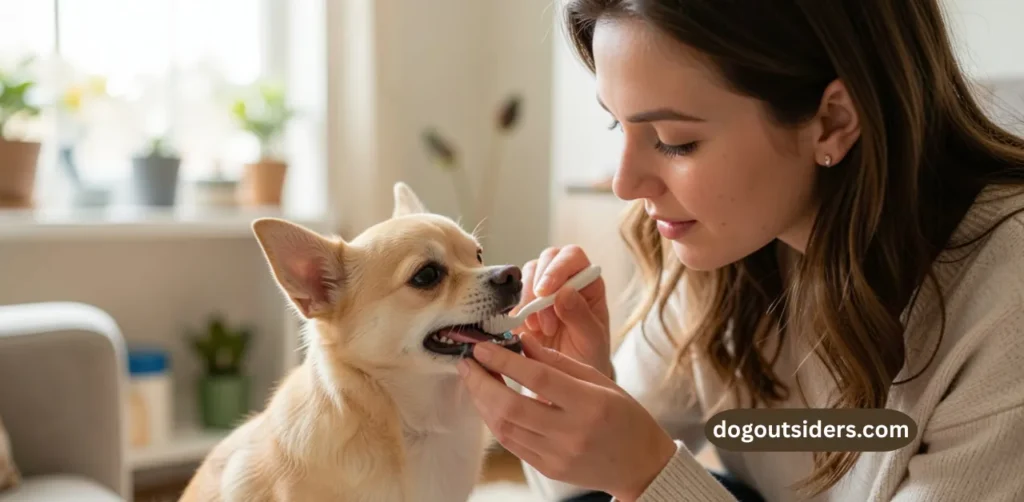
Dental disease doesn’t just affect the mouth. Bacteria from infected gums can travel to the heart, kidneys, and liver, causing serious systemic illness.
What to do instead:
- Brush your chihuahua’s teeth at least 3 times per week using dog-safe toothpaste
- Offer dental chews approved by the Veterinary Oral Health Council (VOHC)
- Schedule annual professional dental cleanings
- Start oral care as early as possible — puppies who get used to brushing rarely resist it
#8 — Never Carry Them Everywhere (Yes, Really)
This one stings, I know. They’re so portable! So snuggly! Why wouldn’t you carry them everywhere?
Because when a chihuahua never has to navigate the world on their own four paws, they lose confidence. They stop learning that they can handle new environments, strangers, or mild stress. Their owner becomes their entire coping strategy — which is both a burden on the dog and exhausting for you.
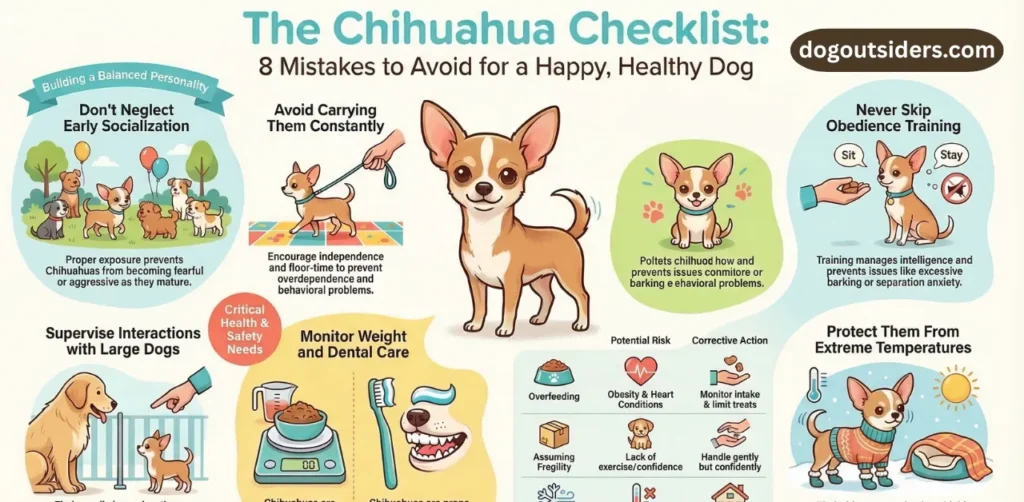
Over-carrying also reinforces resource guarding and lap aggression. If your chi snaps at anyone who comes near you when they’re in your arms, this is likely why.
What to do instead: Let your chi walk. Let them sniff, explore, and problem-solve. Use carrying for genuinely necessary situations — crowded roads, unsafe terrain, post-surgery recovery. For everything else, trust your little dog to be the capable creature they are.
Quick Chihuahua Do’s and Don’ts Recap
| ❌ NEVER | ✅ INSTEAD |
|---|---|
| Let them jump off furniture | Use pet stairs or a ramp |
| Skip socialization | Expose early and often |
| Ignore shaking or weakness | Check blood sugar, call vet |
| Ignore bad behavior | Enforce consistent rules |
| Leave unprepared all day | Train for separation gradually |
| Yell or punish harshly | Use positive reinforcement |
| Skip dental care | Brush 3x weekly |
| Carry everywhere | Let them walk and explore |