Your dog just knocked over a guest, ate something off the sidewalk, and bolted through the front door — again.
Sound familiar? If your dog is running your household instead of the other way around, you are not alone. Most dog owners reach a point where they realize that love alone does not create a well-behaved dog. Structure does.
That is exactly why these 10 basic dog commands you have to try unless you love chaos exist. According to the American Kennel Club, teaching your dog basic obedience commands is one of the most important investments you can make for their safety, your sanity, and your relationship. These 10 commands give your dog a language they understand and give you the tools to actually use it.
You do not need a professional trainer to get started. You need a plan, some patience, and a treat pouch.
10 Basic Dog Commands You Have to Try Unless You Love Chaos
Before diving into each command, here is something most guides skip entirely: the order matters.
What Order Should You Teach These Commands?
Start with the easiest and most immediately useful commands first. Build from there.
Here is the recommended sequence:
- Sit
- Down
- Stay
- Come
- Leave It
- Wait
- Off
- Heel
- Place
- No / Drop It
Teaching in this order builds on each previous lesson. Additionally, it prevents confusion because each new command reinforces skills already learned. For breed-specific sequencing advice, see these essential commands to teach your Labrador first — the logic applies across most breeds.
Start Here: The 3 Foundation Commands Every Dog Needs First
These three commands form the backbone of all dog training. Therefore, they come first, and they deserve the most practice time.
Command 1: Sit
Why it matters: Sit is the gateway command. Once your dog understands “sit,” every other command becomes easier to teach.
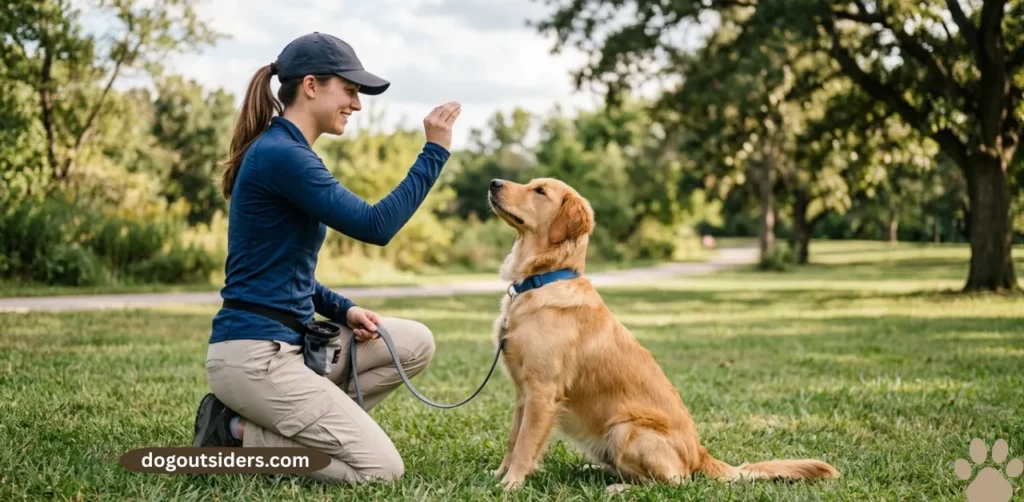
How to teach it:
- Hold a treat close to your dog’s nose
- Slowly move your hand upward — their bottom will naturally lower
- The moment their bottom touches the floor, say “Sit,” reward, and praise
- Repeat 5–10 times per session
Hand signal: Hold your palm facing upward and raise your forearm. Dogs learn visual cues faster when you pair them consistently with verbal commands. According to VCA Animal Hospitals, dogs process hand signals faster than verbal cues because they are naturally more attuned to body language.
Command 2: Down
Why it matters: Down is a calming command. It is harder than Sit because it requires submission — so be extra patient.
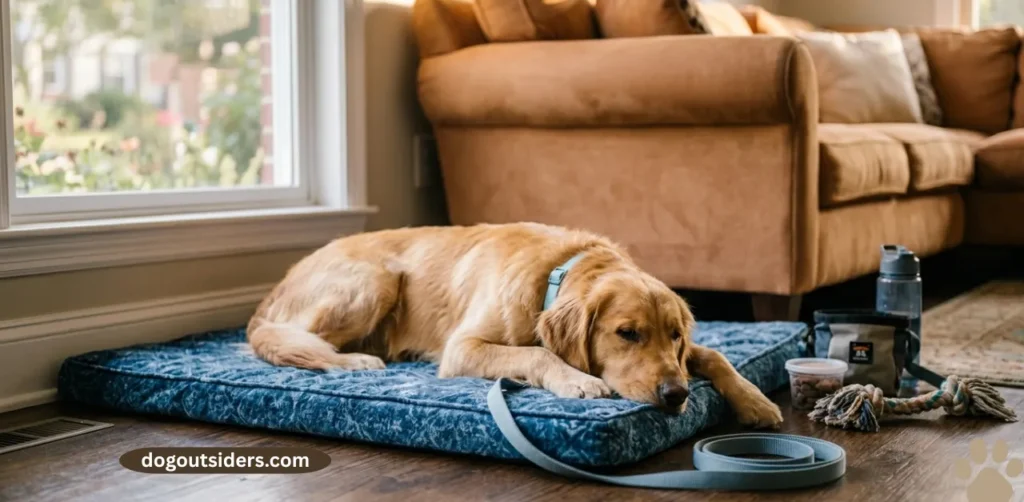
How to teach it:
- Ask for Sit first
- Hold a treat in your closed fist near the floor between their front paws
- Slowly move your hand toward the floor — their elbows will follow
- Say “Down” the moment their belly touches the floor, then reward
Hand signal: Point your index finger downward and lower your whole arm toward the floor.
Command 3: Stay
Why it matters: Stay keeps your dog safe — at doors, on sidewalks, and in crowded spaces.
How to teach it:
- Ask for Sit or Down first
- Open your palm toward your dog like a stop signal and say “Stay”
- Take one step back, pause, then return and reward before they move
- Gradually increase distance and duration over several sessions
Key rule: Always return to your dog to reward — do not call them to you at first. This teaches them that Stay means stay until YOU release them.
The Commands That Could Save Your Dog’s Life
These next three commands move beyond manners. They are genuine safety commands — and every dog needs them regardless of breed or size.
Command 4: Come (Recall)
Why it matters: A reliable recall can prevent your dog from running into traffic, approaching an aggressive dog, or disappearing entirely.
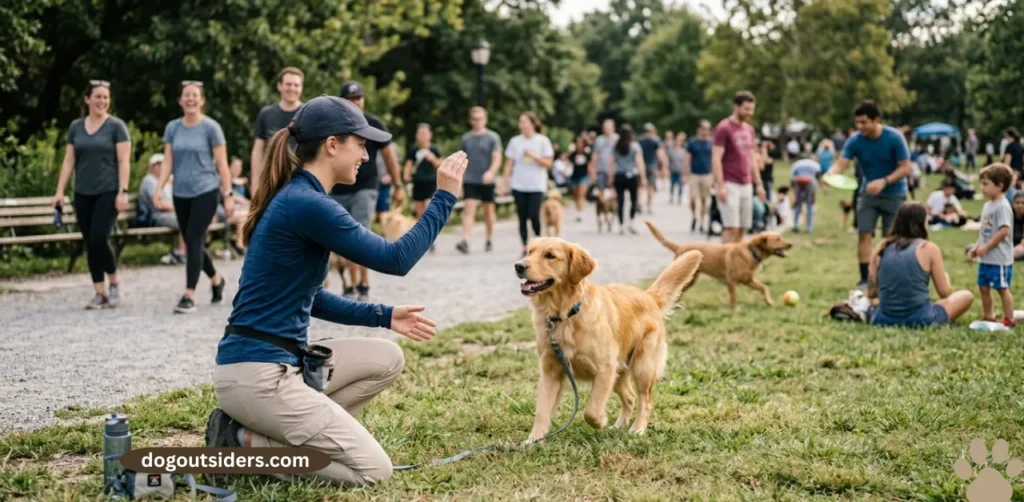
How to teach it:
- Get on your dog’s level and say “Come” in a happy, inviting tone
- Reward generously every single time they come — this command must always equal something wonderful
- Practice in low-distraction areas first, then gradually add more distractions
- Never call your dog to you for something unpleasant — always go to them instead
Critical tip: If your dog comes back to you after running off, resist every urge to scold them. Doing so teaches them that returning to you = punishment. Always reward the return, no matter what.
Many owners of strong-willed or independent breeds find recall particularly challenging — these training tips for strong-willed dogs offer targeted strategies that apply broadly.
Command 5: Leave It
Why it matters: Leave It prevents your dog from eating dangerous objects, approaching hazards, or engaging with things they should not touch.
How to teach it:
- Place a treat in your closed fist and let your dog sniff and paw at it
- The moment they stop trying and back away, say “Leave it” and reward from your OTHER hand
- Progress to treats on the floor covered by your foot, then uncovered
- Eventually, practice with real-world objects on walks
Hand signal: Move your hand in a horizontal sweeping motion across your body — like brushing something away.
Command 6: Wait
Why it matters: Wait is different from Stay. Wait means “pause temporarily” — ideal for doorways, stairs, and cars.
How to teach it:
- Hold your hand up at the threshold (door, gate, car door) and say “Wait”
- Open the door slightly — if they push through, close it calmly and repeat
- The moment they pause, even briefly, reward and give a release cue like “OK” or “Free”
- Gradually open the door wider before releasing them
Manners Matter: Commands That Make Daily Life Easier
These four commands address the everyday chaos most dog owners struggle with most: jumping, pulling, and general household mayhem.
Command 7: Off
Why it matters: Off stops jumping on people, furniture, and counters — one of the top complaints among dog owners.
How to teach it:
- When your dog jumps up, turn away and cross your arms
- Say “Off” calmly — do not push them away (pushing is engagement and they love it)
- The moment all four paws hit the floor, reward immediately
- Practice with guests by coaching them to do the same thing
Never knee your dog in the chest or yell. Both responses reward the behavior with attention and can cause injury. For house training steps that naturally complement this command, read these house training steps that work for any breed.
Command 8: Heel
Why it matters: Heel teaches your dog to walk calmly beside you — no pulling, no zigzagging, no chaos on the leash.
How to teach it:
- Hold a treat at your left hip — your dog’s nose should be at your side
- Say “Heel” and take one step forward
- If they stay beside you, reward
- Gradually extend the number of steps before rewarding
- Stop completely whenever they pull — movement is the reward, not the destination
Hand signal: Pat your left thigh with your hand as you begin walking.
Command 9: Place
Why it matters: Place is the command most trainers wish more owners knew. It tells your dog to go to a specific mat or bed and stay there — perfect for mealtimes, guests, and general household calm.
How to teach it:
- Point to the mat and say “Place”
- Lure your dog onto it with a treat
- Reward the moment all four paws are on the mat
- Ask for a Down once they are comfortable on it
- Gradually increase the duration they stay before releasing them
Many trainers consider Place to be the single most transformative command for daily household peace. It eliminates begging, door-rushing, and guest chaos simultaneously.
Command 10: No / Drop It
Why it matters: No sets a clear boundary. Drop It releases objects from your dog’s mouth — critical for safety.
How to teach Drop It:
- Let your dog hold a toy, then offer a high-value treat in exchange
- Say “Drop it” as they release the toy, then reward
- Practice regularly so it becomes automatic
Important: Never chase your dog to get something out of their mouth. Chasing is a game, and they will win.
Why Your Dog Ignores Commands and How to Fix It
Your dog is not being stubborn on purpose. However, there are specific reasons training stops working — and they are all fixable.
Training Session Length: How Long Is Too Long?
According to PetMD, dog training sessions should be kept short and frequent — not long and infrequent.
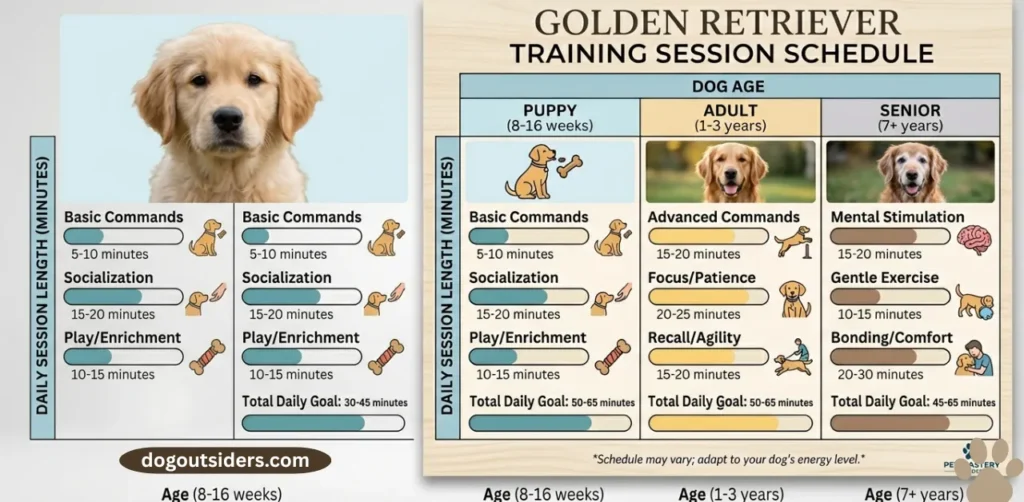
Recommended session structure:
| Dog Age | Session Length | Sessions Per Day |
|---|---|---|
| 8–12 weeks | 3–5 minutes | 3–4 times |
| 3–6 months | 5–10 minutes | 2–3 times |
| 6+ months | 10–15 minutes | 2 times |
| Adult dogs | 15–20 minutes | 1–2 times |
Short, focused sessions produce dramatically better results than one long daily drill. Additionally, always end on a success — even if that means asking for a simple Sit at the end of a frustrating session.
Building this kind of structured daily routine is exactly what a solid first-year training plan for new dog owners looks like in practice.
Common Mistakes That Undo Your Dog’s Training
Use this checklist to audit your current approach:
- ☐ Repeating commands multiple times — Say it once. Repeating “sit, sit, SIT” teaches your dog that the first word is optional
- ☐ Training only at home — Commands practiced only in one location will only work in that location. Practice in parks, on sidewalks, and at friends’ houses
- ☐ Inconsistent reward timing — Reward within 2 seconds of the correct behavior or the lesson is lost
- ☐ Expecting too much too fast — Each command needs hundreds of successful repetitions before it becomes reliable
- ☐ Punishing after the fact — If you did not catch your dog in the act, the correction means nothing to them
For a deeper dive into what derails progress, these mistakes that slow down your dog’s training are worth reading before your next session.
Conclusion:
You have everything you need to get started. These 10 basic dog commands are not about controlling your dog — they are about giving your dog a way to understand what you expect and a way to succeed every single day.
Start with Sit. Build from there. Celebrate every win, no matter how small.
Save this article so you always have the command sequence and training schedule table handy. And if a friend just brought home a new dog, share it with them — because no one should have to figure this out alone.
For more structured training support, explore the full library of breed-specific and behavior-based guides at dogoutsiders.com.
Frequently Asked Questions About Basic Dog Commands
Every dog should know sit, down, stay, come, leave it, wait, off, heel, place, and no or drop it. These 10 basic dog commands cover safety, household manners, and daily obedience. Start with sit and stay, then build toward recall and place. These commands work for puppies and adult dogs alike. Begin with one command per week for best results.
Sit is the best first command for any dog. It is the simplest, most immediately useful, and serves as the foundation for every other command. Once your dog reliably sits on cue, down, stay, and recall all become easier to teach. Practice sit in short 3–5 minute sessions with high-value treats for fastest results.
Most dogs begin responding to basic commands within 1–2 weeks of consistent daily training. However, true reliability — where your dog responds every time, in any location — typically takes 4–8 weeks of practice. Short, frequent sessions of 5–15 minutes outperform long occasional ones. Consistency matters far more than session length in dog training.
Dogs often stop responding because of inconsistent reward timing, lack of practice in new environments, or because they are overtired or overstimulated. This is called response decay — not stubbornness. Return to basics, reduce distractions, and reinforce the command heavily again for a few days. Always practice basic dog commands in multiple locations, not just at home.
Yes — pairing hand signals with verbal commands significantly speeds up training. Dogs naturally read body language faster than spoken words. Use the same hand signal every time you give each verbal cue so your dog learns both simultaneously. This also means your dog can respond even in loud or high-distraction environments where they may not hear you clearly.
Yes, older dogs absolutely learn basic commands — the idea that old dogs cannot learn new tricks is a myth. Adult dogs often have longer attention spans than puppies, which actually helps. They may take slightly longer to unlearn old habits, but with positive reinforcement and patience, most adult dogs learn all 10 basic dog commands successfully. Start with sit and come first.
Sit is the single most important first command because it forms the foundation for all other training. It is also the easiest for most dogs to learn with positive reinforcement. Once sit is solid, you build stay, then down, and then recall. Teaching basic dog commands in the right order prevents confusion and accelerates the entire training process significantly.