Your Husky is gorgeous. Those piercing blue eyes. That wolf-like presence. The personality that made you fall in love instantly.
But right now, that same gorgeous dog is howling at 3 AM, digging craters in your backyard, ignoring every command you give, and just escaped from the yard for the third time this month.
You’re exhausted. You’re frustrated. And you’re secretly wondering if you made a terrible mistake.
Here’s what nobody told you: every single one of those behaviors makes perfect sense. Your Husky isn’t broken — they’re doing exactly what 3,000 years of sled dog genetics programmed them to do. According to the American Kennel Club, Siberian Huskies were bred for endurance, independence, and pack cooperation in extreme Arctic conditions. Veterinary behaviorists consistently emphasize that most Husky behavior problems stem from unmet breed-specific needs, not disobedience.
These 7 common behavior problems in Siberian Huskies and how to fix them decode each issue from its genetic root — and give you breed-specific solutions that work with your Husky’s wiring instead of against it. For foundation training strategies, our guide on training techniques for strong-willed Husky puppies pairs perfectly with these fixes.
Let’s decode your Husky.
Why Siberian Huskies Develop Behavior Problems
Before we fix each problem, you need to understand the breed you chose.
Siberian Huskies are not golden retrievers. They weren’t bred to obey. They were bred to think independently, run for hours without stopping, work cooperatively in a pack, and survive in some of the harshest conditions on earth.
As a result, this breed comes hardwired with:
- Extreme endurance — they need far more physical and mental exercise than most owners expect
- Pack mentality — they were never meant to be alone. Isolation triggers anxiety and distress.
- Independent decision-making — sled dogs had to assess ice conditions and choose paths on their own. This translates to “selective listening” in a home environment.
- Strong prey drive — they hunted small animals to supplement their diet in the Arctic
- Vocal communication — howling was how they communicated across vast distances with their pack
Every single behavior problem below traces directly back to one of these traits. When you understand the why, the fix becomes obvious.
Normal Husky vs. Problem Husky
It’s worth noting: some “behavior problems” are simply normal Husky personality traits. A Husky that howls sometimes, digs occasionally, and has an opinion about commands isn’t a problem dog — they’re a Husky. The behaviors become problems when they escalate in frequency, intensity, or destructiveness to the point where they compromise the dog’s safety or the owner’s quality of life.
Problem 1 — Excessive Howling and Vocalization
Why This Happens
Huskies don’t bark much. Instead, they howl, “talk,” whine, and produce an extraordinary range of vocalizations. This traces directly to their pack communication heritage. In the Arctic, howling carried across vast distances between pack members.
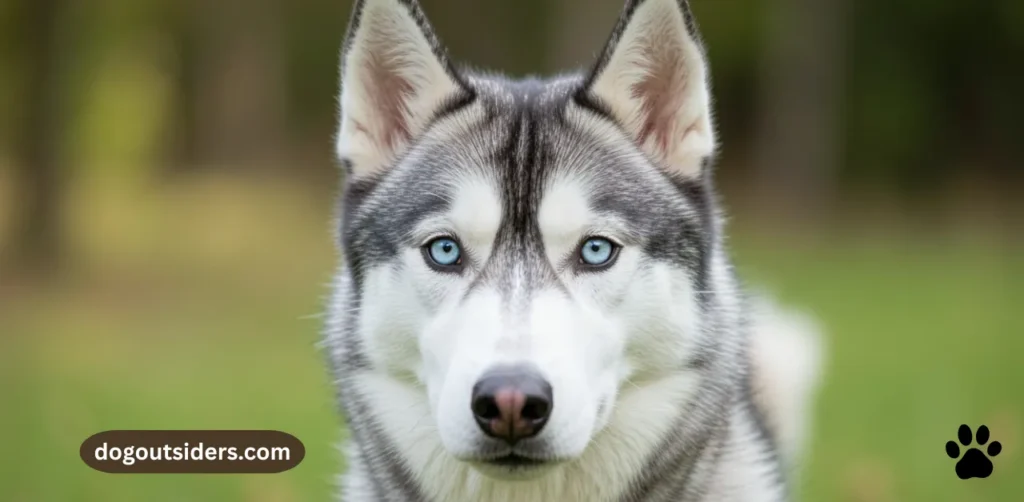
In a home setting, excessive howling typically signals:
- Boredom — the most common trigger
- Separation distress — howling when left alone
- Attention-seeking — learned behavior reinforced by owners responding
- Response to triggers — sirens, other dogs, or high-pitched sounds
How to Fix It
- Increase mental stimulation — a bored Husky howls. A mentally tired Husky sleeps. Add puzzle feeders, nose work, and training sessions daily.
- Don’t reward howling with attention — even negative attention (“quiet!”) reinforces vocalization. Wait for silence, then reward.
- Teach a “quiet” cue — wait for a natural pause in howling, mark it (“yes!”), treat immediately. Build from there.
- Identify and manage triggers — if sirens trigger howling, use desensitization training with recorded sounds at low volume, gradually increasing.
- Exercise before expected triggers — a physically and mentally tired Husky is less reactive to noise triggers.
Real-world scenario: Many Husky owners in apartment buildings report that replacing the food bowl with a puzzle feeder and adding a 15-minute morning nose work game reduced daytime howling by over 50% within two weeks.
Problem 2 — Escape Artistry
Why This Happens
Huskies are legendary escape artists. They climb fences, dig under barriers, open latches, and squeeze through gaps that seem physically impossible. This traces to their nomadic heritage — sled dogs covered vast distances daily. A Husky stuck in a yard with no job experiences a compulsive drive to go somewhere.
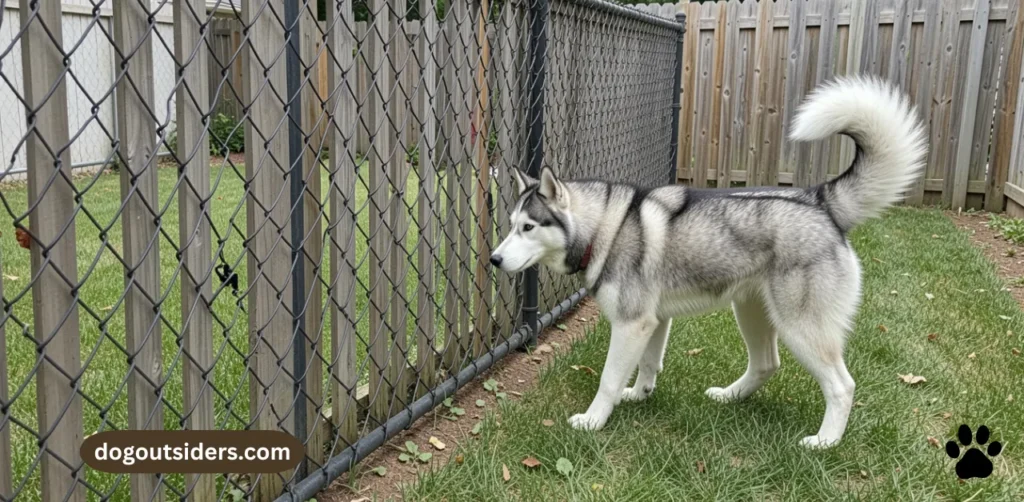
According to PetMD’s Siberian Husky breed profile, Huskies have an exceptionally strong roaming instinct that requires secure containment and adequate exercise to manage.
How to Fix It
- Audit your containment — 6-foot minimum fence height. Bury hardware cloth 12–18 inches below the fence line to prevent digging under. Remove climbable objects near fence lines.
- Address the root cause — escape behavior is almost always driven by boredom, insufficient exercise, or social isolation. Fix those first.
- Add a coyote roller — rolling bars installed along fence tops prevent climbing over
- Never leave unsupervised in an unfenced area — Huskies should NEVER be trusted off-leash in open spaces unless in a fully enclosed area
- Provide enrichment in the yard — digging pits, frozen Kongs, and interactive toys make the yard worth staying in
For ideas on creative kennel setups that prevent escape behavior, secure enclosure design makes a massive difference for this breed.
Problem 3 — Destructive Chewing and Digging
Why This Happens
Destruction in Huskies is almost never spite. It’s boredom, anxiety, or insufficient exercise — period.
Huskies were built to run 100+ miles per day. A Husky that gets a 20-minute walk and then sits inside all day has an enormous energy surplus. That energy will find an outlet — and it usually finds your furniture, shoes, drywall, or garden.
Digging serves a similar purpose. In the Arctic, Huskies dug to create cool resting spots and to cache food. In your yard, they dig because the instinct is strong and they have nothing better to do.
How to Fix It
- Increase daily exercise dramatically — most adult Huskies need 1.5–2+ hours of vigorous activity per day. Running, hiking, biking, or dog sports.
- Provide appropriate chew outlets — Nylabones, frozen stuffed Kongs, bully sticks, and durable rubber toys give the jaw something legal to work on
- Crate train for unsupervised periods — a properly introduced crate prevents destruction when you can’t supervise
- Create a designated digging zone — bury treats in a specific sandbox area and reward digging there. Redirect digging away from forbidden zones.
- Rotate toys daily — the same toys every day become invisible. Rotate a collection so there’s always something novel.
According to the VCA Hospitals destructive behavior guide, destructive chewing in working breeds is most effectively treated by addressing the underlying cause (boredom, anxiety) rather than punishing the symptom.
Problem 4 — Separation Anxiety
Why This Happens
Huskies are pack animals to their core. They were never designed to be alone. In a sled dog team, isolation from the pack was the most distressing experience possible.
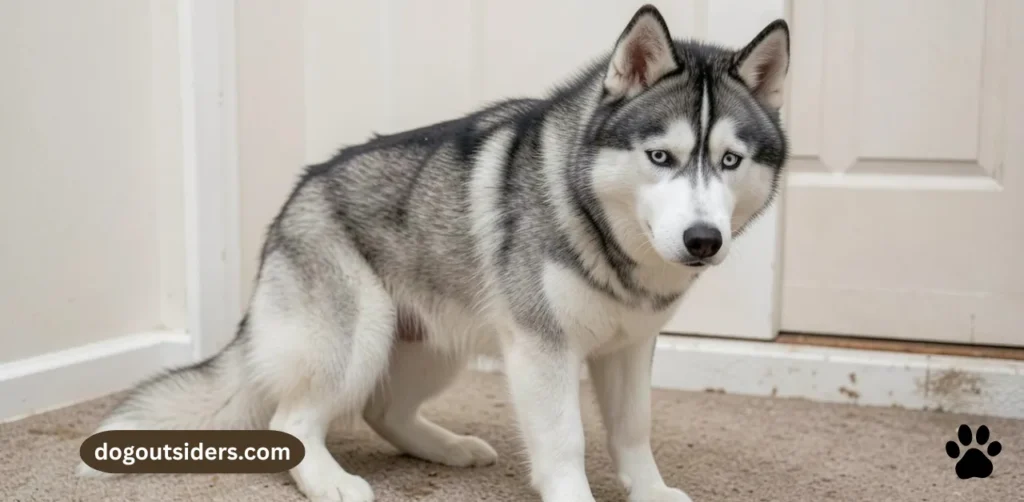
When left alone, many Huskies experience genuine distress — not just mild discomfort. Symptoms include:
- Destructive behavior concentrated near exits (doors, windows)
- Excessive howling or whining that starts within minutes of departure
- House soiling despite being fully house-trained
- Drooling, panting, or pacing
- Self-harm (scratching at doors/crates until paws bleed)
How to Fix It
Separation anxiety requires a systematic desensitization protocol:
- Practice short departures — pick up your keys, walk to the door, and come right back. Repeat until this produces zero reaction.
- Build duration gradually — 30 seconds outside, then 2 minutes, then 5, then 15. Never jump ahead faster than your dog can handle.
- Remove departure cues — put on shoes and grab keys at random times without leaving. Break the association between cues and actual departure.
- Provide a high-value distraction — a frozen Kong or puzzle toy given ONLY when you leave creates a positive association with departure.
- Keep departures and arrivals boring — don’t make a dramatic exit or an excited return. Casual = calm.
- Consider calming aids — veterinary-approved options include Adaptil diffusers, calming supplements, and in severe cases, prescription medication from your vet.
Real-world scenario: Many Husky owners who adopted from rescues report that systematic desensitization — practiced for just 10 minutes daily — reduced separation anxiety symptoms dramatically within 3–4 weeks, even in dogs with established anxiety patterns.
Regular calming routines also help — even grooming routines that reduce stress and anxiety apply principles that work across breeds when adapted to the individual dog.
Problem 5 — Extreme Leash Pulling
Why This Happens
Your Husky pulls on the leash because they were literally born to pull. Pulling weight across frozen tundra was their job for thousands of years. The harness-and-pull motion is genetically reinforced.
In addition, Huskies process the world through movement. Standing still on a leash while you check your phone is physically uncomfortable for a breed designed for constant forward motion.
How to Fix It
- Use a front-clip harness — back-clip harnesses engage the sled-pulling instinct. Front-clip harnesses redirect the dog toward you when they pull.
- Stop when they pull — the instant the leash goes taut, become a tree. Don’t move. The dog learns: pulling = stop; loose leash = forward.
- Reward position, not just walking — treat your Husky every few steps when they’re beside you. They need to learn that your side is the high-reward zone.
- Change direction frequently — random turns keep the Husky engaged with you rather than scanning ahead.
- Consider structured “run time” — let the Husky pull appropriately during designated activities (bikejoring, skijoring, canicross) with a proper sled harness. This satisfies the pull drive in the right context.
Problem 6 — Selective Deafness
Why This Happens
“Selective deafness” — when your Husky looks directly at you, clearly hears the command, and chooses to walk away — isn’t stubbornness. It’s independence.
Sled dogs had to make autonomous decisions on the trail. A dog that blindly followed every human command on thin ice would die. Huskies evaluate whether a command serves a purpose. If they don’t see the point, they opt out.
This can be deeply frustrating. But understanding that it’s intelligence, not defiance, changes your entire approach.
To understand more about how breed intelligence affects trainability, it’s worth recognizing that highly intelligent breeds often appear “stubborn” simply because they require motivation, not just instruction.
How to Fix It
- Make every command worthwhile — always have high-value rewards available. If coming when called produces nothing, a Husky sees no reason to bother.
- Practice recall in low-distraction environments first — build a strong response indoors before testing outdoors.
- Use a long line (not off-leash) — Huskies should almost never be trusted off-leash in unfenced areas. A 30-foot long line allows freedom with safety.
- Build engagement — make yourself more interesting than the environment through play, unpredictability, and high-value rewards.
- Never repeat commands endlessly — saying “come” ten times teaches your Husky that the first nine don’t matter. Say it once. If no response, use the long line to guide them back, then reward.
Problem 7 — High Prey Drive
Why This Happens
Siberian Huskies survived in the Arctic partly by hunting small animals. This prey drive remains strong and is one of the hardest behaviors to modify because it’s deeply instinctive.
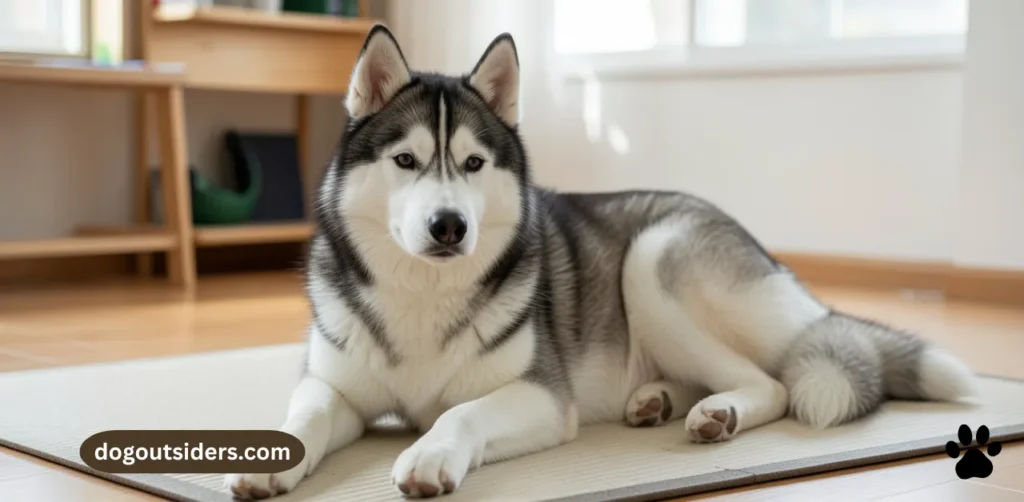
Prey drive manifests as intense fixation on cats, squirrels, rabbits, small dogs, and even birds. The dog may lunge, chase, or — if the animal is reached — injure or kill it. According to the ASPCA’s behavioral resources, predatory behavior is not the same as aggression and requires different management strategies.
How to Fix It
- Management is the priority — secure fencing, leashed walks, and supervised interactions with small animals are non-negotiable
- Teach a bulletproof “leave it” — practice with low-value distractions first, building to higher triggers gradually
- Use threshold training — keep the Husky below reactive distance from prey animals, reward calm observation, and slowly decrease distance over weeks
- Never punish prey drive — punishment doesn’t eliminate instinct. It creates a dog that hides the behavior until they get a chance to act on it unsupervised.
- Provide alternative outlets — flirt poles, tug toys, and lure coursing give the prey drive a legal, safe outlet
- Assess household compatibility honestly — some Huskies with very strong prey drive should not live with cats or small animals. Safety always comes first.
Siberian Husky Behavior Problems: Quick Reference Table
| Problem | Root Cause | Most Common Trigger | Fix Timeframe | Difficulty Level |
|---|---|---|---|---|
| Excessive howling | Pack communication instinct | Boredom, isolation, triggers | 2–4 weeks | Moderate |
| Escape artistry | Nomadic roaming drive | Boredom, insufficient exercise | Immediate (containment) + ongoing (exercise) | Moderate |
| Destructive chewing/digging | Energy surplus, boredom | Under-exercise, no enrichment | 2–3 weeks with proper exercise | Easy–Moderate |
| Separation anxiety | Pack animal isolation distress | Being left alone | 3–8 weeks (systematic desensitization) | Hard |
| Leash pulling | Sled dog pulling instinct | Any leashed walk | 4–8 weeks of consistent training | Moderate |
| Selective deafness | Independent decision-making | Low motivation, no reward | Ongoing (engagement building) | Moderate–Hard |
| High prey drive | Hunting survival instinct | Small animals | Management is permanent; training improves response | Hard |
Screenshot this table. Many Husky owners reference it regularly when working through each behavior.
5 Mistakes That Make Husky Behavior Problems Worse
Even well-meaning owners accidentally reinforce the exact behaviors they’re trying to eliminate. Here’s what to stop doing immediately:
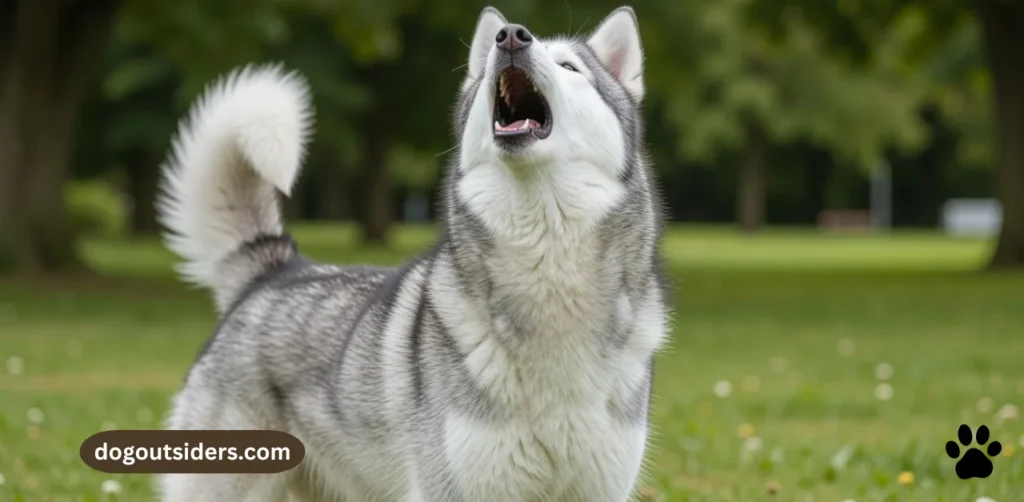
1. Yelling at a howling Husky.
Your Husky interprets yelling as you “howling back.” You’ve just joined the pack chorus. Instead, ignore the howling completely and reward the instant they stop.
2. Punishing destruction after the fact.
Finding a chewed shoe two hours later and scolding your Husky teaches them nothing — they cannot connect past destruction with current punishment. They only learn to fear you, not to stop chewing. Clean it up silently and increase exercise and enrichment.
3. Chasing an escaped Husky.
Running after an escaped Husky triggers their prey-chase instinct — in reverse. You become the prey, and they run faster. Instead, run away from them, use a happy voice, and let their pack instinct bring them to you.
4. Forcing a Husky to “face their fears” during separation anxiety.
Flooding an anxious dog by leaving them alone for hours during early treatment makes anxiety worse, not better. Always build duration gradually with desensitization.
5. Using aversive tools to stop leash pulling.
Prong collars and choke chains suppress the behavior through pain without addressing the sled-pulling instinct. According to the AVMA’s position on humane training, aversive methods increase stress and can escalate to aggression in sensitive breeds. Use a front-clip harness and reward-based training instead.
Your Husky Isn’t the Problem — the Missing Playbook Was
Let’s be honest: nobody told you it would be this hard. Nobody warned you that the beautiful dog in the Instagram photos would howl at emergency vehicles, vault your fence like an Olympic athlete, and chew through a solid door when you left for work.
But here’s the other truth: nobody told you that every single one of those behaviors has a solution. And once you understand that your Husky isn’t misbehaving — they’re just being exactly what they were bred to be — the frustration transforms into something else: direction.
These 7 fixes give you that direction. Start with the one problem that’s causing you the most stress right now. Work on it consistently for two weeks. Then tackle the next one.
If this guide helped you see your Husky differently, save it to your Pinterest board so you can reference it whenever chaos hits. And for more breed-specific guidance, explore our complete guide to training techniques for strong-willed Husky puppies — because early training prevents most of these problems from developing in the first place.
You chose one of the most extraordinary breeds on earth. Now you have the playbook to match.

Jahanzaib
Written by Jahanzaib, a Certified Professional Dog Trainer (CPDT-KA) and Karen Pryor Academy Certified Training Partner (KPA-CTP) with 14 years of experience specializing in German Shepherd and working breed training. Jahanzaib has trained GSDs for obedience, protection sport foundations, and behavior modification, and is a professional member of the Association of Professional Dog Trainers (APDT). They write regularly for dogoutsiders.com on breed-specific training, canine behavior, and working dog management.
This article was reviewed for behavioral accuracy by Dr. Phillip John, DVM, DACVB (Diplomate, American College of Veterinary Behaviorists), specializing in working breed behavioral assessment and positive reinforcement intervention protocols.
Frequently Asked Questions About Husky Behavior Problems
The seven most common behavior problems in Siberian Huskies are excessive howling, escape artistry, destructive chewing and digging, separation anxiety, extreme leash pulling, selective deafness, and high prey drive. Each stems from the breed’s sled dog genetics. Understanding the root cause of each behavior is the first step toward fixing it effectively.
Huskies aren’t hard to train — they’re hard to motivate. Unlike people-pleasing breeds, Siberian Huskies make independent decisions. They need a clear reason to comply with a command. Use high-value rewards, keep training sessions short, and make yourself more interesting than the environment. Engagement before obedience is the key Husky training principle.
Identify the breed-specific root cause first. Most Husky behavior problems trace to unmet exercise needs, boredom, isolation, or genetic instinct. Address the underlying trigger — increase exercise, add mental stimulation, implement desensitization training — rather than punishing symptoms. Positive reinforcement combined with adequate physical activity resolves most Husky behavior issues.
Huskies don’t have more behavior problems — they have breed-specific behavior patterns that clash with typical suburban pet life. Their sled dog heritage creates needs most home environments don’t naturally satisfy. With adequate exercise, mental stimulation, and breed-appropriate training, Siberian Huskies are no more problematic than any other working breed.
Most Siberian Huskies begin showing naturally calmer behavior between ages 2 and 4. However, this varies significantly based on individual temperament, exercise levels, and training history. Huskies never become low-energy dogs — they simply become more manageable. Structured calm training and consistent daily exercise accelerate the timeline regardless of age.
Yes. Teach a “place” or “settle” command by rewarding calm behavior on a designated mat. Start with short durations and build gradually to 30+ minutes. Combine this with adequate daily exercise and mental stimulation. A Husky that receives sufficient physical and mental activity learns to settle willingly. The key is draining energy before expecting calm.
No — Huskies rarely outgrow behavior problems without intervention. In fact, uncorrected behaviors typically worsen with age as the dog practices them repeatedly. Early training, consistent exercise, and breed-specific management strategies are essential for resolving Siberian Husky behavior problems permanently. Start addressing issues as soon as they appear for the fastest results.