She’s four pounds of fury.
Your small dog lunges at every stranger who walks past your apartment door. She bares her teeth at your mother-in-law. She growled at a toddler at the park last weekend, and the look that child’s parent gave you still makes your stomach turn.
You’ve tried saying “no” firmly. You’ve tried picking her up and removing her from the situation. You’ve tried ignoring it and hoping she’d grow out of it. Nothing has worked — and deep down, you’re starting to worry that this is just who she is.
It’s not.
According to the American Kennel Club, aggression in dogs is one of the most common behavioral complaints among pet owners — and small dogs are disproportionately affected (Source: AKC). But the critical fact most owners miss is that small dog aggression is almost always rooted in fear, not dominance. Understanding how to stop small dog aggression starts with understanding what’s actually driving it.
This guide provides a clear, five-step positive reinforcement protocol for reducing aggressive behavior in small dogs — no punishment, no force, no outdated dominance myths. Whether your dog barks at strangers, snaps at other dogs, or guards her food bowl like it’s the last meal on earth, these evidence-based steps will help.
If you’re also navigating the broader challenges of caring for small dogs with big personalities, this guide fits directly into that journey.
Why Small Dogs Develop Aggressive Behavior
Before fixing the problem, it helps to understand the cause. And the cause is almost never what people assume.
Fear Drives Most Small Dog Aggression
A widely cited 2008 study published in Applied Animal Behaviour Science found that small breeds — particularly Chihuahuas, Dachshunds, and Jack Russell Terriers — scored highest for owner-directed and stranger-directed aggression across 33 breeds evaluated (Source: Duffy, Hsu & Serpell, 2008).
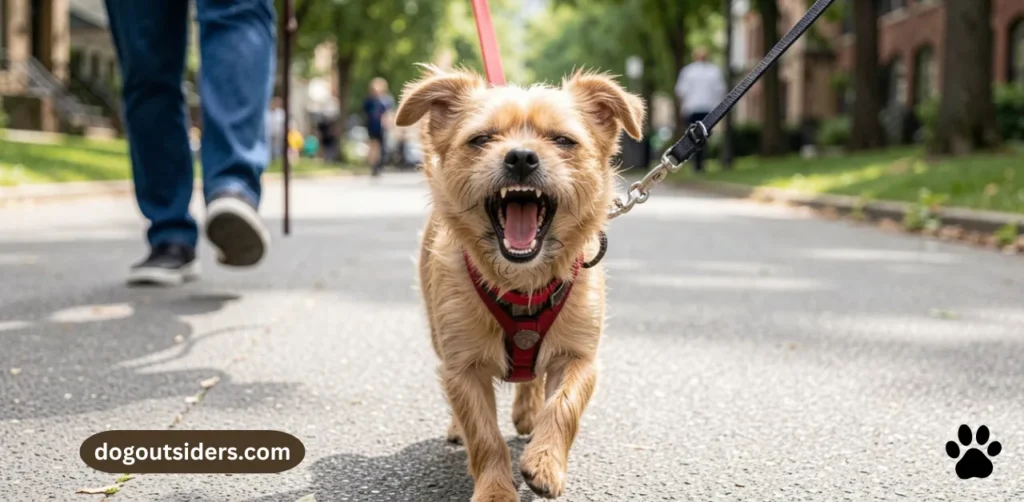
But the researchers made a crucial distinction: this wasn’t predatory aggression. It was fear-based reactivity — a defensive response from a very small animal navigating a disproportionately large world.
Consider the physics: a five-pound Yorkie lives in a world where every human is a giant, every large dog is a potential predator, and every reaching hand descends from above like a threat. Barking, growling, and snapping are survival strategies — not attitude problems.
Why “Small Dog Syndrome” Gets It Wrong
The popular concept of “small dog syndrome” suggests that small dogs become aggressive because owners spoil them and fail to set boundaries. This framing is misleading.
The American Veterinary Society of Animal Behavior (AVSAB) does not recognize “small dog syndrome” as a clinical diagnosis (Source: AVSAB). What does exist is a documented pattern of under-socialization and inadvertent reinforcement of fearful behaviors — patterns that are more common in small dog ownership because owners are less likely to enroll small dogs in training classes and more likely to carry them away from situations rather than teaching them to cope.
The aggression isn’t caused by being spoiled. It’s caused by never learning that the world is safe.
How to Recognize Aggression Triggers in Small Dogs
Fixing aggression requires knowing exactly what triggers it. Many small dog owners report that their dog “just explodes out of nowhere” — but aggression almost always follows a predictable sequence.
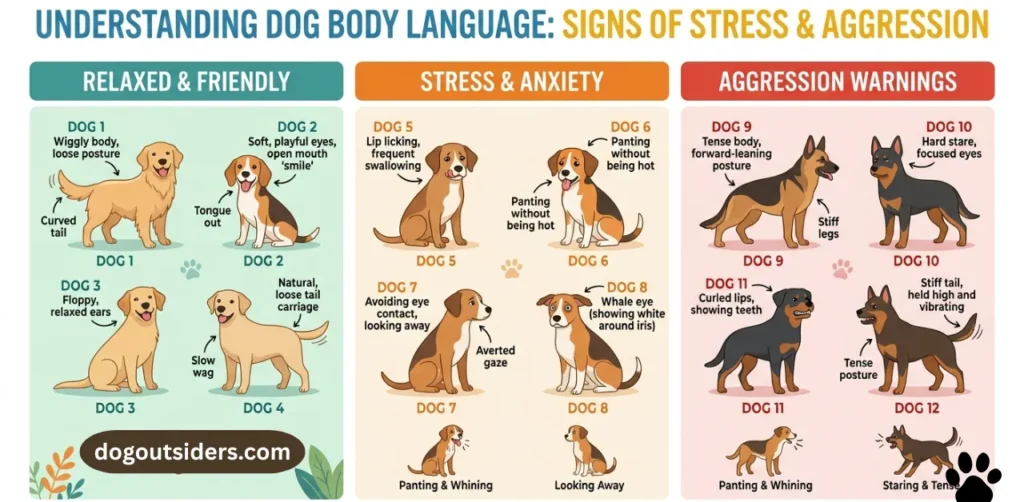
The 6 Most Common Triggers
- Strangers approaching (especially reaching hands from above)
- Other dogs (particularly larger dogs on walks)
- Being picked up or touched unexpectedly
- Resource proximity (food bowl, favorite toy, owner’s lap)
- Doorbell or knocking sounds (territorial triggers)
- Veterinary or grooming handling (pain-associated fear)
Body Language Warnings That Precede Aggression
Before a small dog barks or snaps, she almost always shows stress signals first. Learning to recognize stress signals in your dog is one of the most impactful skills an owner can develop.
Common pre-aggression body language in small dogs:
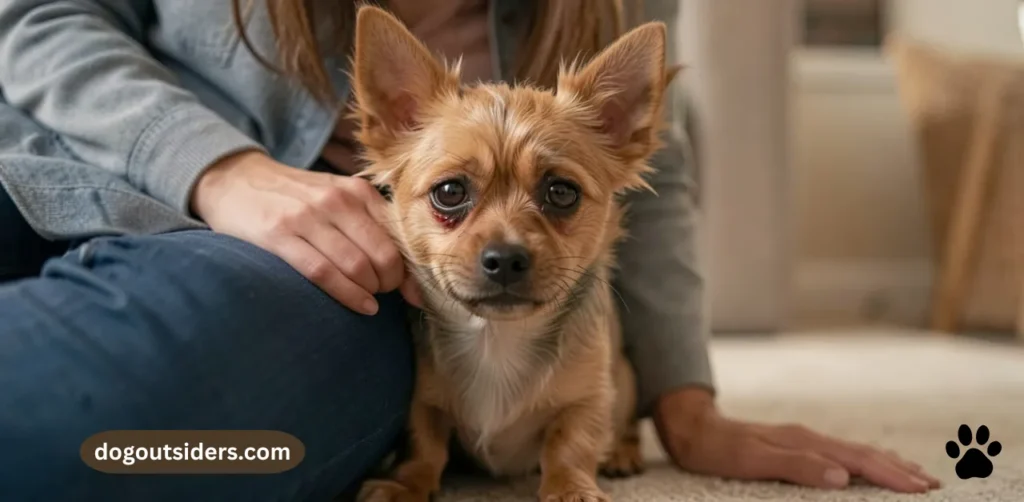
- Whale eye (whites of eyes visible)
- Lip licking when no food is present
- Yawning in non-tired contexts
- Stiffened body posture
- Ears pinned flat or rotated backward
- Tail tucked or held rigidly high
These signals say: “I’m uncomfortable and approaching my threshold.” Intervening at this stage — before the bark, growl, or snap — is where effective training begins.
How to Stop Small Dog Aggression with Positive Reinforcement
This five-step protocol follows the same progression used by certified applied animal behaviorists. Each step builds on the previous one.
Step 1 — Identify and Manage Triggers First
Before you can change your dog’s behavior, you need to prevent rehearsal of the aggressive behavior. Every time your dog barks-lunges-snaps and the scary thing goes away, her brain files that response as “successful.” The behavior gets stronger.
Management strategies:
- Increase distance from known triggers (cross the street before the other dog is close)
- Close blinds if your dog barks at passersby through windows
- Feed in a separate room if there’s food-related guarding
- Use a front-clip harness (never a collar) to reduce leash-pulling pressure on the trachea
- Establish a “safe zone” in your home where your dog is not disturbed
Management isn’t training — it’s buying time while you implement the next four steps.
Step 2 — Counter-Conditioning: Change the Emotional Response
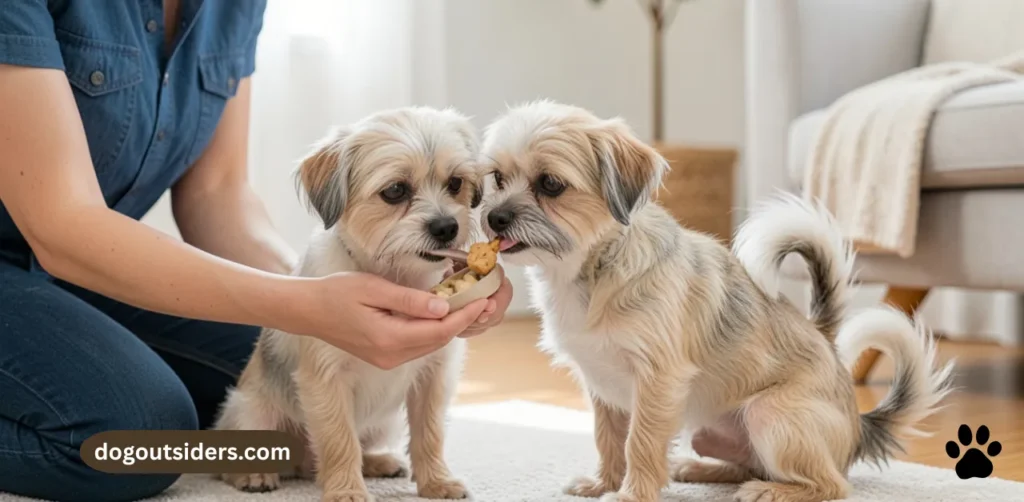
Counter-conditioning is the core technique for fear-based aggression. The concept is straightforward: pair the scary trigger with something your dog loves (usually high-value treats) until the trigger predicts good things instead of danger.
Example scenario: A Dachshund named Benny reacts aggressively to strangers entering his home. His owner begins counter-conditioning by having a friend stand outside the closed front door. Every time Benny notices the friend’s voice, his owner feeds him tiny pieces of chicken. Over multiple sessions across two weeks, the friend moves closer — eventually entering the doorway, then the room. Benny learns: stranger’s voice = chicken. His emotional response shifts from fear to anticipation.
Key rules:
- Treat before your dog reacts (you’re changing the emotion, not rewarding the bark)
- Use high-value treats only (cheese, meat, liver — not kibble)
- If your dog won’t take treats, you’re too close to the trigger. Increase distance.
For a deeper foundation in these techniques, this positive training foundations guide for beginners covers the underlying principles.
Step 3 — Desensitization: Gradual Controlled Exposure
Desensitization works alongside counter-conditioning. The idea: expose your dog to the trigger at such a low intensity that she doesn’t react — then gradually increase intensity over time.
For leash reactivity toward other dogs, this looks like:
- Start at a distance where your dog notices the other dog but doesn’t react (this might be 50+ feet)
- Reward calm behavior at that distance
- Over days and weeks, decrease the distance by small increments
- If your dog reacts, you’ve moved too fast — go back a step
Critical point: Desensitization training for dogs must be gradual. Flooding (forcing your dog into close contact with the trigger) causes trauma, not learning. PetMD notes that gradual exposure paired with positive outcomes is the most effective approach for fear-based behavioral issues (Source: PetMD).
Many owners find that socialization strategies for reactive toy breeds provide helpful specifics for this step.
Step 4 — Teach and Reinforce Alternative Behaviors
Once your dog’s emotional response is shifting, give her a specific behavior to perform instead of barking or lunging.
Effective replacement behaviors:
- “Look at me” (eye contact on cue — incompatible with staring at the trigger)
- “Touch” (nose to your palm — redirects focus and builds engagement)
- “Go to bed” (move to a designated mat — creates physical and psychological distance from the trigger)
Practice these behaviors in calm, low-distraction settings first. Then gradually introduce them near (managed) triggers.
Example scenario: Many Pomeranian owners report success with a “watch me” cue during walks. When the dog spots another dog at a distance, the owner says “watch me,” the Pom makes eye contact, and receives a treat. Over time, the Pomeranian starts offering the eye contact automatically when she sees a trigger — choosing to look at her owner instead of reacting.
This same approach applies to dealing with food bowl guarding in small dogs, where the replacement behavior involves relaxing while humans approach the food area.
Step 5 — Build Confidence Through Routine and Enrichment
Aggressive behavior decreases when a dog’s overall confidence increases. A fearful dog living in an unpredictable environment will always be more reactive than the same dog living with structure and mental stimulation.
Confidence-building strategies:
- Consistent daily routine: Same feeding times, walk times, and sleep times reduce ambient anxiety
- Mental enrichment: Puzzle feeders, snuffle mats, “find it” games, and short training sessions burn anxious energy
- Safe exploration: Let your dog investigate new environments at her own pace — don’t drag or carry
- Structured rest: Small dogs need 14–16 hours of sleep. Overtired dogs are reactive dogs. Enforced nap time matters.
A 2009 study in Applied Animal Behaviour Science found that dogs trained exclusively with reward-based methods showed lower stress indicators and fewer aggressive responses compared to dogs trained with confrontational methods — reinforcing that positive reinforcement isn’t just kinder, it’s more effective (Source: Herron, Shofer & Reisner, 2009).
5 Mistakes That Make Small Dog Aggression Worse
These are the most common errors reported across veterinary behavior consultations for reactive small dogs:
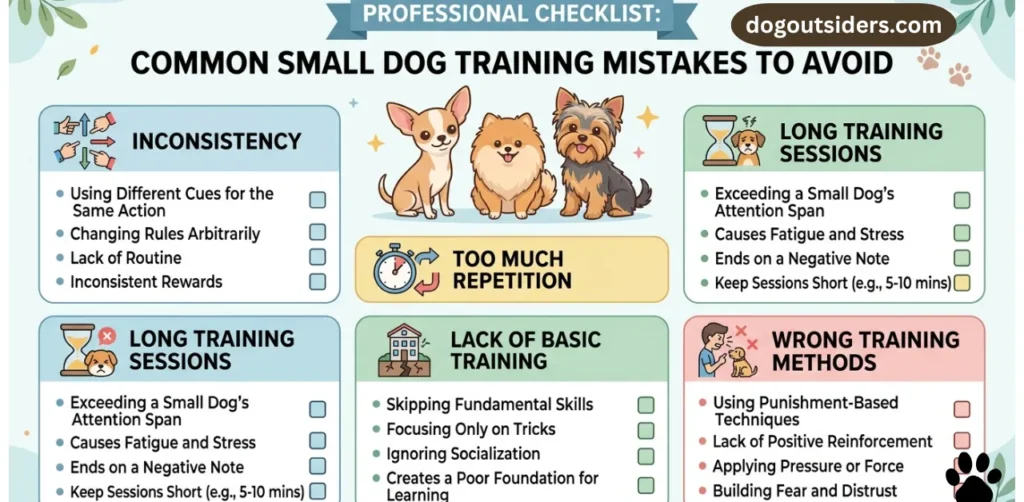
- Picking the dog up when she reacts. This removes the trigger, teaching the dog that barking works. It also elevates her to eye level with the threat — increasing, not decreasing, arousal.
- Yelling “NO” or “QUIET.” To the dog, you’re barking along with her. Volume escalates on both sides.
- Punishing the growl. A growl is a warning. Punish it, and the dog skips the warning next time — going straight to a bite with no signal. The AVMA notes that suppressing warning signals through punishment increases bite risk, not decreases it (Source: AVMA).
- Forcing interactions. Holding your dog while a stranger pets her doesn’t teach confidence. It teaches her that you’ll trap her when she’s afraid — and she needs to escalate to escape.
- Laughing it off because “she’s small.” A five-pound dog with untreated fear-based aggression is a dog in chronic psychological distress. Size doesn’t reduce suffering.
When to Call a Professional
Not all aggression can be resolved with owner-guided training. Seek a certified applied animal behaviorist (CAAB) or a veterinary behaviorist (DACVB) if:
- Your dog has bitten and broken skin
- Aggression is escalating in frequency or intensity despite consistent training
- Your dog shows aggression with no identifiable trigger
- You feel unsafe or unable to manage the behavior
A professional dog behavioral assessment can identify medical causes (pain, neurological issues, thyroid dysfunction) that mimic behavioral aggression. Many cases of “sudden aggression” in small dogs turn out to have underlying health origins — dental pain being among the most common.
Your Dog Isn’t Broken — She’s Scared
Small dog aggression is one of the most misunderstood and most treatable behavioral issues in companion animals. The growling, barking, and snapping that embarrass you in public are almost always expressions of fear — not attitude, not dominance, not a “bad dog.”
Positive reinforcement works. Science confirms it. Thousands of small dog owners have used these exact steps to transform reactive, fearful dogs into calmer, more confident companions.
Start with Step 1 today. Just manage one trigger. That’s enough.
And if this guide gave you clarity, save it on Pinterest so other small dog owners can find it too. For more breed-specific guidance, explore the full library of small dog care resources on dogoutsiders.com. 🐾

Jahanzaib
“Written by the dogoutsiders.com editorial team. Reviewed by Jahanzaib, a Certified Professional Dog Trainer–Knowledge Assessed (CPDT-KA) specializing in fear-based behavior modification for small and toy breed dogs. Jahanzaib holds a certification from the Certification Council for Professional Dog Trainers and has completed advanced coursework in applied animal behavior through the ASPCA.”
This article was reviewed by a CPDT-KA certified dog trainer specializing in small breed behavior modification.
Frequently Asked Questions
Avoid punishment entirely. Punishment increases fear, which fuels aggression. Instead, use positive reinforcement — reward calm behavior, manage triggers by creating distance, and redirect with treats or known commands. Counter-conditioning and desensitization are the safest, most effective approaches. For severe cases, consult a certified applied animal behaviorist rather than using corrections.
Small dogs aren’t inherently meaner — they’re more frequently fearful. Their small size means everything towers over them, creating chronic threat perception. Additionally, small dogs are less likely to receive formal training or structured socialization, and owners are more likely to inadvertently reinforce reactive behaviors by picking the dog up when she barks. Proper socialization and positive training significantly reduce small dog aggression.
Yes, in most cases. Fear-based aggression responds well to counter-conditioning and desensitization — positive reinforcement techniques that change the dog’s emotional response to triggers. Severity, duration, and consistency of training affect outcomes. Most small dog owners see meaningful improvement within four to eight weeks of structured positive reinforcement work. Medical causes should also be ruled out by a veterinarian.
The most common triggers are strangers approaching, other dogs on walks, unexpected touching or handling, resource proximity (food, toys, owner’s lap), doorbell or knocking sounds, and veterinary or grooming procedures. Nearly all triggers share one root: the dog perceives a threat to her safety. Identifying your dog’s specific triggers is the essential first step in any behavior modification plan.
No. Punishing biting suppresses warning signals without addressing the underlying fear. A dog punished for growling learns to skip the growl and bite without warning — creating a far more dangerous situation. Instead, manage the environment to prevent bites, address the root fear through counter-conditioning, and teach replacement behaviors. Consult a certified behaviorist if biting has broken skin.
Positive reinforcement combined with counter-conditioning and desensitization is the method recommended by the American Veterinary Society of Animal Behavior for aggression cases. Reward-based training reduces stress, builds trust, and produces longer-lasting behavioral change than punishment-based methods. This applies to dogs of all sizes, but is especially critical for fear-prone small breeds.
Timelines vary based on severity, trigger type, and training consistency. Many small dog owners see noticeable improvement in four to eight weeks with daily, structured positive reinforcement practice. Full reliability in high-distraction environments typically requires three to six months of ongoing work. Aggression management is an ongoing process, not a one-time fix — maintenance training is essential long-term.