You’ve been down a rabbit hole of pet health forums. Your dog has cancer, or their immune system seems to be struggling, or they’re simply getting older and you want to do everything you can. Then you start seeing the same thing everywhere: turkey tail mushroom.
Some sites call it a miracle. Others dismiss it entirely. And most of what’s written is either from a brand trying to sell you something or from a clinical resource so dry that you can’t figure out what any of it actually means for your specific dog.
Turkey tail mushroom for dogs — benefits, research, and what owners should know — is exactly what this guide delivers. No hype. No dismissal. Just the honest, research-informed picture so you can make the most informed decision possible — ideally alongside your veterinarian.
According to the American Kennel Club, turkey tail mushroom is one of the most researched medicinal mushrooms in veterinary medicine, with documented immune-modulating properties backed by real clinical studies (Source: AKC).
Understanding the subtle health signals that suggest your dog might benefit from immune support is equally important — our guide on recognizing subtle health changes that might indicate your dog needs support is a useful companion read alongside this one.
Turkey Tail Mushroom for Dogs — Benefits, Research, and What Owners Should Know
What Is Turkey Tail Mushroom (Trametes versicolor)?
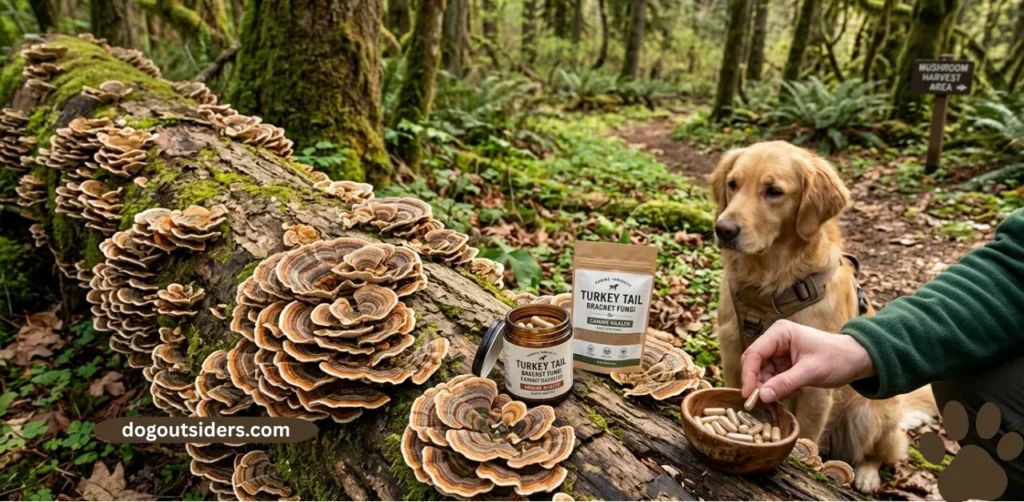
Turkey tail mushroom — scientifically known as Trametes versicolor — is a bracket fungus that grows on dead wood worldwide. Its fan-shaped, multicolored surface resembles a turkey’s tail, giving it its common name.
It has been used in traditional Chinese medicine for centuries. More recently, it has become the subject of serious scientific research — in both human oncology and veterinary medicine.
It’s important to understand upfront: turkey tail is not a cure for any disease. But the research on its immune-modulating, antitumor-supportive, and gut-health effects is genuinely interesting — and in some cases, promising.
Why Dog Owners Are Turning to This Supplement
Most owners who search for turkey tail mushroom are dealing with a dog facing cancer, a weakening immune system, or the health vulnerabilities that come with age. They’re not looking for a miracle. They’re looking for honest options that might complement conventional care — and that won’t cause harm in the process.
This guide is written specifically for you.
What’s Inside Turkey Tail Mushroom — The Compounds That Actually Work
Understanding why turkey tail is considered beneficial means understanding its key active compounds. This is where most articles skip the explanation — and where owners lose the ability to evaluate the claims critically.
PSK (Polysaccharide K) — What It Does in the Dog’s Body
PSK (also called Krestin) is a protein-bound polysaccharide extracted from turkey tail mushroom. It has been studied extensively in Japan, where it’s approved as an adjunct cancer therapy in human medicine.
In the dog’s body, PSK primarily works as an immune modulator — it helps activate and regulate the immune system rather than simply “boosting” it indiscriminately. Specifically, PSK:
- Stimulates the activity of natural killer (NK) cells, which identify and destroy abnormal cells
- Enhances macrophage activity — the immune cells that engulf and destroy pathogens and damaged cells
- May inhibit tumor cell proliferation through immune signaling pathways
PSP (Polysaccharide Peptide) — How It Differs from PSK
PSP is a distinct compound from PSK — same mushroom, different extraction. While PSK is protein-bound, PSP contains a different peptide component that gives it slightly different activity:
- Stronger antioxidant activity than PSK
- Demonstrated antitumor properties in laboratory studies
- Prebiotic effects — PSP acts as a food source for beneficial gut bacteria
Both compounds matter. A quality turkey tail supplement should contain both.
Beta-Glucans and the Gut Microbiome Connection
Turkey tail is also rich in beta-glucans — complex polysaccharides that serve a dual function in dogs:
- Immune support: Beta-glucans bind to receptors on immune cells, activating a broad immune response
- Gut microbiome support: Beta-glucans act as prebiotics — feeding beneficial bacteria in the gut and supporting a diverse, healthy microbiome
This gut-health angle is largely overlooked by competitors but increasingly validated by research. A healthy gut microbiome directly correlates with stronger immune function — meaning turkey tail’s benefits may work through two pathways simultaneously.
Just as plant-based bioactive compounds in whole foods like vegetables provide nutritional benefits to dogs, mushroom-derived compounds work through similar pathways. For context on how plant-based nutritional compounds support dogs differently than they support humans, our overview of dog-safe vegetables is a helpful reference.
What the Research Actually Says — Turkey Tail Mushroom and Canine Cancer
This is the most important section of this article — and the one that requires the most honesty.
The UC Davis Hemangiosarcoma Study — What It Found
In 2012, researchers at the University of California, Davis School of Veterinary Medicine published a study on turkey tail mushroom (specifically, an extract called I’m-Yunity) in dogs with hemangiosarcoma — a highly aggressive cancer of the blood vessel walls that carries a very poor prognosis.
What the study found:
- Dogs with hemangiosarcoma who received the highest dose of I’m-Yunity had the longest survival times recorded in any study of dogs with this cancer up to that point
- The median survival time for dogs on the highest dose was approximately 199 days — compared to 86 days for untreated dogs in historical data
- No significant adverse effects were observed at any dose level tested
This is genuinely significant. For a cancer with such a poor prognosis, more than doubling median survival time — with no toxicity — is a meaningful finding.
What the Research Proves and What It Doesn’t (Yet)
Here’s where honest reporting matters. The UC Davis study was a Phase I dose-finding trial — a small study designed primarily to establish safe dosage ranges and observe early efficacy signals. It was not a large-scale randomized controlled trial.
What this means:
- The findings are promising and warrant further investigation ✅
- They cannot be used to claim turkey tail “treats” or “cures” cancer ❌
- Additional larger studies are needed to confirm the mechanism and optimal use ✅
Since 2012, additional research has continued building on this foundation. A 2020 study published in Evidence-Based Complementary and Alternative Medicine found that PSK demonstrates measurable antitumor and immunostimulatory effects in multiple animal models (Source: Evidence-Based Complementary and Alternative Medicine, 2020).
How Turkey Tail Fits Into Integrative Veterinary Care
Most integrative veterinarians now position turkey tail mushroom as a supportive adjunct to conventional cancer treatment — not a replacement for surgery, chemotherapy, or radiation. It may help:
- Support immune function during chemotherapy
- Potentially slow tumor progression
- Improve overall quality of life during treatment
Always discuss turkey tail use with your veterinarian before starting — especially if your dog is undergoing conventional cancer treatment, as interactions with some therapies need to be considered.
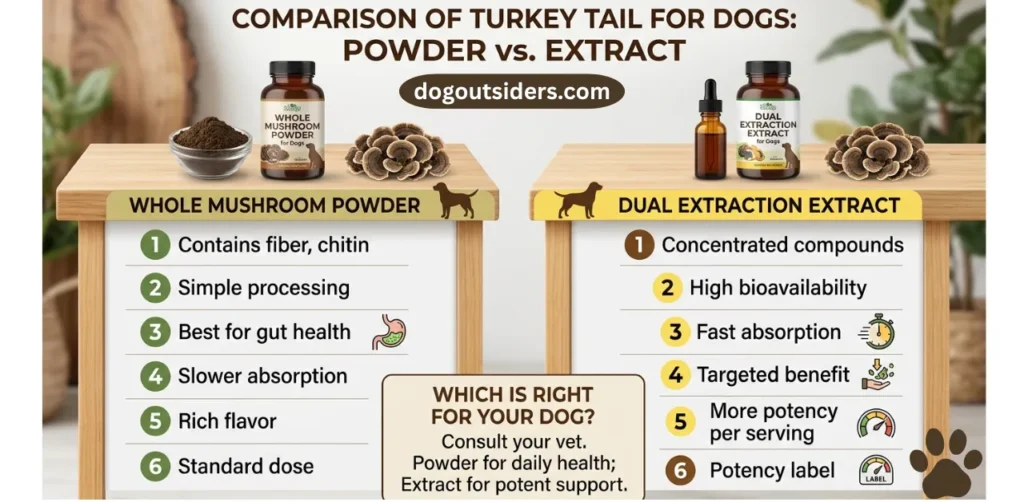
Whole Mushroom Powder vs. Dual-Extraction Extract — Why This Matters
This is the quality distinction that no competitor explains — and it’s the single most important thing to understand before purchasing any turkey tail product.
The Problem With Most Turkey Tail Mushroom Products
Many products on the market contain whole mushroom powder — simply dried and ground turkey tail. While this contains some beneficial compounds, there’s a critical limitation:
The cell walls of mushrooms are made of chitin — a tough material that neither humans nor dogs can digest efficiently. Without breaking down the chitin, many of the water-soluble compounds (including PSK and PSP) remain locked inside the cells and pass through the digestive system without being absorbed.
Additionally, some compounds in turkey tail are water-soluble, while others are alcohol-soluble. A single extraction method can only capture one type.
What Dual-Extraction Does That Powder Alone Cannot
Dual extraction uses both a water extraction (to capture water-soluble beta-glucans, PSP, and PSK) and an alcohol extraction (to capture fat-soluble compounds). The extracts are then combined.
This process:
- Breaks down chitin, dramatically improving bioavailability
- Captures both water-soluble and alcohol-soluble compounds
- Delivers a measurably higher concentration of active compounds per dose
The quality of a turkey tail supplement for dogs comes down significantly to this distinction. Just as the source and processing of whole food ingredients matters for overall nutrition, the processing method of supplements determines how much active benefit your dog actually receives. Our article on how fresh and whole food ingredients contribute to a dog’s overall nutritional health explores the whole-food-versus-processed spectrum in more depth.
Turkey Tail Mushroom Dosage for Dogs — A Safe Starting Point
The most common owner question — and the one almost no competitor answers with a practical reference — is simply: how much?
Dosage by Weight — A Practical Reference Table
The following ranges are based on integrative veterinary guidelines and published research protocols. Always start at the lower end and increase gradually. Consult your vet for dosing in dogs with serious health conditions.
| Dog Weight | Recommended Daily Dose (Standardized Extract) |
|---|---|
| Under 10 lbs | 100–200 mg |
| 10–25 lbs | 200–400 mg |
| 25–50 lbs | 400–600 mg |
| 50–75 lbs | 600–800 mg |
| 75–100 lbs | 800–1,000 mg |
| Over 100 lbs | 1,000–1,200 mg |
Important notes:
- These doses apply to standardized extracts with confirmed beta-glucan content (look for at least 30% beta-glucans on the label)
- Whole mushroom powder doses are typically 3–5x higher due to lower bioavailability
- Human supplements are generally not recommended — the formulations and concentrations are designed for human body weight and metabolism
Understanding how dogs respond differently to natural supplements compared to humans is important — the way dogs metabolize natural foods and supplements differs significantly from human physiology, which is why human dosing guidelines should never be applied directly to dogs.
How to Introduce Turkey Tail Into Your Dog’s Routine
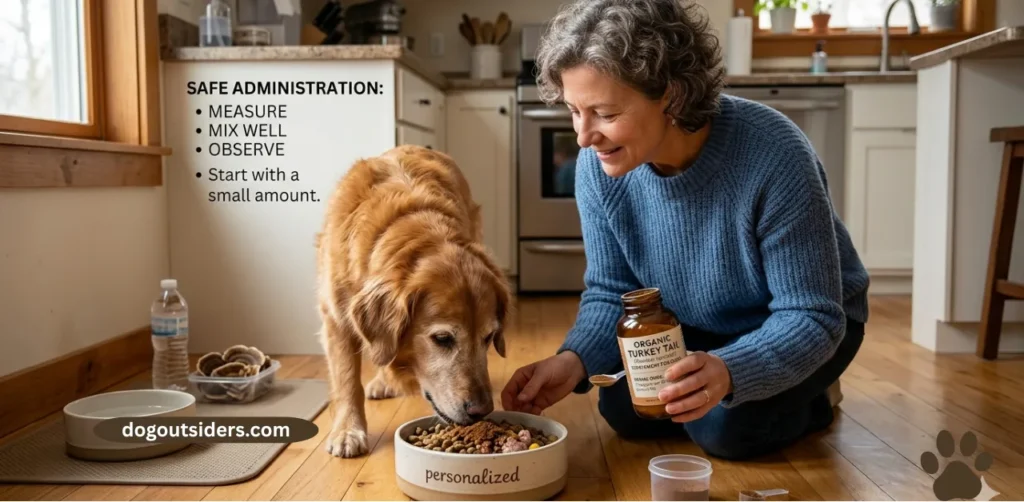
- Start with half the recommended dose for the first 1–2 weeks
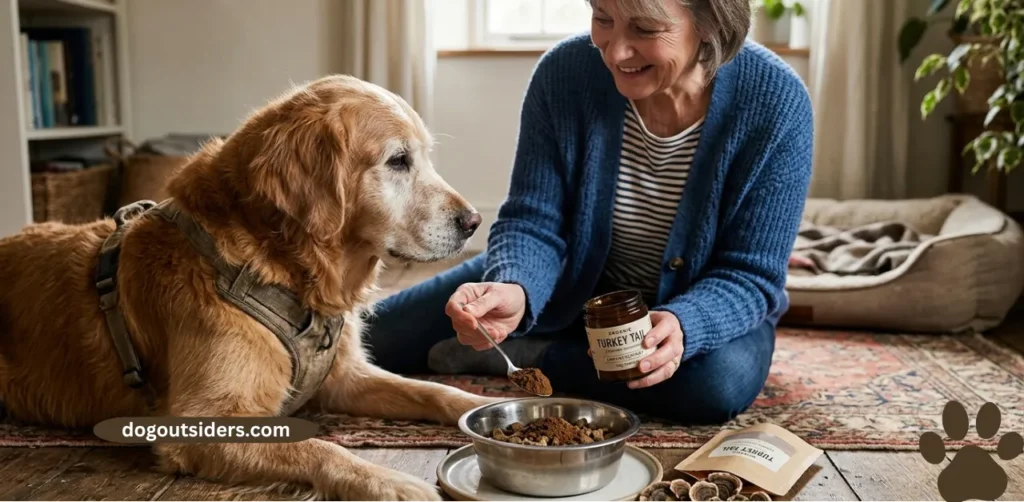
- Mix into wet food, bone broth, or a food topper to improve palatability
- Monitor for any digestive changes during the first week
- If appetite changes occur, try mixing into a different food format
If your dog suddenly shows reduced interest in their food after starting a supplement, it’s worth understanding when a dog stopping eating normally becomes a health signal worth investigating rather than simply a supplement palatability issue.
Turkey Tail vs. Other Medicinal Mushrooms for Dogs
Owners often ask: “Which mushroom is best for my dog?” The answer depends on the specific health goal.
| Mushroom | Primary Benefit | Best For | Research Level |
|---|---|---|---|
| Turkey Tail | Immune modulation, cancer support, gut health | Cancer, immune challenges, aging dogs | ⭐⭐⭐⭐ (Strongest in veterinary medicine) |
| Reishi | Adaptogenic, anti-inflammatory, stress reduction | Anxiety, inflammation, liver support | ⭐⭐⭐ |
| Lion’s Mane | Cognitive support, nerve regeneration | Senior cognitive decline, nerve damage | ⭐⭐⭐ |
| Chaga | Antioxidant, anti-inflammatory | General oxidative stress, senior health | ⭐⭐ |
Turkey tail has the strongest body of veterinary-specific research. The other mushrooms are valuable but better suited to different health goals. Some integrative vets recommend combining mushrooms — but always discuss multi-supplement protocols with your vet first.
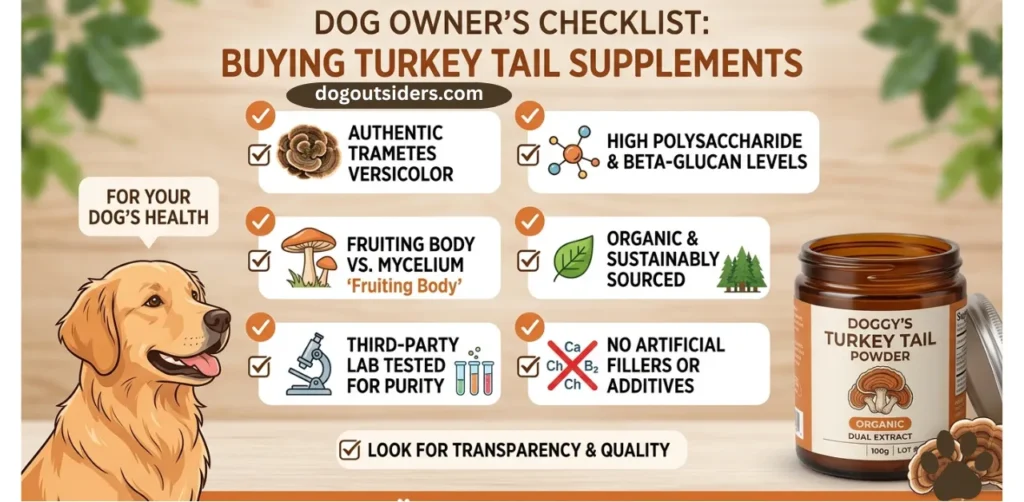
How to Choose a Quality Turkey Tail Mushroom Product — The Label Checklist
Armed with the knowledge above, here’s a practical checklist for evaluating any turkey tail mushroom product before purchasing.
What Good Turkey Tail Labels Say
✅ “Dual-extraction” or “hot water and alcohol extracted” — confirms bioavailability
✅ Beta-glucan content listed — look for minimum 30% beta-glucans
✅ Made from fruiting body — not mycelium on grain (the actual mushroom, not the root)
✅ Third-party tested — independent verification of compound content
✅ Species confirmed: Trametes versicolor — the specific species that has been studied
✅ Formulated or vet-reviewed for dogs — appropriate concentration for canine use
Red Flags That Indicate a Low-Quality Product
❌ “Mushroom mycelium on grain” listed as the primary ingredient — this is filler, not active mushroom
❌ No beta-glucan percentage listed — the company likely doesn’t know or doesn’t want you to know
❌ Vague claims with no compound specifics — marketing without substance
❌ “Proprietary blend” only — impossible to evaluate actual dosage
❌ No third-party testing certification — no verification of label accuracy
❌ Human supplement repackaged for dogs — dosing may be inappropriate
Common Mistakes to Avoid When Using Turkey Tail for Dogs
Even well-informed owners make these errors. Here’s what to watch out for:
- ❌ Buying whole mushroom powder assuming it’s equivalent to an extract. Bioavailability is dramatically different. Whole powder can work, but the dose needs to be significantly higher and the quality harder to verify.
- ❌ Using human supplements at human doses. Dog physiology is different. Human therapeutic doses are formulated for adult human weight and metabolism — always use a product formulated or confirmed appropriate for dogs.
- ❌ Starting at full dose immediately. Any new supplement can cause digestive adjustment. Starting at half dose for 1–2 weeks significantly reduces the risk of GI upset.
- ❌ Using turkey tail as a replacement for conventional cancer treatment. Turkey tail is a supportive adjunct — it works best alongside, not instead of, your veterinarian’s recommended treatment plan.
- ❌ Buying based on price alone. The cheapest turkey tail products are almost always whole mushroom powder with no extraction — and therefore minimal bioavailable active compounds. The cost difference between a quality extract and a low-quality powder is real and meaningful.
Making the Right Decision for Your Dog
Turkey tail mushroom is not magic. But it’s also not snake oil. The research behind it — particularly for immune support and cancer care — is more substantial than most natural supplements, and it has a strong veterinary safety record.
What makes the difference is understanding the compounds, evaluating the research honestly, choosing a quality product, and dosing appropriately for your dog’s size and health status.
If your dog is facing cancer, immune challenges, or the health changes of aging, turkey tail mushroom is a supplement worth discussing with your veterinarian. Bring this guide to that conversation. Ask about integrative care options. And trust yourself to be your dog’s best advocate — because that’s exactly what you already are.
Save this article to Pinterest so you always have the dosage table, the product checklist, and the research summary on hand. And for more practical dog health and wellness guidance, explore the full resource library at dogoutsiders.com.
Medical Disclaimer: This article is for informational purposes only and does not replace professional veterinary advice. Always consult a licensed veterinarian before starting any supplement, especially for dogs undergoing medical treatment.

Jahanzaib
Jahanzaib, Certified Veterinary Technician (CVT) and integrative pet health educator with 8+ years of clinical experience in small animal medicine and holistic veterinary care. Jahanzaib specializes in translating veterinary supplement research into practical, balanced guidance for dog owners — with a focus on immune support, cancer care adjuncts, and evidence-based natural wellness. All supplement content on dogoutsiders.com is reviewed against current veterinary integrative medicine guidelines and published research before publication.
“This article was reviewed for accuracy by a Certified Veterinary Technician (CVT) specializing in integrative canine health. All supplement and research information is cross-referenced against current AKC, PetMD, and NIH/NCI published guidelines. Last Updated: June 20256 This content is for informational purposes only and does not replace professional veterinary advice.”
Frequently Asked Questions
Yes, turkey tail mushroom is generally considered safe for dogs when given at appropriate doses. The UC Davis clinical study found no significant adverse effects at any dose level tested. However, dogs with autoimmune conditions should be used with veterinary guidance, as immune-modulating compounds may affect these conditions. Always start at a low dose and monitor for digestive changes during the first two weeks.
Turkey tail mushroom primarily supports immune function through PSK, PSP, and beta-glucan compounds that activate natural killer cells and modulate immune response. It also provides prebiotic support for the gut microbiome. For dogs with cancer, published research suggests it may extend survival times as a supportive adjunct to conventional treatment — particularly in hemangiosarcoma cases studied at UC Davis.
Dosage depends on your dog’s weight and the product form. For standardized extracts, a general guideline is 100–200 mg for dogs under 10 lbs, scaling up to 1,000–1,200 mg for dogs over 100 lbs. Always start at half the recommended dose for the first two weeks. Consult your veterinarian for dosing guidance if your dog is undergoing cancer treatment or has other health conditions.
Research suggests it may help as a supportive adjunct — not a cure. The 2012 UC Davis study found that dogs with hemangiosarcoma receiving high-dose turkey tail extract survived significantly longer than historical controls, with no adverse effects. Current evidence supports its use alongside conventional cancer treatment. Always discuss this with your veterinary oncologist before adding it to a cancer care protocol.
Whole mushroom powder contains active compounds locked behind chitin cell walls, which dogs cannot efficiently digest, significantly reducing bioavailability. Dual-extraction processes break down chitin and capture both water-soluble and alcohol-soluble compounds — delivering far more active PSK, PSP, and beta-glucans per dose. Always choose a dual-extracted product with beta-glucan content listed on the label for maximum efficacy.
Turkey tail mushroom is well-tolerated by most dogs. Possible mild side effects when first introducing it include loose stools or mild digestive upset — which typically resolve within a week. Starting at half the recommended dose minimizes this risk. Dogs with known mushroom allergies should not be given any mushroom supplement. Always introduce any new supplement gradually and monitor your dog’s response.
It’s not recommended without veterinary guidance. Human supplements are formulated for adult human body weight and metabolism — the concentrations may be too high or the formulation inappropriate for dogs. Additionally, some human mushroom products include additives that are not safe for dogs. Use supplements specifically formulated or verified safe for canine use, and confirm appropriate dosing with your veterinarian.