You fell in love with that clever face, that hypoallergenic coat, and that unmistakable personality. But nobody warned you about the grooming.
Within the first few weeks of owning a poodle, many owners find themselves wrestling with mats that seem to appear overnight, dealing with ear odors they can’t explain, and staring at grooming bills that rival a car payment. The conflicting advice across YouTube videos, breed forums, and Instagram doesn’t help — it actually makes the overwhelm worse.
Here’s what matters: you’re not a bad owner for feeling lost. Poodle grooming is genuinely harder than most breeds. According to the American Kennel Club, poodles require more consistent grooming than nearly any other breed because of their continuously growing, single-layer curly coat. Veterinary grooming professionals consistently emphasize that a proactive, structured routine costs far less — in money, stress, and your dog’s comfort — than treating problems after they’ve already developed.
This guide lays out the 7 grooming rules every poodle owner must follow — backed by veterinary guidance, organized as a system you can start today, and designed to take you from overwhelmed to fully confident. If you’re looking for a broader overview first, our guide to poodle grooming essentials covers the foundational concepts.
Let’s get into it.
Why Your Poodle’s Grooming Needs Are Completely Different
Before the rules, you need to understand why your poodle isn’t like other dogs when it comes to grooming.
Most breeds have a double coat that sheds naturally, releasing dead hair on its own. Poodles don’t. Their single-layer coat grows continuously — much like human hair — and dead hair stays trapped inside the curls unless you physically remove it through regular brushing.
When that dead hair isn’t removed, it wraps around the living coat and forms tight mats that pull painfully on the skin, restrict airflow, and create the perfect environment for bacteria, yeast, and parasites. According to PetMD’s grooming guide, matted coats are one of the leading causes of preventable skin infections in curly-coated breeds.
Poodles also grow hair inside the ear canal, have narrow tear ducts that produce visible staining, and grow nails quickly — especially indoor dogs whose nails never wear down on rough surfaces.
Does Size Matter?
Yes. Grooming challenges shift depending on whether you own a toy, miniature, or standard poodle:
- Toy poodles have denser, finer coats that mat faster in friction zones (armpits, behind ears). Their small size makes nail trimming and ear cleaning more delicate.
- Miniature poodles hit the middle ground — coat density is moderate, but their activity levels mean they pick up more debris.
- Standard poodles have the most coat surface area. Brushing sessions take longer, professional grooming costs more, and the coat requires more product (shampoo, conditioner, detangler) per session.
Regardless of size, all 7 rules apply universally. The specifics of time and product volume shift — the rules themselves don’t.
Rule 1 — Brush Your Poodle’s Coat Every Single Day
This is the single most important grooming rule. It’s also the one most frequently skipped.
Daily brushing prevents mats from forming. Once a mat tightens against the skin, it can rarely be safely brushed out — it must be cut or shaved away, which often means starting the coat over from scratch.
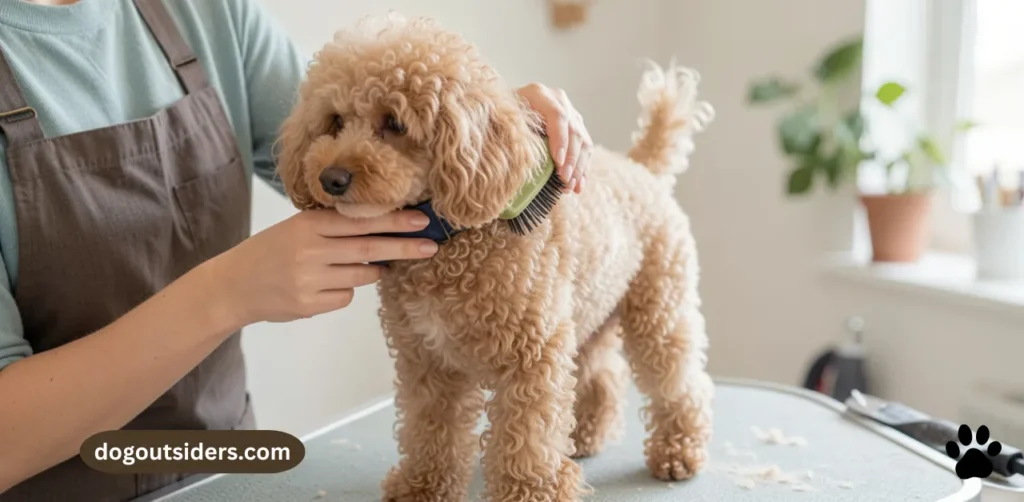
The Line-Brushing Technique
Effective poodle brushing isn’t random. It follows a method called line brushing:
- Part the coat into small sections using a comb or your fingers
- Brush from the skin outward — not just the fluffy surface
- Work section by section — legs, belly, armpits, behind the ears, and the tail base are the highest-risk matting zones
- Use a slicker brush first, then follow with a steel greyhound comb for a final tangle check
- Spray a light detangling mist before brushing to reduce friction and breakage
Each session takes about 10–15 minutes once you’ve established the habit.
The comb test: Run the steel comb through the coat. If it glides without catching, you’re mat-free. If it snags anywhere, slow down and address that tangle with the slicker brush immediately.
For more detail on proper techniques for brushing your poodle, we break down the process tool by tool.
Real-world scenario: A miniature poodle owner in a popular breed forum documented that switching from weekly to daily brushing completely eliminated emergency shave-down visits to the groomer. Within two months, the coat was noticeably thicker, healthier, and dramatically easier to manage.
Rule 2 — Follow a Consistent Bathing Schedule
Poodles don’t need daily baths. But they absolutely need a predictable, consistent bathing routine.
How Often Should You Bathe a Poodle?
Most grooming professionals recommend every 3 to 4 weeks. Bathing too often strips the natural oils that protect the coat and skin. Bathing too rarely lets dirt, oil, and dander build up — making mats worse and skin irritation more likely.
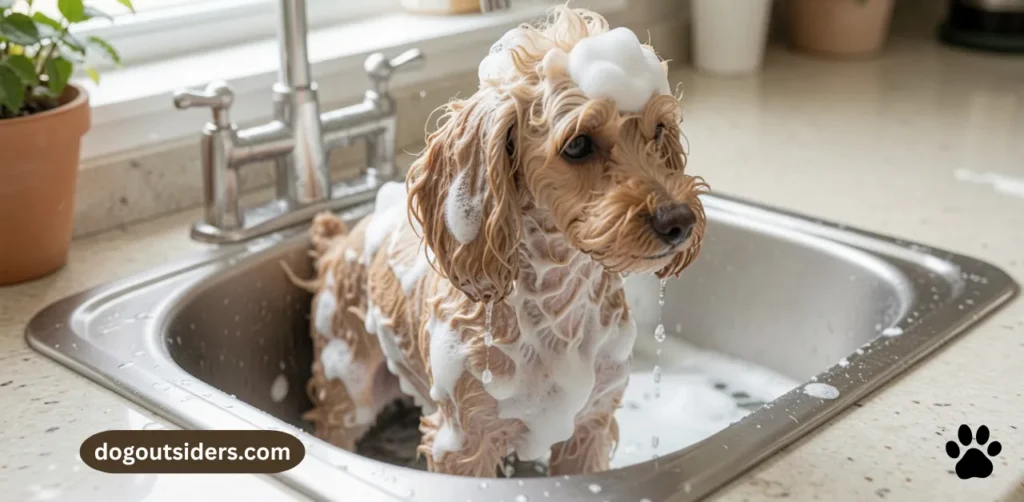
Here’s the right process:
- Always brush thoroughly before bathing. Water tightens existing tangles and makes them nearly impossible to remove afterward.
- Use a dog-specific shampoo formulated for curly or sensitive coats. Human shampoo disrupts canine skin pH.
- Follow with a moisturizing conditioner to maintain curl definition.
- Rinse completely. Product residue causes itching and dull coat texture.
- Blow-dry on a cool or low-heat setting while brushing simultaneously. Air-drying a poodle coat lets the curls tighten into tangles.
Seasonal Adjustments
Bathing frequency isn’t static year-round:
- Summer: Higher humidity and increased outdoor activity may require bathing every 2–3 weeks, with extra conditioner to counteract sun and chlorine exposure.
- Winter: Dry indoor heating saps moisture from the skin. Consider extending to every 4–5 weeks and adding a leave-in conditioning spray between baths.
According to veterinary dermatology resources at VCA Animal Hospitals, lukewarm water protects the skin barrier far better than hot water, which strips essential oils.
Rule 3 — Book Professional Grooming Every 4–6 Weeks
Even if your at-home brushing and bathing game is flawless, professional grooming is not optional. It’s a health necessity.
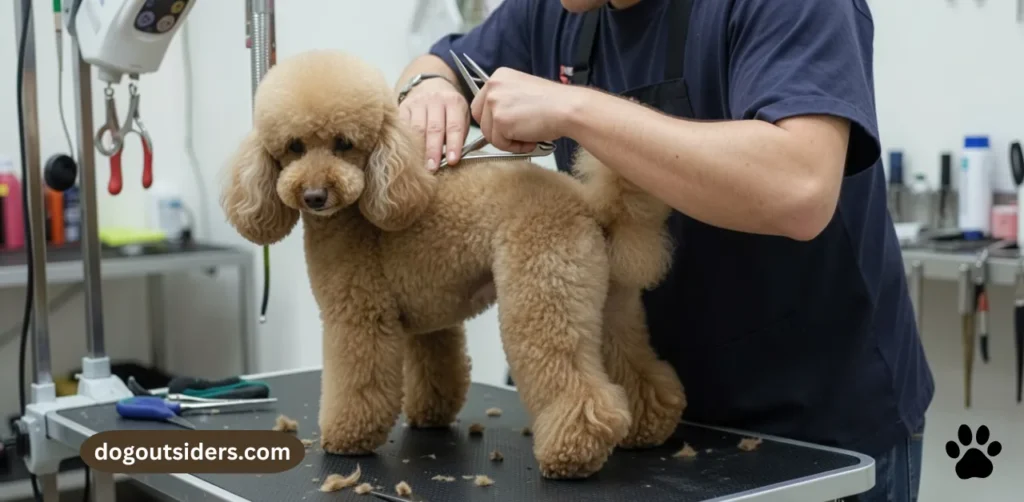
A professional groomer delivers services that are difficult — and sometimes dangerous — to replicate at home:
- Full-body clipping and scissoring to maintain a manageable coat length
- Sanitary trimming around the belly, rear, and paw pads
- Anal gland expression (when needed)
- Thorough ear hair removal from inside the canal
- Hands-on skin assessment under the dense coat where you might miss problems
The AKC recommends professional poodle grooming every 4 to 6 weeks regardless of the coat style you prefer. Waiting longer than 8 weeks typically results in matting severe enough to require a full shave-down — stressful for the dog and disappointing for the owner.
What to Look For in a Groomer (Green Flags vs. Red Flags)
| Green Flags ✅ | Red Flags 🚩 |
|---|---|
| Asks about your dog’s temperament before booking | Won’t let you see the grooming area |
| Has breed-specific poodle experience (ask directly) | Relies heavily on cage-drying for long periods |
| Welcomes facility tours | Can’t explain their process when asked |
| Communicates honestly about coat condition | Rushes through the intake conversation |
| Uses positive handling techniques | Has reviews mentioning nicks, cuts, or stressed dogs |
If you’re exploring style options, our guide to the best poodle haircuts and styles helps you communicate clearly with your groomer about what you want.
Rule 4 — Clean Your Poodle’s Ears Every Week
This is the rule most poodle owners don’t even know exists — and skipping it has painful consequences.
Poodles are genetically predisposed to ear infections because of their long, floppy ear flaps and the hair that grows inside the ear canal. That combination traps moisture, restricts airflow, and creates the ideal environment for yeast and bacterial growth. The American Veterinary Medical Association notes that floppy-eared breeds require far more proactive ear care than erect-eared breeds.
Weekly Ear Care Steps
- Lift the ear flap and visually inspect for redness, swelling, or unusual discharge
- Apply a vet-approved ear cleaning solution directly into the canal
- Gently massage the base of the ear for 20–30 seconds to loosen debris
- Let your dog shake — this naturally expels the loosened material
- Wipe the visible outer ear with a cotton ball or soft gauze (never push cotton swabs into the canal)
Warning signs that mean “call your vet”: Foul odor, dark brown/black discharge, excessive head shaking or ear scratching, visible swelling or redness inside the canal.
Rule 5 — Trim Nails Every Two to Three Weeks
Poodle nails grow fast. And because many poodles live primarily indoors, their nails never get the natural wear-down that outdoor-active dogs get from rough surfaces.
Why This Matters
Overgrown nails force your poodle to redistribute weight to the back of the paw. Over time, this changes joint alignment and causes real pain. The ASPCA’s grooming guidance warns that chronically long nails contribute to splayed feet, reduced traction, and arthritis-like symptoms in senior dogs.
Safe Trimming Steps
- Use a guillotine-style clipper or a rotary nail grinder — many poodle owners prefer grinders for precision and less stress on the dog
- Trim small amounts — cut just below where the nail curves
- Watch for the quick — in light nails, it’s the pink area visible inside. In dark nails, trim tiny increments and stop when you see a gray/pink oval on the cut surface
- Keep styptic powder nearby for accidental nicks
For a deeper walkthrough, see our guide on caring for your dog’s nails safely.
Real-world example: Many toy and miniature poodle owners report that switching from clippers to a Dremel-style rotary grinder dramatically reduced their dog’s nail-trimming anxiety. The gradual filing feels less jarring than the sudden pressure of clipping.
Rule 6 — Keep the Face and Eyes Clean Daily
Poodles — especially white and light-colored ones — are prone to visible tear staining. Those reddish-brown streaks under the eyes are caused by porphyrin, a naturally occurring compound in tears. Left uncleaned, the chronic moisture can trigger bacterial irritation on the delicate facial skin.

Daily Face Care Routine
- Wipe beneath each eye every morning with a damp, soft cloth or unscented pet wipe
- Trim hair around the eyes regularly to prevent stray hairs from poking the cornea and triggering excess tearing
- Wipe the beard area after meals — food residue causes staining and odor
- Keep the face dry — lingering moisture worsens staining and encourages yeast
Important: Avoid tear stain products containing tylosin or antibiotics unless your vet prescribes them. Many over-the-counter “tear stain removers” lack FDA regulation and may cause more problems than they solve.
Rule 7 — Start the Grooming Routine While They’re a Puppy
The absolute best time to establish grooming habits is during your poodle’s first few months of life. Puppies introduced gently and consistently to brushing, bathing, ear handling, and nail trimming become dramatically more cooperative adults.

When to Begin
Veterinary behaviorists recommend starting gentle grooming exposure as early as 8–12 weeks of age — even before the soft puppy coat transitions to the denser adult coat (typically between 9 and 18 months).
At this stage, the goal isn’t a perfect grooming session. It’s desensitization.
- Handle their paws, ears, muzzle, and belly daily — even for just 30 seconds
- Run a soft brush gently over the coat — let them sniff and explore first
- Turn on clippers or a blow dryer nearby (not directly on them) to acclimate them to the sounds
- Reward every calm response with a small treat and soft verbal praise
- Keep sessions under 5 minutes — build duration gradually over weeks
What About Anxious Adult Poodles?
Rescue poodles and adopted adults who missed this socialization window often panic during grooming. Here’s how to approach it:
- Reintroduce tools gradually — leave the brush on the floor near them for days before using it
- Use counter-conditioning — pair every grooming touch with a high-value treat
- Break sessions into micro-steps — handle one paw per day, not all four
- Consider a Fear Free Certified groomer for professional sessions — they’re trained specifically in low-stress handling techniques
For a complete guide to setting your young poodle up for success across all areas of care, visit our complete poodle care tips for new owners.
Poodle Grooming Frequency Table: Your Quick Reference
| Grooming Task | Frequency | Time Per Session | Key Tool |
|---|---|---|---|
| Brushing | Daily | 10–15 min | Slicker brush + steel comb |
| Bathing | Every 3–4 weeks | 20–30 min | Dog-specific shampoo + conditioner |
| Professional grooming | Every 4–6 weeks | 1.5–3 hours (at salon) | N/A (professional handles) |
| Ear cleaning | Weekly | 5 min | Vet-approved ear solution + cotton |
| Nail trimming | Every 2–3 weeks | 10 min | Grinder or guillotine clipper |
| Face & eye cleaning | Daily | 2–3 min | Damp cloth or pet wipe |
| Teeth brushing | 3–4x per week | 2 min | Dog toothpaste + finger brush |
Save this table, screenshot it, or print it — many poodle owners keep a version of this on their fridge.
5 Common Poodle Grooming Mistakes to Avoid
Even well-intentioned poodle owners make these errors. Spotting them early saves your dog a lot of discomfort:
- Brushing only the surface fluff. If you’re not reaching the skin, you’re not actually preventing mats. Surface brushing creates a deceptive “looks fine on top” situation while mats form underneath against the skin.
- Bathing before brushing. Water tightens existing tangles into rock-hard mats. Always complete a full brush-out before the bath — no exceptions.
- Skipping areas during brushing. The armpits, groin, behind the ears, and base of the tail are the most common matting zones, and they’re exactly the areas most owners rush through.
- Waiting too long between professional grooming visits. Stretching a 6-week interval to 10 or 12 weeks almost guarantees a full shave-down. The cost savings of skipping a session often get wiped out by the correction visit.
- Using human grooming products. Human shampoo, conditioner, and detangling spray have the wrong pH for dogs. They strip coat oils and irritate the skin, making everything worse.
Your Poodle Is Counting on You
Grooming a poodle is a real commitment — but it genuinely doesn’t have to be overwhelming.
These 7 rules give you a clear, reliable framework: brush daily, bathe consistently, see a professional groomer regularly, clean ears weekly, trim nails every couple of weeks, care for the face and eyes, and start the whole routine as early as possible.
When you follow these rules, your poodle stays comfortable, healthy, and looking absolutely stunning. And you spend far less time, money, and stress dealing with preventable problems.
If this guide helped you, save it to your Pinterest board so you can pull it up before every grooming session. And if you’re building a full poodle care routine from the ground up, explore our complete poodle care resource library — it covers nutrition, training, health, and everything else your poodle needs from you.
Your poodle is counting on you. Now you know exactly how to show up for them.

Jahanzaib
This article was written by Jahanzaib, a Certified Professional Groomer (CPG) with over a decade of breed-specific experience specializing in poodles and curly-coated breeds. Jahanzaib holds credentials from the National Dog Groomers Association of America (NDGAA), is a member of the International Society of Canine Cosmetologists (ISCC), and contributes expert grooming guides to dogoutsiders.com.
This article was reviewed for accuracy by Dr. Phillip John, DVM, a licensed veterinarian specializing in companion animal dermatology.
Frequently Asked Questions About Poodle Grooming
Poodles need daily brushing, bathing every 3–4 weeks, and professional grooming every 4–6 weeks. Ears require weekly cleaning; nails need trimming every 2–3 weeks. Following this poodle grooming schedule consistently prevents matting, ear infections, and overgrown nails. Set recurring phone reminders so no task gets skipped.
An ungroomed poodle’s coat mats tightly against the skin, trapping moisture, dirt, and parasites. This leads to painful skin infections, restricted movement, and chronic discomfort. Ears develop infections from trapped hair and moisture. Overgrown nails alter gait and cause joint pain. Even basic daily brushing prevents most of these problems.
Yes. Many poodle owners handle daily brushing, bathing, ear cleaning, and nail trimming at home. However, professional grooming every 4–6 weeks is still essential for full-body clipping, sanitary trims, and thorough coat assessment. Home poodle grooming supplements professional care but doesn’t replace it. Invest in a quality slicker brush and steel comb.
A high-quality slicker brush is the most essential poodle grooming tool. Use it daily with the line-brushing technique to remove tangles before they form mats. Follow every session with a steel greyhound comb to catch hidden snags near the skin. Apply a light detangling spray before brushing to reduce friction on curly coats.
Brush your poodle’s entire coat daily using the line-brushing technique — parting hair into sections and working from skin to tips. Always brush thoroughly before bathing, since water tightens existing tangles. Keep the coat at a manageable length between professional grooming visits. Focus extra attention on armpits, behind the ears, and the tail base.
Schedule your poodle puppy’s first professional grooming visit between 12 and 16 weeks, after initial vaccinations begin. Before that appointment, start gentle at-home grooming introduction at 8–12 weeks — daily handling of paws, ears, and muzzle builds comfort. This early poodle puppy grooming exposure prevents lifelong grooming anxiety.
Shaving is sometimes necessary for severely matted coats, but it shouldn’t be a regular practice. A complete shave removes the coat’s natural insulation and sun protection, increasing sunburn and temperature regulation risks. Instead, keep your poodle’s coat at a manageable length through consistent brushing and professional grooming every 4–6 weeks.