Your dog is staring at you. You’re holding an apple. And you’re genuinely not sure if sharing a slice is a sweet bonding moment or a mistake you’ll regret.
Or maybe your dog already snagged a piece — seeds, core, and all — and you’re now typing frantically with one hand while watching them with the other.
Either way, you need a real answer. Not a vague “it depends” — a clear, specific guide that tells you exactly what’s safe, what’s dangerous, how much to give, and what to do if something already went wrong.
This is that guide.
According to the American Kennel Club, apples are one of the most commonly shared human foods between owners and their dogs — and one of the most frequently misunderstood in terms of which parts are safe (Source: AKC).
Are Apples Safe for Dogs?
Yes, apples are safe for dogs when prepared correctly. They provide fiber, vitamins A and C, and make a low-calorie treat. However, always remove the seeds and core before feeding — apple seeds contain amygdalin, which releases cyanide when digested. Serve in small slices only.

The Quick Answer — What Vets Recommend
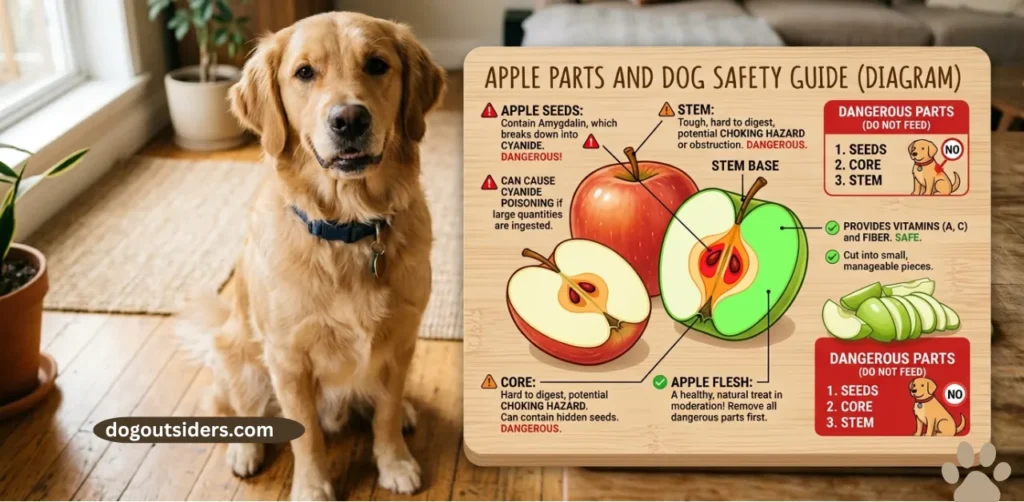
Dogs can eat apples. The flesh and skin are completely safe and nutritious. The parts to avoid are:
- Seeds — contain amygdalin, a compound that releases hydrogen cyanide
- Core — choking hazard with dense, tough texture
- Stem — potential choking and digestive risk
Remove these three parts and your dog gets all the benefits with none of the risks. It’s that simple — once you know what to remove.
The Dangerous Parts of Apples Dogs Must Avoid
Apple Seeds and Cyanide — The Real Risk Explained
Are apple seeds poisonous to dogs?
Apple seeds contain amygdalin, a compound that releases hydrogen cyanide when chewed or digested. While a dog would need to consume a large quantity of seeds to reach toxic levels, the risk is real — especially for small dogs. Always remove all seeds before giving your dog any apple. Never feed the whole apple unprocessed.
Now — let’s give you the context no other article provides.
How many seeds are actually dangerous?
According to ASPCA toxicology data, a 10-pound dog would need to ingest approximately 85 grams of crushed apple seeds to reach a potentially toxic cyanide dose. A single apple contains roughly 5–8 seeds — each weighing about 0.7 grams. That’s approximately 0.7 grams of total seeds per apple — far below dangerous levels for any average-sized dog.
This does not mean seeds are safe to give intentionally. It means that if your dog accidentally swallowed a few seeds from one apple, the acute toxic risk is low. However, chronic exposure to seeds over many feedings can accumulate — which is why removing seeds every single time remains the correct practice (Source: ASPCA Animal Poison Control).
Key practical takeaway: One or two accidentally swallowed seeds from a single apple is unlikely to cause toxicity in a medium or large dog. However:
- Small and toy breeds face a higher relative risk per seed
- Crushed or chewed seeds release more amygdalin than whole seeds
- Always remove seeds regardless — consistent habits prevent accidents
Apple Core and Stem — Choking and Toxicity Concerns
What happens if a dog eats an apple core?
An apple core poses two risks: choking and seed ingestion. The tough, dense core texture can cause choking — especially in small breeds. The seeds inside contain amygdalin, which releases cyanide during digestion. If your dog ate an apple core, monitor for vomiting, lethargy, or difficulty breathing and contact your vet if symptoms appear.
The core’s dense, fibrous texture also resists digestion — it can cause a partial intestinal obstruction in smaller dogs if swallowed whole. Always discard the core completely before offering any portion to your dog.
My Dog Ate Apple Seeds — What to Do Right Now
If your dog just ate apple seeds or swallowed an apple core, follow these steps:
- Stay calm — one apple’s worth of seeds is unlikely to cause acute toxicity in a medium or large dog
- Estimate how much they ate — a few seeds vs. a large quantity of crushed seeds is a meaningful difference
- Note your dog’s weight — smaller dogs face higher relative risk per seed
- Watch for symptoms for 2–4 hours:
- Vomiting
- Lethargy or weakness
- Dilated pupils
- Difficulty breathing
- Bright red gums (a sign of cyanide toxicity)
- Call your vet or ASPCA Poison Control (888-426-4435) if your dog is small (under 15 lbs) and ate seeds from more than one apple, or if any symptoms appear
Knowing the subtle signs your dog may be showing distress even when they seem outwardly calm can help you monitor effectively after any accidental ingestion.
What Are the Health Benefits of Apples for Dogs?
Apples aren’t just safe — they’re genuinely good for dogs. Here’s what they actually provide:
Vitamins, Fiber, and Antioxidants — What Apples Actually Provide
| Nutrient | Benefit for Dogs |
|---|---|
| Dietary fiber | Supports healthy digestion and bowel regularity |
| Vitamin A | Supports immune function, vision, and skin health |
| Vitamin C | Antioxidant — supports immune system and reduces inflammation |
| Potassium | Supports heart and kidney function |
| Quercetin | A natural antioxidant flavonoid with anti-inflammatory properties |
| Malic acid | Contributes to dental health — helps keep teeth clean |
| Water content (~86%) | Contributes to hydration, especially useful in summer |
According to PetMD, the fiber and natural antioxidant content in apples make them one of the more nutritionally valuable fruit treats for dogs when given in appropriate quantities (Source: PetMD).
Are Apples a Good Low-Calorie Treat Alternative?
Yes — significantly. A single thin apple slice contains approximately 5–10 calories, compared to:
- Standard commercial dog treat: 25–50 calories
- Small dog biscuit: 30–40 calories
- Piece of cheese: 35–50 calories
For dogs on a calorie-controlled diet or dogs who need to lose weight, apple slices make an excellent substitute for higher-calorie commercial treats. Just as broccoli offers similar low-calorie nutritional value for dogs, apples provide a whole-food alternative to processed snacks.
How to Safely Prepare and Serve Apples to Your Dog
Step-by-Step Apple Preparation Guide
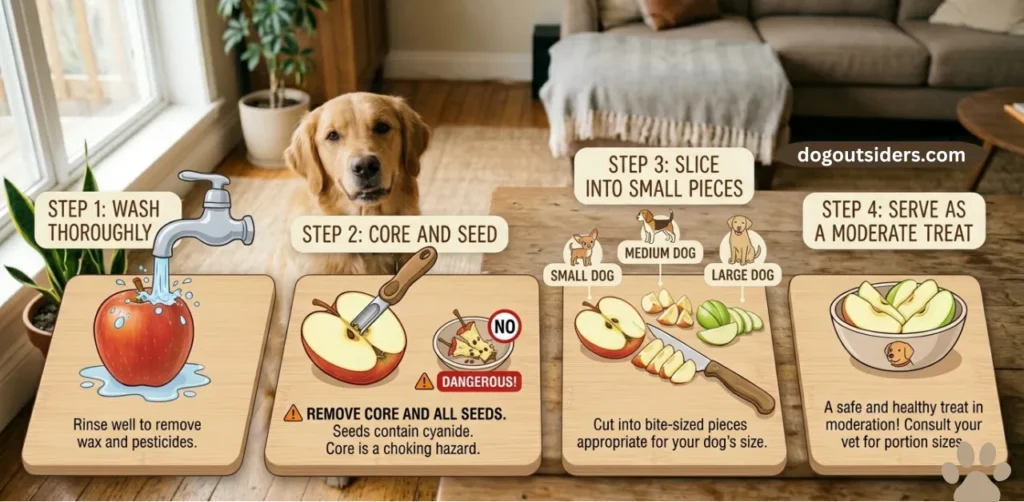
Follow these six steps every time you give your dog an apple:
- Wash the apple thoroughly — remove pesticide residue, wax coatings, and surface bacteria with cool running water
- Remove the stem completely — twist off and discard before cutting
- Core the apple — cut around the core entirely, discarding the center section
- Remove ALL seeds — check each slice for stray seeds before serving
- Peel if desired (optional) — the skin is safe and nutritious, but dogs with sensitive stomachs may tolerate peeled apple better
- Slice into small, thin pieces — appropriate size depends on your dog’s size (see table below)
How Many Apple Slices Can My Dog Have?
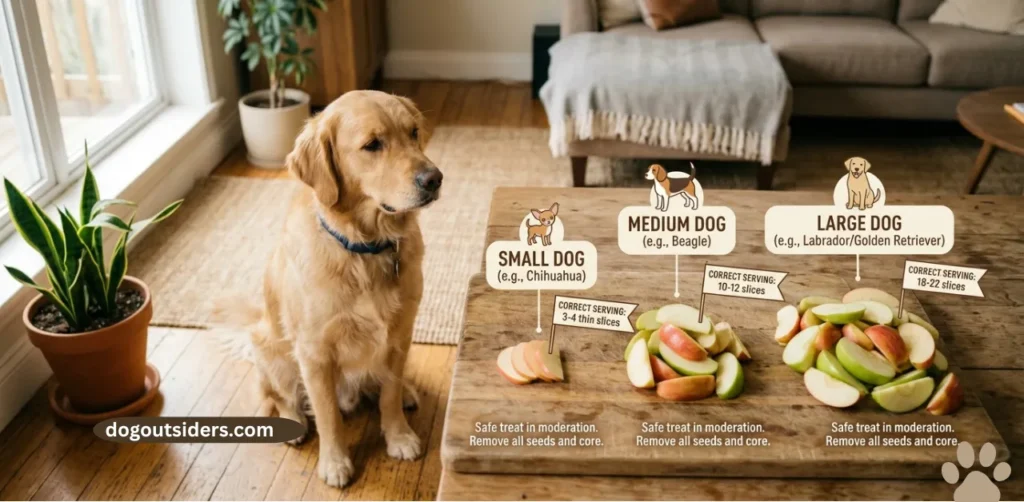
The 10% rule applies here: treats — including fruit — should make up no more than 10% of your dog’s total daily caloric intake. Here’s a practical guide by breed size:
| Dog Size | Weight | Recommended Serving | Frequency |
|---|---|---|---|
| Toy/Extra Small | Under 10 lbs | ½ to 1 thin slice | 2–3 times per week |
| Small | 10–25 lbs | 1–2 thin slices | 3–4 times per week |
| Medium | 25–50 lbs | 2–3 thin slices | Daily if desired |
| Large | 50–90 lbs | 3–4 thin slices | Daily if desired |
| Giant | 90+ lbs | 4–5 thin slices | Daily if desired |
Important: Start with a smaller amount for first-time apple eaters — any new food can cause mild digestive upset until your dog’s system adjusts.
Apple Varieties — Are All Types Safe for Dogs?
This is the question no competitor article answers — and it’s one owners ask regularly.
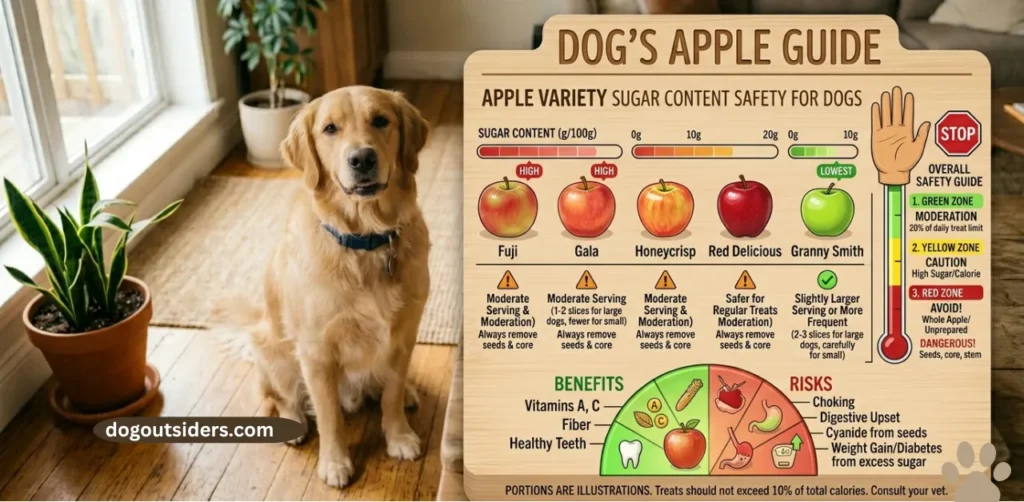
The short answer: All common apple varieties are safe for dogs. The flesh and skin of every standard eating apple — red, green, yellow — are non-toxic. However, there are some practical differences worth knowing:
| Apple Variety | Sugar Content | Tartness | Notes for Dogs |
|---|---|---|---|
| Red Delicious | High | Low | Sweet, most dogs enjoy it |
| Gala | Medium-High | Low-Med | Good balance for most dogs |
| Fuji | High | Low | Very sweet — limit for diabetic dogs |
| Granny Smith | Lower | High | Many dogs dislike the tartness |
| Honeycrisp | Medium | Medium | Popular choice, good texture |
| Golden Delicious | High | Low | Sweet and soft — good for senior dogs |
Key takeaway: All varieties are safe. For diabetic dogs or dogs watching sugar intake, lower-sugar varieties (Granny Smith) are preferable. For senior dogs or dogs with dental sensitivity, softer varieties (Golden Delicious) are easier to manage.
Can All Dogs Eat Apples? Special Cases Owners Must Know
Can Puppies Eat Apples?
Yes, puppies can eat apples in very small amounts. Their digestive systems are more sensitive than adult dogs, so start with a tiny piece and monitor for any stomach upset. Always remove seeds and core completely. Introduce gradually and limit to half a slice for puppies under six months old.
Introduce apple as you would any new food — one small piece, then wait 24 hours to confirm no digestive reaction before offering it again.
Diabetic Dogs and Apples — What You Need to Know
Apples contain natural fruit sugars (fructose) — approximately 10–14 grams per 100g of apple flesh. For dogs with diabetes or insulin resistance, this sugar content requires consideration.
If your dog is diabetic:
- Consult your veterinarian before introducing any fruit
- Choose lower-sugar varieties (Granny Smith) if approved
- Offer very small amounts only — half a slice maximum
- Monitor blood glucose response after any new food introduction
- Never give apple juice or applesauce to a diabetic dog — the concentrated sugar content is significantly higher
Can Dogs Eat Dried Apples?
Caution advised. Dried apples are not toxic, but they present two concerns:
- Concentrated sugar — removing water concentrates the natural sugars significantly
- Added ingredients — many commercial dried apple products contain added sugar, sulfites, or preservatives that are not appropriate for dogs
If you give dried apples, ensure they are:
- Unsweetened and unseasoned
- Free from sulfite preservatives
- Given in very small quantities (one or two small pieces)
Fresh apples are always the preferred option.
Can Dogs Eat Applesauce? The Xylitol Warning
Plain, unsweetened applesauce in small quantities is safe for dogs. However, this is a critical safety point that no competitor article covers with sufficient urgency:
Many commercial applesauces contain xylitol — a sugar substitute that is highly toxic to dogs. Even small amounts of xylitol can cause rapid insulin release, hypoglycemia, liver failure, and death in dogs.
Before giving any applesauce:
- Read the ingredient label completely
- Look for: xylitol, birch sugar, or “natural sweeteners” in the ingredients
- If xylitol is listed: do NOT give to your dog under any circumstances
- Only safe option: plain, single-ingredient applesauce with no additives
According to the ASPCA Animal Poison Control Center, xylitol poisoning is one of the most common and most severe pet poisoning cases reported annually — and it’s frequently linked to human foods assumed to be safe (Source: ASPCA).
Some owners who notice their dog has stopped eating their regular food but eagerly accepts fruit treats might be tempted to use applesauce as a food topper — understanding why dogs may refuse regular food but accept treats is worth reading before using any fruit supplement as a meal incentive.
Common Apple Feeding Mistakes Dog Owners Make
Even well-meaning owners make these errors. Here’s what to avoid:
- ❌ Giving the whole apple — seeds, core, and stem included. Always prepare before serving — never hand over an entire apple unsupervised.
- ❌ Assuming all applesauce is safe — commercial applesauce frequently contains xylitol. Read every label, every time.
- ❌ Overfeeding — even healthy treats cause digestive issues and weight gain in excess. Stick to the breed-appropriate serving sizes in the table above.
- ❌ Skipping the wash — commercial apples often have pesticide residue and wax coatings. Always wash before serving, even if you peel the skin.
- ❌ Giving dried apple with additives — dried fruit products for human consumption often contain sulfites, added sugar, or other preservatives. Only unsweetened, plain dried apple is appropriate for dogs.
- ❌ Ignoring breed and size — giving a Chihuahua the same portion as a Labrador isn’t just excessive — it can cause real digestive upset in small dogs. Adjust serving size by breed weight every time.
For more on what makes up a complete and balanced approach to sharing whole foods like vegetables and fruit with dogs, understanding how broccoli rabe fits into dog nutrition provides helpful context on the broader category of plant-based treats.
Apples and Your Dog — Final Thoughts
Sharing an apple with your dog is one of those simple, healthy, genuinely good things you can do together. The benefits are real. The preparation is easy. And now you know exactly what to remove, how much to give, what the actual seed risk looks like, and what to do if anything goes wrong.
The bottom line: apples are a yes — when prepared right. Remove the seeds, core, and stem. Slice appropriately for your dog’s size. Check applesauce labels for xylitol. And enjoy the moment.
If you found this guide helpful, bookmark it or share it with a fellow dog owner who’s asked the same question. And for more practical, vet-informed guidance on what your dog can and can’t eat, explore the complete food safety resources at dogoutsiders.com.
You can also read our guide on whether bananas are safe for dogs — another commonly shared fruit with its own set of important guidelines.
“Reviewed by a Certified Veterinary Technician (CVT) specializing in companion animal nutrition. Cross-referenced against current ASPCA, AKC, and AVMA guidelines. Last Updated: June 2026. For emergencies, contact ASPCA Poison Control: 888-426-4435.”

Jahanzaib
Jahanzaib, Certified Veterinary Technician (CVT) with 7 years of clinical experience in small animal medicine and companion animal nutrition at a multi-specialty veterinary practice. Member of the National Association of Veterinary Technicians in America (NAVTA). Specializes in translating complex veterinary nutrition guidelines into practical, actionable guidance for everyday dog owners. All content reviewed against current ASPCA, AKC, and AVMA standards before publication.
Frequently Asked Questions
Yes, apples are safe for dogs when prepared correctly. Remove all seeds, the core, and the stem before serving — these parts pose toxicity and choking risks. The flesh and skin are nutritious and safe. Slice apples into small pieces appropriate for your dog’s size and serve as an occasional treat within the 10% daily calorie guideline.
Apple seeds contain amygdalin, which releases hydrogen cyanide when chewed. A toxic dose requires many seeds, but the risk is real — especially for small dogs. One apple’s seeds are unlikely to cause acute toxicity in medium or large dogs, but always remove seeds entirely as a consistent safety practice. Never give crushed or chewed seeds intentionally.
An apple core poses choking risk and potential seed toxicity. The dense texture can obstruct the throat or digestive tract — especially in small breeds. Monitor for vomiting, lethargy, or breathing difficulty for 2–4 hours. For small dogs or if large quantities of seeds were consumed, contact your vet or ASPCA Poison Control at 888-426-4435 immediately.
Treats should make up no more than 10% of daily calories. For small dogs (under 25 lbs), limit to 1–2 thin slices. For medium dogs (25–50 lbs), 2–3 slices is appropriate. Large and giant breeds can have 3–5 slices. Start with one small piece for first-time apple eaters and monitor for any digestive reaction before increasing.
Yes, apple skin is safe for most dogs and contains beneficial fiber and antioxidants. However, always wash the apple thoroughly first to remove pesticide residue and wax coatings on commercial apples. Dogs with sensitive stomachs may tolerate peeled apple better. For puppies or dogs with digestive issues, peeling the apple is the safer option.
Yes, puppies can eat apples in small amounts. Their digestive systems are more sensitive, so introduce with just half a thin slice and wait 24 hours to check for any reaction. Always remove all seeds and the core. Limit to very small pieces for puppies under six months. Consult your vet before introducing new foods to very young puppies.
Plain, unsweetened applesauce in tiny amounts is safe. However, many commercial applesauces contain xylitol — a sweetener that is highly toxic to dogs and can cause liver failure or death. Always read the full ingredient list before giving any applesauce to your dog. If xylitol is listed as any ingredient, do not give it under any circumstances.