German Shepherds give everything. Their loyalty, their intelligence, their energy — all of it, completely, to the people they love.
That’s exactly why learning about German Shepherd health issues matters so much. This breed is magnificent — and also medically complex. According to the American Kennel Club, German Shepherds are genetically predisposed to several serious conditions that owners can significantly impact through early detection and proactive prevention. (Source: AKC)
The five conditions covered in this guide aren’t just statistics. Each one has a warning sign you might be noticing right now. Each one has a prevention strategy you can start today. And for at least one of them — bloat — recognizing the signs in time is the difference between life and death.
This guide covers what each condition is, how to spot it early, and — most importantly — what you can do right now to protect your German Shepherd’s long-term health.
What Are the Most Common German Shepherd Health Issues?
The 5 most common German Shepherd health issues are:
- Hip Dysplasia — abnormal hip joint development causing pain and mobility loss
- Elbow Dysplasia — joint malformation leading to front-leg lameness
- Degenerative Myelopathy (DM) — progressive spinal cord disease causing hind-limb weakness
- Exocrine Pancreatic Insufficiency (EPI) — digestive enzyme deficiency causing severe weight loss
- Bloat (GDV) — life-threatening stomach twisting requiring emergency surgery
Each of these conditions is addressed in full detail below — with symptoms, early warning signs, and specific prevention steps.
Why German Shepherds Are Prone to These Health Problems
Understanding why this breed is vulnerable changes how you approach prevention.
German Shepherds were developed as high-endurance working dogs — bred for strength, speed, agility, and an intense drive to work. That same powerful body carries specific structural vulnerabilities.
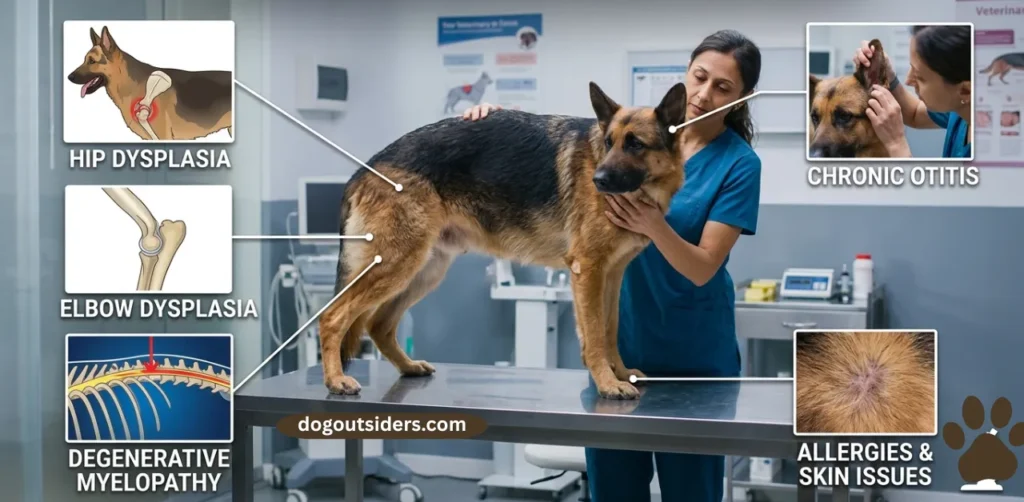
Their deep chest cavity creates anatomical risk for bloat. Their rapid growth from puppy to large adult stresses developing joints before they’ve fully mineralized. Their genetic bottleneck — the result of selective breeding for working traits — concentrated certain disease genes, including those linked to DM and EPI, at higher rates than in mixed-breed dogs. (Source: OFA — Orthopedic Foundation for Animals)
Knowing this doesn’t change what you can do — but it does explain why the breed requires more proactive health monitoring than average.
Issue 1: Hip Dysplasia
Hip dysplasia is the most well-known German Shepherd health condition — and with good reason. The Orthopedic Foundation for Animals reports that German Shepherds have one of the highest rates of hip dysplasia of any breed, with approximately 19–20% of tested GSDs showing some degree of the condition. (Source: OFA)
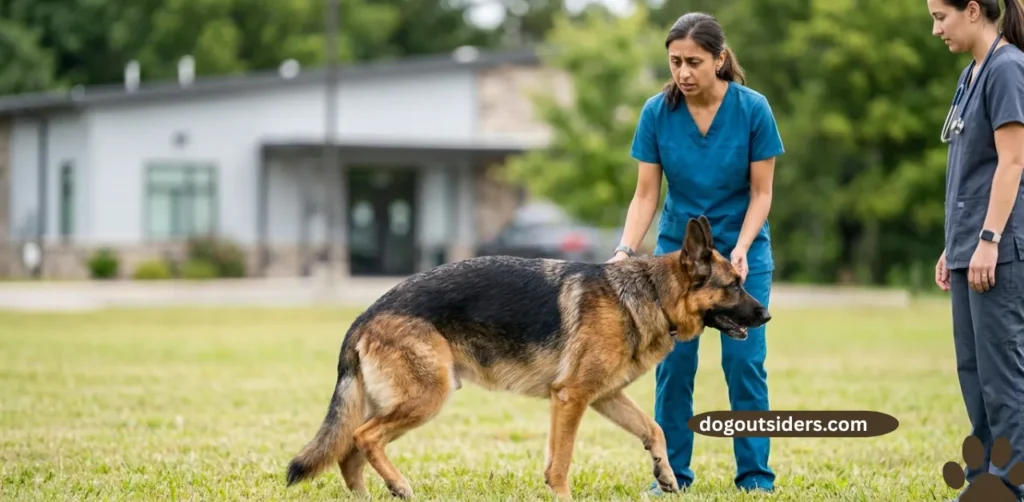
Hip dysplasia occurs when the ball-and-socket joint of the hip develops abnormally, causing the joint surfaces to rub rather than glide smoothly. Over time, this leads to progressive arthritis, pain, and reduced mobility.
Early warning signs to watch for:
- Reluctance to climb stairs, jump, or stand from lying position
- “Bunny hopping” gait — both back legs moving together rather than alternately
- Decreased activity or willingness to exercise
- Muscle loss in the hindquarters
- Behavioral changes: increased irritability, reluctance to be touched near the hips
Prevention strategies:
- Maintain a healthy body weight — excess weight dramatically increases joint stress
- Feed a large-breed puppy formula during growth phase — controls growth rate to protect joint development
- Avoid high-impact exercise (jumping, repetitive stairs) in puppies under 18 months
- Use our dog exercise calculator to find the right activity level for your GSD’s age and size
- Ask your vet about OFA hip screening at 2 years of age
Also be aware that certain training mistakes can unknowingly stress developing GSD joints — particularly overworking a young dog before their skeletal system has matured.
How Do I Know If My German Shepherd Has Hip Dysplasia?
Hip dysplasia in German Shepherds is confirmed by X-ray at a veterinary clinic. However, early signs include reluctance to rise from rest, reduced rear-leg strength, a “bunny hopping” gait, and decreased enthusiasm for exercise. If your GSD is showing any of these signs — especially before age 3 — request a hip evaluation from your vet. Early intervention significantly slows progression.
Issue 2: Elbow Dysplasia
Less commonly discussed but equally significant, elbow dysplasia refers to abnormal development of the elbow joint — typically affecting front-leg movement and causing lameness in one or both forelegs.
German Shepherds rank among the breeds most frequently diagnosed with elbow dysplasia, according to OFA screening data. (Source: OFA)
Signs to watch for:
- Front-leg lameness — particularly after rest or exercise
- Stiff, shortened stride in the front legs
- Reluctance to extend the front legs fully
- Swelling around the elbow joint
Age-stage note: Elbow dysplasia most commonly becomes apparent between 4 and 18 months of age — during the active growth phase. This is why early monitoring and growth-rate management matters.
Issue 3: Degenerative Myelopathy (DM)
Degenerative myelopathy is a progressive neurological disease of the spinal cord that primarily affects German Shepherds and a handful of other breeds. It is caused by a genetic mutation in the SOD1 gene — meaning dogs who carry two copies of the mutation are at significantly elevated risk. (Source: AKC Canine Health Foundation)
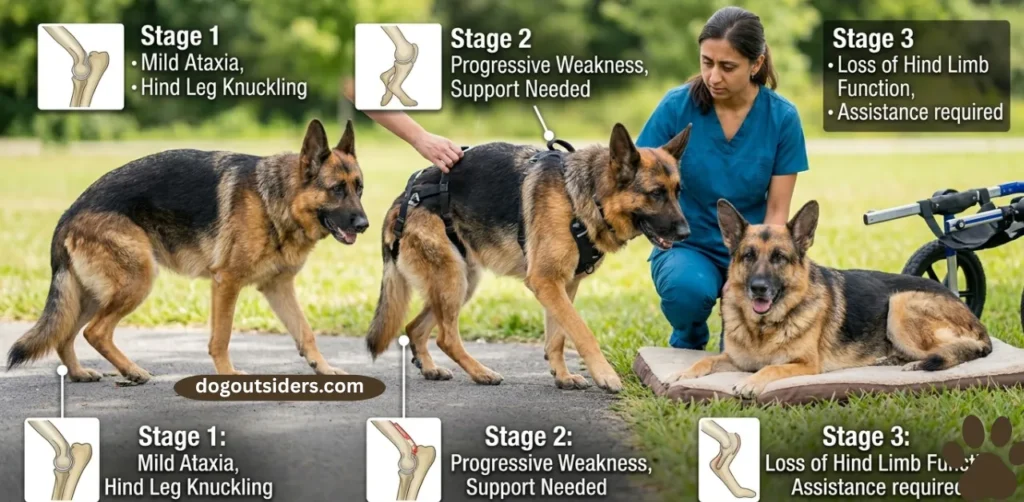
DM typically appears in dogs aged 8 and older. It begins with subtle weakness in the hind limbs and progresses — over months to years — to complete paralysis of the rear legs.
Early signs that are often mistaken for normal aging:
- Dragging or scuffing of one or both rear feet
- Difficulty rising from a lying position
- Loss of coordination in the rear legs (“wobbliness”)
- Muscle loss in the hindquarters
- Gradual loss of bladder and bowel control in advanced stages
What makes DM distinct from arthritis: Arthritis causes pain — DM typically does not. A dog with DM may show little or no sign of discomfort despite significant mobility loss. This distinction matters because pain management alone won’t address DM.
What Is Degenerative Myelopathy in German Shepherds?
Degenerative myelopathy (DM) is a progressive, incurable neurological disease affecting the spinal cord of German Shepherds, typically beginning after age 8. Caused by a genetic mutation, it starts with hind-leg weakness and progresses to paralysis. There is no cure, but genetic testing can identify at-risk dogs before symptoms appear, and physical rehabilitation significantly slows progression and maintains quality of life.
Prevention and management:
- Genetic testing (SOD1 mutation test) is available through several veterinary genetics labs
- Regular, appropriate physical exercise supports neuromuscular function and slows progression
- Physical rehabilitation therapy and hydrotherapy are the most evidence-supported interventions
- Mobility aids (carts/wheelchairs) extend quality of life in later stages
Issue 4: Exocrine Pancreatic Insufficiency (EPI)
EPI is one of the most commonly missed German Shepherd health issues — despite being significantly more prevalent in this breed than in most others.
The pancreas produces enzymes that digest food. In EPI, the pancreas fails to produce sufficient digestive enzymes, meaning food passes through the system largely undigested. Dogs with EPI absorb almost no nutrition from their meals — leading to severe weight loss despite a ravenous appetite. (Source: VCA Animal Hospitals)
Warning signs of EPI:
- Dramatic, rapid weight loss despite eating normal or increased amounts
- Chronic loose, pale, greasy, or foul-smelling stools
- Increased appetite — often described as insatiable
- Flatulence and abdominal discomfort
- Dull, poor-quality coat
Consider a scenario like this: A GSD owner noticed their dog eating voraciously but losing weight rapidly over six weeks. Multiple deworming treatments showed no improvement. An EPI blood test (cTLI — canine trypsin-like immunoreactivity) finally identified the cause. With pancreatic enzyme supplements added to each meal, the dog regained healthy weight within weeks.
Management: EPI is highly manageable once diagnosed. Supplementing each meal with pancreatic enzyme powder (available by prescription) allows normal digestion to occur. Most dogs with EPI return to a healthy weight and quality of life.
Prevention note: EPI has a genetic component — if your GSD’s parents or siblings were diagnosed with EPI, inform your vet for early monitoring.
Issue 5: Bloat (Gastric Dilatation-Volvulus / GDV)
Bloat — or gastric dilatation-volvulus (GDV) — is the most medically urgent condition on this list. It is a genuine veterinary emergency with a mortality rate that approaches 30% even with surgery. (Source: VCA Animal Hospitals)
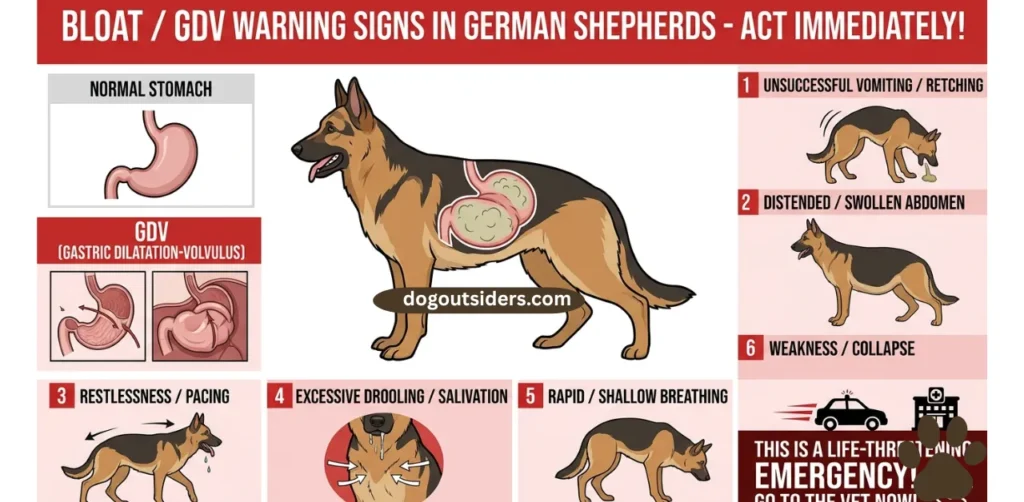
In bloat, the stomach fills with gas and, in GDV, physically twists on its axis — cutting off blood supply to the stomach and surrounding organs. Without emergency surgery, GDV is fatal within hours.
German Shepherds are a high-risk breed due to their deep chest anatomy.
Warning signs — these require immediate emergency veterinary care:
- Distended, hard, or visibly swollen abdomen
- Unproductive retching — attempting to vomit but bringing nothing up
- Excessive drooling
- Restlessness, inability to get comfortable
- Rapid, shallow breathing
- Pale or white gums
- Sudden collapse or extreme weakness
How Can I Prevent Bloat in My German Shepherd?
Bloat prevention in German Shepherds involves managing meal timing and activity. Feed two to three smaller meals daily rather than one large meal. Avoid vigorous exercise for at least one hour before and after eating. Use a slow-feeder bowl to reduce the speed of eating. Elevated bowls remain controversial — consult your vet. Gastropexy surgery (stomach tacking) during spay/neuter is highly effective for high-risk dogs.
Emergency vs. Scheduled: When to Go to the Vet Right Now
One of the most important things this guide can give you is clarity on urgency. Not every health concern is an emergency — but some absolutely are.
| Sign | Action | Urgency |
|---|---|---|
| Unproductive retching + swollen abdomen | Emergency vet NOW | ⛔ Life-threatening |
| Sudden hind-leg paralysis or inability to stand | Emergency vet NOW | ⛔ Life-threatening |
| Pale or white gums | Emergency vet NOW | ⛔ Life-threatening |
| Rapid, unexplained weight loss over weeks | Vet appointment within days | ⚠️ Urgent |
| Progressive rear-leg weakness or dragging feet | Vet appointment this week | ⚠️ Urgent |
| Reluctance to exercise or climb stairs | Scheduled vet appointment | 📋 Monitor |
| Increased appetite with poor coat quality | Scheduled vet appointment | 📋 Monitor |
| Intermittent front-leg limping | Scheduled vet appointment | 📋 Monitor |
If your GSD is facing a serious joint condition that is affecting their quality of life significantly, our guide on when joint conditions become life-quality decisions addresses the difficult conversations every committed owner may eventually face.
Prevention Tips: Protecting Your German Shepherd’s Long-Term Health
Prevention is genuinely the most powerful health tool available to German Shepherd owners. Here are the core pillars of a GSD preventive care routine:
1. Maintain a healthy body weight throughout life
Excess weight accelerates joint degeneration in hip and elbow dysplasia. It also increases GDV risk by putting additional pressure on the abdominal cavity.
2. Match exercise to life stage
- Puppies (under 18 months): Low-impact exercise only — no jumping, no repetitive stairs, no distance running
- Adults (18 months–7 years): Regular, consistent moderate-to-high exercise supports joint health and healthy weight
- Seniors (7+ years): Maintained gentle exercise is critical for DM slowing — but watch for post-exercise stiffness
3. Schedule regular preventive veterinary visits
Annual exams catch early-stage conditions before they progress. Many owners don’t realize you can combine preventive care appointments efficiently — for example, scheduling vaccinations alongside other routine procedures.
4. Feed a breed-appropriate diet
Large-breed puppy formulas control growth rate. Adult large-breed formulas support joint health. Discuss enzyme testing for EPI risk with your vet if your GSD has a family history.
5. Know the behavioral signs of pain
Dogs rarely cry out in pain — they change their behavior instead. If your GSD is suddenly less interested in play, reluctant to be touched, or acting out of character, it may be a health signal. Understanding behavioral changes that signal something is wrong helps you catch health issues that don’t yet have physical symptoms.
Common Owner Mistakes That Worsen These Health Conditions
Even the most devoted German Shepherd owners make these errors — often without knowing it:
❌ Over-exercising a GSD puppy
Forcing a puppy under 18 months through intensive training, long runs, or repeated jumping dramatically increases the risk of hip and elbow dysplasia. The growth plates aren’t closed yet.
❌ Feeding one large meal per day
A single large daily meal is a significant GDV risk factor. Switch to two to three smaller meals immediately.
❌ Delaying the vet because “they’re still eating”
EPI dogs eat ravenously and still waste away. A good appetite does not rule out serious illness.
❌ Attributing rear-leg changes to “getting old”
Early DM signs are regularly dismissed as normal aging. They are not. Early diagnosis allows for intervention that meaningfully slows progression.
❌ Skipping OFA screening
Hip and elbow screening at 2 years of age is the only way to confirm joint health status — and it creates a baseline for monitoring progression.
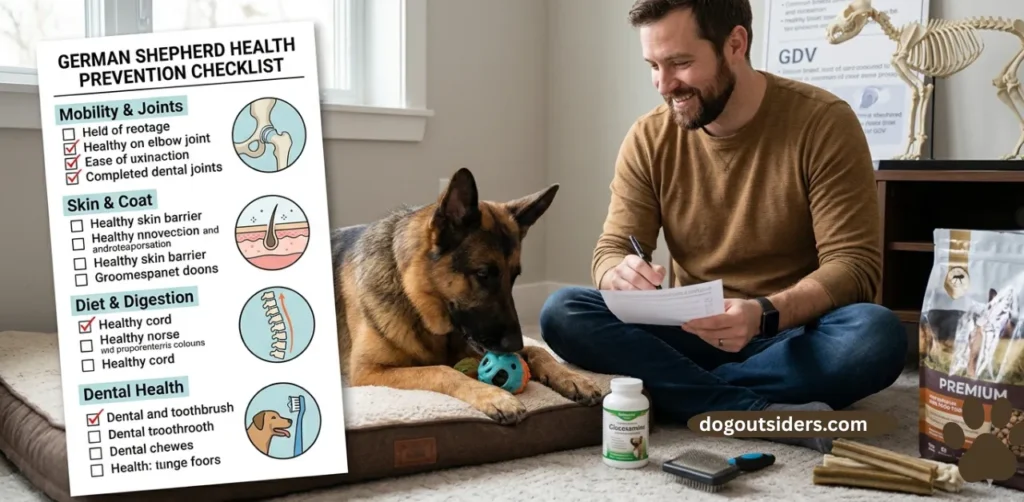
German Shepherd Health Monitoring Checklist ✅
Use this checklist monthly and before every vet visit:
Joint Health (Hip & Elbow Dysplasia):
- Normal gait — no limping, bunny hopping, or shortened stride
- Willingness to climb stairs and jump without hesitation
- No stiffness after rest periods
- Healthy muscle mass in hind and forequarters
Neurological (Degenerative Myelopathy):
- No foot dragging or scuffing of rear paws
- Normal coordination in rear legs
- No unexplained muscle loss in hindquarters
- Normal bladder and bowel control (senior dogs especially)
Digestive (EPI):
- Stable body weight — not losing despite eating normally
- Normal stool consistency and color
- No greasy, pale, or unusually foul-smelling stools
- Normal appetite (not insatiable)
Bloat Prevention (GDV):
- Fed two to three smaller meals daily (not one large meal)
- No vigorous exercise within one hour of meals
- Using a slow-feeder bowl if your GSD eats quickly
- Know your nearest 24-hour emergency vet clinic’s address and number
Your German Shepherd Is Counting on You — And You’re Already Ahead
The fact that you’re reading this means you’re ahead of the curve. Most German Shepherd health problems are either preventable or significantly more manageable when caught early. The conditions in this guide — hip dysplasia, elbow dysplasia, degenerative myelopathy, EPI, and bloat — all have warning signs that show up before they become crises.
Use the checklist above every month. Learn the behavioral changes that signal pain or discomfort. And never dismiss something that “seems a bit off” — with German Shepherds, early action is everything.
Bookmark this guide and share it with every GSD owner you know. And if you want to go deeper on exercise — one of the most powerful prevention tools available — use our dog exercise calculator to find the right activity level for your German Shepherd at every life stage.
You chose this breed because of everything they give you. This is how you give it back.
Frequently Asked Questions
The most common German Shepherd health issues are hip dysplasia, elbow dysplasia, degenerative myelopathy (DM), exocrine pancreatic insufficiency (EPI), and bloat (GDV). Hip dysplasia affects approximately 19–20% of tested GSDs. Each condition has specific early warning signs. Proactive screening, weight management, and appropriate exercise significantly reduce risk and improve outcomes for all five conditions.
Signs of hip dysplasia in German Shepherds include reluctance to climb stairs or jump, a “bunny hopping” rear gait, muscle loss in the hindquarters, and stiffness after rest. Definitive diagnosis requires X-rays at a veterinary clinic. If your GSD shows any of these signs, especially before age 3, request a hip evaluation promptly — early intervention significantly slows progression and improves quality of life.
Prevent bloat by feeding two to three smaller meals daily instead of one large meal, and avoid vigorous exercise for at least one hour before and after eating. Use a slow-feeder bowl to reduce eating speed. High-risk dogs may benefit from gastropexy surgery (stomach tacking) during spay or neuter. Know the emergency signs — unproductive retching and a swollen abdomen require immediate veterinary care.
Degenerative myelopathy (DM) is a progressive, genetic neurological disease that attacks the spinal cord of German Shepherds, typically beginning after age 8. It causes hind-limb weakness progressing to paralysis. There is no cure, but genetic testing (SOD1 mutation) identifies at-risk dogs before symptoms appear. Physical rehabilitation and consistent appropriate exercise significantly slow progression and maintain quality of life.
Yes — German Shepherds are predisposed to several serious breed-specific conditions, including hip dysplasia, degenerative myelopathy, EPI, and bloat. Their working-dog genetics, deep chest, and rapid large-breed growth rate contribute to these vulnerabilities. However, many conditions are highly manageable with early detection, OFA health screening, appropriate exercise, weight management, and regular veterinary care. Proactive owners significantly improve their GSD’s health outcomes and lifespan.
Exocrine pancreatic insufficiency (EPI) is a condition where the pancreas fails to produce sufficient digestive enzymes, causing severe weight loss despite normal or increased appetite. It is significantly more common in German Shepherds than most other breeds. EPI is diagnosed through a blood test (cTLI) and is highly manageable — adding prescription pancreatic enzyme powder to each meal allows most dogs to return to a healthy weight and normal life.
Early signs include subtle gait changes (limping, bunny hopping, rear-leg scuffing), unexplained weight loss despite eating normally, behavioral changes such as reduced activity or irritability, stiffness after rest, and digestive irregularities like chronic loose or pale stools. Dogs rarely show obvious pain — behavioral shifts are often the first indicator. Monthly health monitoring and annual vet exams are the most reliable early detection tools for German Shepherd health issues.