You chose one of the most remarkable breeds in the world. Now comes the real question: are you giving them everything they actually need to thrive?
German Shepherds are not like other dogs. They are working-bred animals — built for purpose, wired for challenge, and emotionally bonded to their people at a level that few breeds match. According to the American Kennel Club, German Shepherds are the third most popular dog breed in the United States, consistently valued for their intelligence, loyalty, and versatility. (Source: AKC)
But that same intelligence and emotional depth means they have demands that many owners underestimate. The things every German Shepherd owner needs go far beyond a leash and a food bowl.
This guide breaks down all 10 essentials — physical, mental, emotional, behavioral, and health-related — organized by priority so you know exactly where to focus first. Whether you’re a new GSD owner or a seasoned one doing a gut-check, this is the complete ownership framework your dog deserves.
What Do German Shepherds Need the Most?
Every German Shepherd owner needs:
- Daily structured exercise — minimum 2 hours of physical activity
- Mental stimulation — puzzle toys, training sessions, scent work
- Consistent obedience training — starting from day one
- Early socialization — with people, dogs, and environments
- A strong leadership routine — structure reduces GSD anxiety
- Quality nutrition — breed-appropriate diet for large, active dogs
- A proper grooming kit — double coat requires weekly brushing
- A safe crate or den space — for rest, recovery, and alone time
- Regular veterinary care — including breed-specific health screening
- Emotional connection — GSDs bond deeply and need daily engagement
Each of these is explained in full below.
The 10 Things Every German Shepherd Owner Needs
#1: Daily Structured Exercise — At Least 2 Hours
German Shepherds are not a “30-minute walk” breed. They need a minimum of 1.5–2 hours of genuine physical activity every day — and that activity needs to be varied and intentional. (Source: AKC)
“Structured” is the key word. A GSD wandering around a yard doesn’t meet this need. What works:
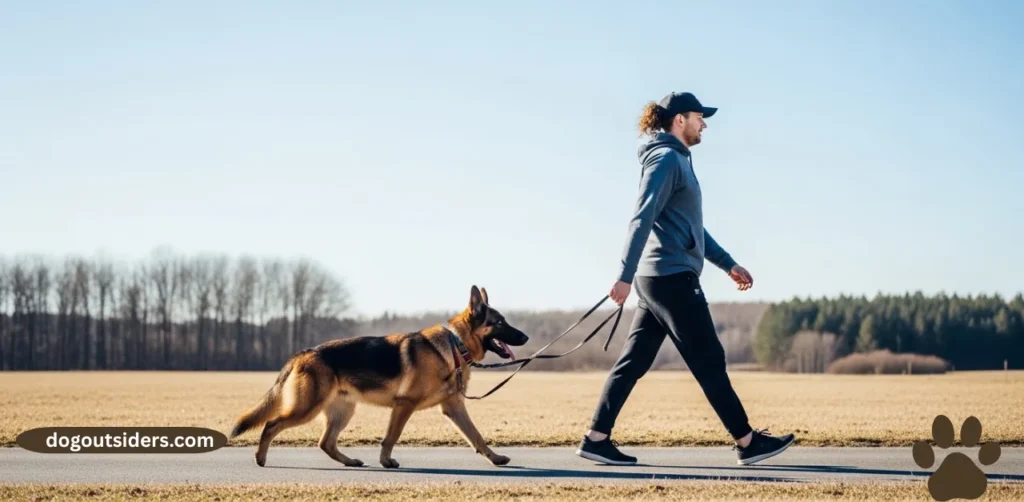
- Morning walk or run (30–45 minutes minimum)
- Off-leash play in a secure area (fetch, frisbee, agility)
- Evening training session (30 minutes — physical and mental combined)
Under-exercised GSDs develop destructive behaviors, excessive barking, and anxiety. It’s not misbehavior — it’s an unmet biological need.
Use our dog exercise calculator to find the exact right daily exercise amount for your GSD’s age, weight, and health status.
#2: Mental Stimulation — The Need Most Owners Underestimate
This is the gap that separates struggling GSD owners from thriving ones.
German Shepherds were bred to work — to track, herd, guard, and problem-solve for hours at a time. Their brain needs as much of a workout as their body. A physically tired GSD who is mentally bored is still a problematic GSD.
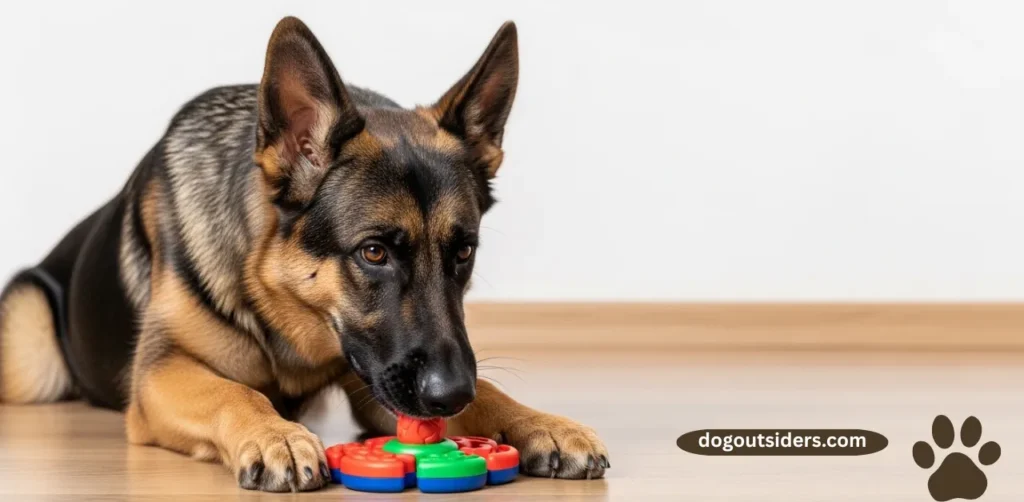
Daily mental stimulation options:
- Kong or puzzle toys filled with food — 15–20 minutes of focused problem-solving
- Nose work and scent games — hide treats or objects for your GSD to find
- Obedience training sessions — even 10 minutes of structured training engages their working mind
- New routes and environments — novel smells and experiences stimulate the brain
- Trick training — GSDs learn quickly and need the challenge of something new
Research in canine cognition confirms that working-breed dogs show significantly higher stress and behavioral problems when denied cognitive engagement. (Source: VCA Animal Hospitals)
A GSD who gets 2 hours of exercise and 30 minutes of mental stimulation is a completely different dog from one who only gets physical activity.
#3: Consistent Obedience Training From Day One
Training is not optional for a German Shepherd. It’s a psychological necessity.
GSDs need clarity, structure, and the satisfaction of understanding what’s expected of them. Without consistent training, they become anxious — not because they’re “dominant” or “stubborn,” but because uncertainty creates stress in a breed wired to work within a clear social structure.
What “consistent” means in practice:
- Daily 10–15 minute training sessions
- Same commands, same rules, from every family member
- Positive reinforcement as the foundation — corrections used sparingly and correctly
- Progression — always introducing new challenges as old ones are mastered
New GSD owners are often surprised to discover that some common approaches actually slow their dog’s progress rather than helping. The training mistakes that slow German Shepherd progress are worth reviewing before you establish your routine — because early training patterns are very hard to undo.
#4: Early and Ongoing Socialization
Socialization is not a puppy-only activity — it’s a lifelong practice for German Shepherds.
GSDs who are not properly socialized become reactive, anxious, or territorially aggressive toward strangers, other dogs, and unfamiliar environments. Given the breed’s size and protective instincts, a poorly socialized GSD is a serious management challenge.
Socialization priorities:
- Positive exposure to 100+ different people before 16 weeks of age
- Regular encounters with other well-mannered dogs
- Exposure to different environments — urban, suburban, parks, vehicles
- Ongoing “maintenance socialization” throughout adulthood — not just during puppyhood
Think of socialization as building a flexible, confident nervous system. The investment made early pays dividends for the dog’s entire life.
#5: A Strong Leadership Routine and Clear Structure
German Shepherds thrive under clear, calm, consistent leadership. This doesn’t mean domination — it means predictability.
A GSD who knows exactly what each day looks like, who their person is, what the rules are, and what’s expected of them is a calm, confident, well-adjusted dog. Remove that structure and the anxiety, destructive behavior, and reactivity follow quickly.
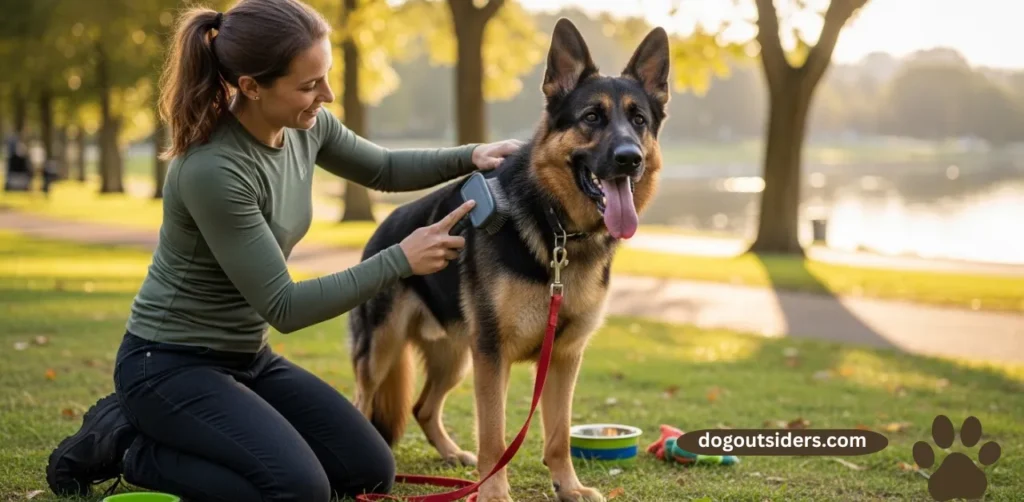
What effective GSD leadership looks like:
- Consistent daily routines (meals, walks, sleep times)
- Clear rules that are enforced by all household members
- Calm, confident energy from the owner — GSDs mirror their person’s emotional state
- Following through on every command given
For deeper insight into building the kind of relationship that makes your GSD genuinely want to work with you, explore the German Shepherd training secrets that professional trainers use to build that connection.
#6: Breed-Appropriate Quality Nutrition
A German Shepherd working 2+ hours daily has significant nutritional demands that cheap, filler-heavy kibble cannot meet.
What to look for in GSD nutrition:
- High-quality animal protein as the first ingredient — chicken, beef, lamb, or fish
- Large-breed formula — designed for the joint and bone demands of larger dogs
- Joint support ingredients — glucosamine and chondroitin are especially important given GSD hip dysplasia risk
- No corn syrup, artificial preservatives, or unnamed meat by-products
- Appropriate caloric density for your GSD’s activity level
Feeding schedule matters too: two meals daily (morning and evening) rather than one large meal reduces bloat risk — a serious concern for deep-chested breeds.
#7: A Complete Grooming Kit for Double-Coat Management
If you own a German Shepherd and don’t own a quality de-shedding brush, you will be buried in fur by week three.
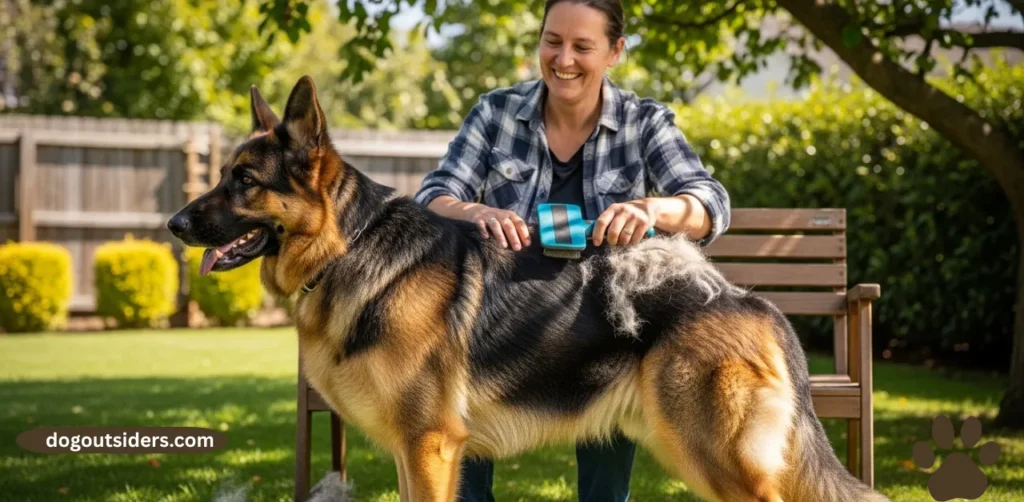
GSDs have a dense double coat that sheds year-round — with two major “blow coat” seasons in spring and fall where shedding intensifies dramatically. This is not a grooming preference — it’s a health requirement. Matted undercoat traps moisture and heat against the skin.
Your GSD grooming essential kit:
- Slicker brush — for surface coat maintenance (weekly)
- Undercoat rake or de-shedding tool (Furminator-style) — for undercoat removal
- Dog-appropriate shampoo — for monthly or as-needed baths
- Ear cleaning solution — GSDs with upright ears still accumulate wax and debris
- Nail clippers or grinder — nails should be trimmed every 3–4 weeks
#8: A Safe Den Space — Crate or Dedicated Area
German Shepherds need a defined, consistent space that is entirely theirs.
This isn’t about confining your dog — it’s about giving them a psychological “home base” that reduces anxiety, supports crate training, and provides a retreat when they need to decompress. Dogs, like humans, need somewhere that feels unambiguously safe and their own.
A properly introduced crate becomes a resource, not a punishment. Most GSDs, once crate-trained, choose to go to their crate voluntarily. If a crate isn’t your preference, a dedicated dog bed in a consistent location serves the same psychological function.
#9: Regular Veterinary Care and Breed-Specific Screening
German Shepherds are predisposed to several serious health conditions that require proactive monitoring — not reactive treatment.
Annual vet exams are a baseline. For GSDs specifically, your veterinary care plan should include:
- OFA hip and elbow screening at 2 years of age
- Genetic testing for degenerative myelopathy (DM) — especially if breeding
- Dental care — large breeds are prone to periodontal disease
- Weight monitoring — obesity dramatically accelerates joint disease in this breed
For a full breakdown of the five most common GSD health conditions and what to watch for, our guide to German Shepherd health issues and prevention tips covers everything you need to know to stay ahead of the most serious risks.
#10: Your Time, Presence, and Emotional Engagement
Every item on this list matters — but this one is the foundation underneath all of them.
German Shepherds do not do well as “yard dogs” or “weekend dogs.” They are one of the most deeply bonded breeds that exists — and they form that bond with you, specifically. Time away from you is experienced as genuine emotional loss. They watch for you. They wait for you. When you come home, it matters to them profoundly.
What emotional engagement looks like in practice:
- Daily one-on-one time — even 20 minutes of focused play or training
- Physical affection — most GSDs love physical closeness with their person
- Acknowledging them — speaking to them, including them, letting them know they’re seen
- Reading their signals — understanding what they’re trying to communicate
Learning to read your GSD’s emotional signals is one of the most valuable skills you can develop as a GSD owner — and it deepens the bond in ways that generic “dog ownership” advice never addresses.
Can German Shepherds Be Left Alone for 8 Hours?
Most adult German Shepherds can manage approximately 4–6 hours alone, but 8 hours is generally too long without intervention. GSDs are highly social and prone to separation anxiety — prolonged isolation leads to destructive behavior, excessive barking, and genuine emotional distress. If your work schedule requires 8-hour absences, a midday dog walker, doggy daycare, or a companion dog significantly reduces the impact.
Making longer absences manageable:
- Provide a Kong or frozen enrichment toy before leaving
- Leave worn clothing with your scent
- Use a dog camera to monitor and occasionally check in
- Hire a midday walker or pet sitter — even 30 minutes makes a significant difference
- Ensure full exercise before you leave — a tired GSD handles alone time better
How to Tell If Your German Shepherd Is Happy
A happy German Shepherd shows a relaxed, wiggly body with a loose tail wag at or above back level, soft eyes, an open mouth, and eager engagement with you and their environment. They seek you out voluntarily, play enthusiastically, eat normally, sleep well, and respond quickly to their name. Behavioral changes — withdrawal, appetite loss, excessive barking — are usually the first signal something is off.
Specific happiness signals in GSDs:
- The “GSD lean” — pressing their body against you
- Play bows — front legs down, rear up — an invitation and a sign of joy
- “Zoomies” — spontaneous bursts of running — typically a sign of happiness and energy release
- Bringing toys to you as a greeting or offering
- Relaxed, floppy ears — not pinned back or rigid
What Is the Leading Cause of Death in German Shepherds?
The leading causes of death in German Shepherds are cancer and musculoskeletal disorders (including degenerative myelopathy and severe hip dysplasia). Studies indicate cancer accounts for a significant proportion of GSD deaths in middle to older age, while degenerative conditions affecting mobility severely impact quality of life in senior dogs. Regular veterinary screening and maintaining a healthy weight are the most effective preventive measures.
GSD Needs vs. Wants — Quick Reference
| Category | Must-Have (Need) | Nice-to-Have (Want) |
|---|---|---|
| Exercise | 2 hrs structured daily activity | Agility course, swimming pool access |
| Mental | Daily training + puzzle toys | Nose work classes, sport competition |
| Training | Daily 10–15 min obedience sessions | Advanced tricks, canine sport titles |
| Nutrition | High-quality large-breed formula | Raw diet, customized meal plan |
| Grooming | De-shedding brush, weekly brushing | Professional grooming monthly |
| Space | Safe den/crate with consistent placement | Dedicated dog room, outdoor kennel |
| Health | Annual vet + breed-specific screening | Pet insurance, holistic supplements |
| Social | Daily owner interaction, regular socialization | Dog sport community, playdates |
Common Mistakes German Shepherd Owners Make
Even experienced owners make these errors. Recognizing them early saves months of frustration:
❌ Treating mental stimulation as optional
Physical exercise alone does not meet a GSD’s needs. A bored working dog is a destructive working dog. Mental engagement is non-negotiable.
❌ Inconsistent rules across household members
If one person enforces “off the sofa” and another invites the dog up, your GSD lives in perpetual uncertainty. GSDs need consistent rules from everyone.
❌ Skipping socialization after puppyhood
Socialization is a lifelong process, not a puppy phase. Adult GSDs who stop encountering new people, dogs, and environments become progressively more reactive.
❌ Leaving a young GSD alone for extended periods
Puppies and adolescent GSDs (under 2 years) should not be left alone for more than 3–4 hours. Their tolerance for isolation builds gradually with training and maturity.
❌ Confusing training with punishment
German Shepherds do not respond well to harsh punishment-based training. It damages trust and increases anxiety in a breed that is already sensitive to its owner’s emotional state. Positive reinforcement builds both skill and bond.
❌ Underestimating the shedding commitment
New GSD owners consistently underestimate the coat management required. Budget time — and invest in quality grooming tools — before you bring your dog home.
The training and behavioral guidance in this article is reviewed by Marcus Hendley, CPDT-KA (Certified Professional Dog Trainer through the Certification Council for Professional Dog Trainers), with 10 years of experience specializing in working breeds including German Shepherds, Belgian Malinois, and Dutch Shepherds. All health-related information is cross-referenced with AKC and VCA Animal Hospitals guidelines.
You’re More Ready Than You Think
Owning a German Shepherd is not for the faint-hearted — but here’s what the breed’s many devotees all know: when you meet these 10 needs consistently, the relationship that develops is unlike anything else in the dog world.
The GSD’s loyalty, intelligence, and emotional attunement create a partnership that goes far beyond typical pet ownership. They read you. They protect you. They work with you. And they will give you everything they have — as long as you give them what they need.
Bookmark this guide and share it with any GSD owner you know who’s trying to get it right. And if you’re ready to go deeper on the health side of GSD ownership, our comprehensive guide to the most common German Shepherd health problems covers everything your dog needs you to know — before symptoms appear.
You chose this breed. Now give them the life they were made for.
Frequently Asked Questions
German Shepherds need daily structured exercise (1.5–2 hours), consistent mental stimulation, positive obedience training, early socialization, and a deep emotional connection with their owner. Of these, mental stimulation is most commonly underestimated. A German Shepherd who receives adequate physical activity but no cognitive engagement will still develop behavioral problems. Start training and enrichment from day one and never stop.
Most adult German Shepherds can manage 4–6 hours alone, but 8 hours is generally too long. GSDs are highly social dogs prone to separation anxiety — extended isolation leads to destructive behavior and genuine emotional distress. If your schedule requires 8-hour absences, a midday dog walker, doggy daycare, or an enrichment routine before you leave significantly reduces the impact on your dog’s wellbeing.
The leading causes of death in German Shepherds are cancer and degenerative musculoskeletal conditions, including severe hip dysplasia and degenerative myelopathy. Cancer accounts for a significant proportion of deaths in middle-aged and older GSDs. Regular veterinary screening, maintaining a healthy body weight, and OFA health testing are the most effective preventive strategies every German Shepherd owner should prioritize.
A happy German Shepherd shows a loose, wiggly body, a relaxed tail wag at back level, soft eyes, and eager engagement with you and their environment. They seek you out voluntarily, eat well, sleep soundly, and respond quickly to their name. Behavioral changes — withdrawal, appetite loss, excessive barking, or avoidance — are usually the first indicators that something has shifted in their emotional state.
In dog language, you say “I love you” through slow blinking and soft eye contact, physical closeness and gentle touch, calm and consistent presence, and engaging them in activities they enjoy. Responding to your German Shepherd’s signals, giving them undivided attention during training or play, and maintaining their daily routine all communicate love and security in ways dogs genuinely understand and respond to.
Neither is objectively better — the choice depends on your lifestyle and preferences. Male GSDs are typically larger, may be more assertive, and tend toward stronger territorial instincts. Females are often slightly smaller, can mature faster behaviorally, and may be easier to manage for first-time owners. Both sexes are equally intelligent, trainable, and loyal. Individual temperament and early socialization matter far more than sex.
Mentally stimulate a German Shepherd through daily obedience training sessions, puzzle feeders and Kong toys, nose work and scent games, new routes and environments, trick training, and interactive play. Aim for at least 20–30 minutes of dedicated mental engagement daily in addition to physical exercise. Rotating activities prevents habituation — GSDs need novelty to stay genuinely engaged and cognitively challenged.