You swept the floors this morning. Then your dog came in from the yard.
Now there’s a trail of paw prints across the kitchen, a fresh layer of hair on the couch, and that faint smell you’ve stopped noticing — until a guest walks in and their eyes say everything.
If this sounds familiar, you’re not a bad housekeeper. You’re just missing the right system. The 6 best cleaning habits for dog owners aren’t about cleaning more — they’re about cleaning strategically so you stay ahead of the mess instead of constantly chasing it.
This guide walks you through each habit, explains why it works, and gives you a ready-to-use daily, weekly, and monthly schedule so you’re never guessing what needs attention next.
According to the American Kennel Club, dogs shed dead hair and skin cells continuously — and without the right maintenance habits, that material builds up in carpets, upholstery, and HVAC systems far faster than most owners realize (Source: AKC).
Let’s fix that — one habit at a time.
Why Dog Owners Need a Cleaning System, Not Just Cleaning Tips
Most dog owner cleaning advice reads like a random list: vacuum more, wash the bedding, deal with accidents fast. That’s all true — but a list of tips isn’t a system.
A system works because it fits around your dog’s actual daily routine. And your dog’s routine is predictable.
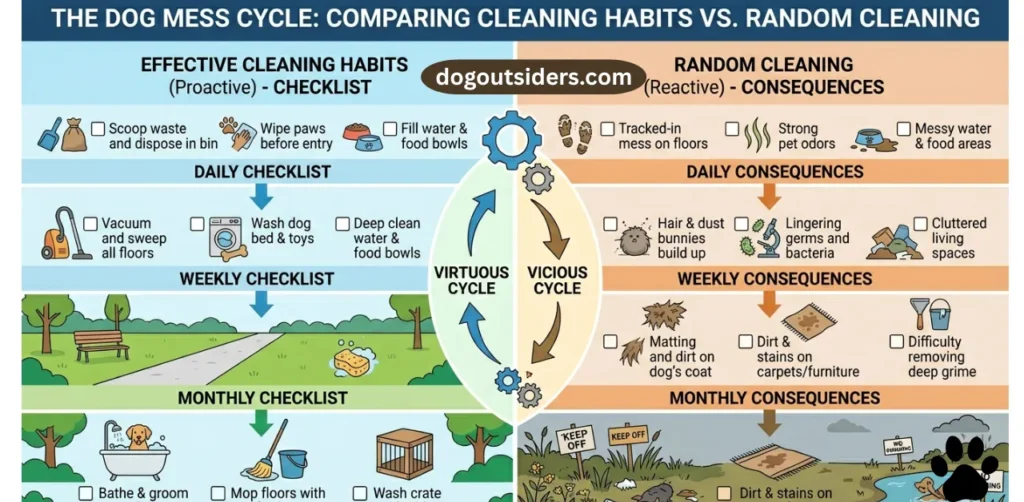
The Difference Between Cleaning Reactively and Cleaning Systematically
Reactive cleaning means you clean when something is visibly dirty. Systematic cleaning means you address mess at its source, on a schedule, before it accumulates into an overwhelming problem.
The difference in effort is significant. One approach leaves you feeling like you’re always behind. The other keeps you consistently ahead with far less total time spent.
How Your Dog’s Daily Routine Creates Mess Patterns You Can Predict
Dogs follow patterns. They go outside at roughly the same times. They sleep in the same spots. They eat, drink, and play in predictable locations.
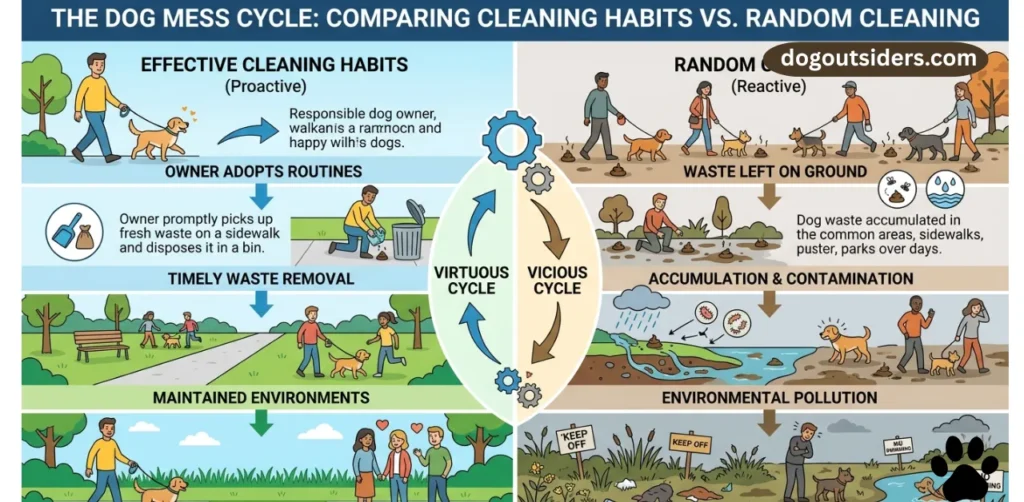
Once you map those patterns, you can build habits that intercept mess before it spreads. That’s exactly what these 6 habits do.
Understanding what responsible dog ownership looks like at home — including whether keeping dogs outside creates additional hygiene challenges — helps frame cleaning habits within the bigger picture of caring for your dog well.
6 Best Cleaning Habits for Dog Owners — The Complete System
Habit 1: Groom Your Dog Regularly to Reduce the Mess at the Source
The single most effective thing you can do to reduce indoor mess isn’t cleaning — it’s grooming.
Every time you brush your dog, you remove loose hair, dead skin cells, and dirt before they end up on your floors and furniture. This is the habit that reduces your cleaning workload across every other area of the house.
How Grooming Frequency Directly Reduces Your Home Cleaning Workload
The right grooming frequency depends on your dog’s coat:
- Short-haired dogs (Beagles, Boxers): Brush 1–2 times per week
- Medium-haired dogs (Golden Retrievers, Huskies): Brush 3–4 times per week
- Long-haired dogs (Sheepdogs, Collies): Daily brushing during shedding seasons
According to PetMD, regular brushing distributes natural oils through the coat, reduces shedding by up to 90% during high-shed seasons, and dramatically decreases the amount of hair that lands on your furniture and floors (Source: PetMD).
Grooming tip: Brush your dog outdoors when possible. This keeps the loose hair outside rather than redistributed indoors.
Many owners who struggle with constant dog hair report that doubling their brushing frequency reduced their vacuuming needs by half. The math is simple — less loose hair on the dog means less loose hair everywhere else.
Habit 2: Vacuum on a Dog-Owner Schedule, Not a Human One
The average non-pet-owner vacuums once a week. That schedule doesn’t work for dog owners.
Dog hair, dander, and tracked-in dirt accumulate at a rate that standard weekly vacuuming can’t keep up with. The result is hair that embeds deeper into carpet fibers and furniture — making it harder to remove over time, not easier.
How Often Should You Vacuum If You Have a Dog?
Here’s the honest frequency guide competitors don’t provide:
- High-traffic areas (living room, dog sleeping spots): Every 2–3 days
- Bedrooms (if your dog has access): 2 times per week
- Hardwood or tile floors: Daily quick sweep or robot vacuum run
- Upholstered furniture: Once per week minimum (use an upholstery attachment)
A robot vacuum running on a daily schedule is one of the most impactful tools a dog owner can invest in. Modern HEPA-filter robot vacuums capture pet dander as small as 0.3 microns — a meaningful health benefit for anyone with pet allergies in the home.
For outdoor dogs who come in regularly, managing what they track in from outside — including dirt, pollen, and debris — is a key part of keeping indoor surfaces cleaner between full vacuum sessions.
Habit 3: Use Enzyme Cleaners for Accidents — Not Regular Cleaners
When your dog has an accident on the carpet or upholstery, what you clean it with matters as much as how fast you clean it.
Most owners reach for whatever household cleaner is nearby. The problem: regular cleaners break down the visible stain but leave behind odor-causing proteins that your dog can still smell — which is exactly why many dogs return to the same spot repeatedly.
Why Regular Cleaners Don’t Eliminate Pet Odor (And What Does)
Enzyme cleaners work differently. They contain biological enzymes that break down the actual organic compounds — urine, feces, saliva, vomit — at a molecular level. This eliminates the odor at the source rather than masking it with a scent.
How to use an enzyme cleaner correctly:
- Blot up as much of the accident as possible first (don’t rub — it spreads the stain deeper)
- Apply the enzyme cleaner generously — it needs to saturate the same area the accident did
- Let it sit for the time specified on the label (usually 10–15 minutes)
- Blot dry. Don’t steam clean immediately — heat deactivates the enzymes.
Important: Enzyme cleaners need time to work. Rushing the process reduces their effectiveness significantly.
According to the AVMA, pets that can smell their own elimination sites are significantly more likely to return to those spots — making complete odor elimination a behavioral management issue as much as a hygiene one (Source: AVMA).
Habit 4: Build a Paw-Cleaning Entry Routine
Muddy paws are one of the most common — and most preventable — sources of indoor mess for dog owners. Yet almost no cleaning guide addresses how to stop the dirt at the door rather than cleaning it off the floor later.
The 60-Second Paw Check That Stops Dirt Before It Spreads
Build this into every single walk. It takes under a minute and it saves you from mopping floors or scrubbing paw prints off hardwood multiple times per day.
The basic entry routine:
- Keep a dedicated towel or paw-wiping mat at every door your dog uses
- Wipe all four paws before your dog advances further into the house
- On wet or muddy days, keep a bucket of clean water and a small washcloth near the door for a quick rinse-and-dry
- For dogs who resist paw handling — practice short, rewarded paw-handling sessions daily until it becomes routine
Consider paw wax during winter months. It prevents salt and chemical ice-melt products from irritating your dog’s paws AND creates a slight barrier that reduces dirt adhesion.
This habit alone can reduce your floor-cleaning frequency by 30–40% during wet seasons.
Habit 5: Choose Cleaning Products That Are Safe for Your Dog
This is the most overlooked habit on this list — and potentially the most important for your dog’s health.
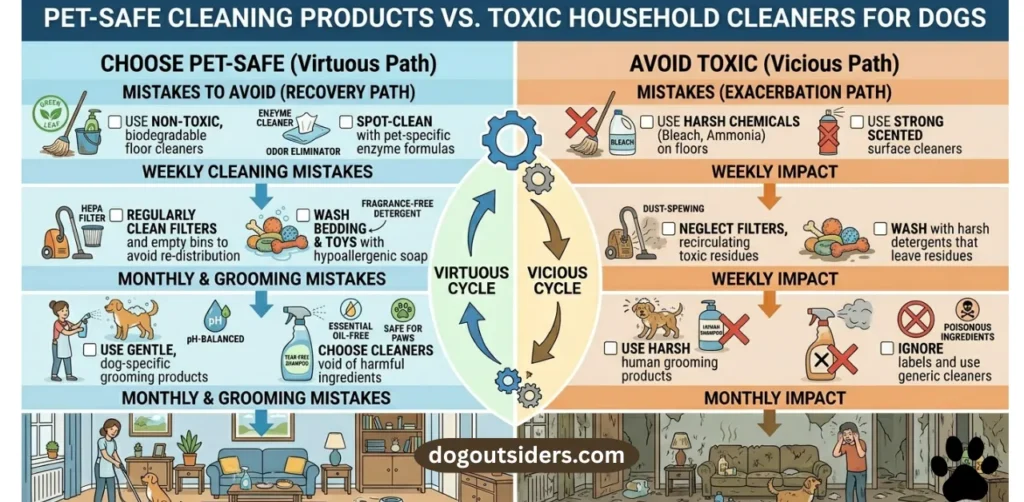
Many common household cleaning products contain chemicals that are toxic to dogs. Dogs walk on cleaned surfaces and then lick their paws. They rest on floors and furniture where cleaners have been applied. Exposure happens constantly — and owners often don’t make the connection.
Common Household Cleaners That Are Toxic to Dogs
| Cleaning Product | Toxic Component | Risk to Dogs |
|---|---|---|
| Bleach-based cleaners | Sodium hypochlorite | Respiratory irritation, chemical burns |
| Ammonia-based cleaners | Ammonia | Respiratory distress, mucous membrane damage |
| Phenol disinfectants (Pine-Sol) | Phenols | Liver damage, especially in small breeds |
| Antibacterial sprays (some) | Benzalkonium chloride | Skin and GI irritation |
| Essential oil diffusers/sprays | Tea tree, eucalyptus, citrus | Neurological and liver toxicity |
Dogs also exhibit behavioral stress signals — including restlessness, excessive licking, and avoidance behaviors — when exposed to harsh chemical odors. If your dog seems unusually agitated after cleaning, the products you’re using may be part of the problem. Understanding the behavioral warning signs dogs display when stressed or uncomfortable can help you identify whether your cleaning routine is affecting your dog’s wellbeing.
Pet-Safe Alternatives That Actually Clean
- White vinegar + water (50/50): Effective on hard floors, glass, and many surfaces. Natural deodorizer.
- Baking soda: Excellent odor absorber for carpets and upholstery. Leave for 15 minutes before vacuuming.
- Castile soap + water: Gentle, plant-based, effective for general surface cleaning.
- Certified pet-safe enzymatic cleaners: Safe for all surfaces and highly effective on pet messes.
Always ensure rooms are well-ventilated after cleaning — even with pet-safe products — and keep your dog out until surfaces are fully dry.
Habit 6: Clean Dog Bowls, Toys, and Bedding on a Schedule
This is the cleaning habit that almost every dog owner skips — and it’s the one with the most significant health implications.
A 2011 study by NSF International identified dog food bowls as one of the top 10 germiest spots in the average American home — harboring bacteria including E. coli, Salmonella, and MRSA (Source: NSF International).
How Often Should You Wash Dog Bedding and Bowls?
Here’s the frequency guide most cleaning articles never provide:
| Item | Minimum Cleaning Frequency |
|---|---|
| Dog food and water bowls | Daily rinse; full wash every 2–3 days |
| Dog bed/blanket | Every 1–2 weeks |
| Soft dog toys | Every 2 weeks (machine wash where possible) |
| Hard rubber/plastic toys | Weekly (dishwasher safe, or scrub with pet-safe soap) |
| Dog crate/pen | Wipe down weekly; deep clean monthly |
| Collar and leash | Once per month minimum |
Bowl-washing tip: Run stainless steel or ceramic bowls through the dishwasher for the most thorough sanitization. Plastic bowls develop micro-scratches over time that harbor bacteria even after washing — replace them with stainless or ceramic alternatives.
Bedding tip: Use a dog bed with a removable, machine-washable cover. Wash on a hot cycle (at least 140°F / 60°C) to kill dust mites and bacteria effectively.
Dog Owner Cleaning Schedule — Daily, Weekly, and Monthly
This is the complete schedule no competitor article provides. Use it as your reference.
| Frequency | Task |
|---|---|
| Daily | Quick sweep/robot vacuum hard floors |
| Daily | Wipe down dog bowls and refill with fresh water |
| Daily | Paw wipe at entry points after walks |
| Every 2–3 days | Vacuum high-traffic carpeted areas and furniture |
| Every 2–3 days | Full wash of dog food and water bowls |
| Weekly | Full vacuum of all rooms including under furniture |
| Weekly | Wipe down hard toys and play areas with pet-safe cleaner |
| Weekly | Spot-check dog’s sleeping areas for odor or staining |
| Every 1–2 weeks | Wash dog bedding, blankets, and bed covers |
| Every 2 weeks | Wash soft plush toys |
| Monthly | Deep clean dog crate or pen |
| Monthly | Wash collar, leash, and harness |
| Monthly | Replace HVAC filter (more often during peak shed seasons) |
| Seasonally | Professional carpet clean or deep upholstery treatment |
Print this. Put it on the fridge. It removes the guesswork entirely.
Cleaning Mistakes Dog Owners Make (And How to Fix Them)
Even owners who clean regularly make these mistakes — and they’re why the mess and odor keep coming back.
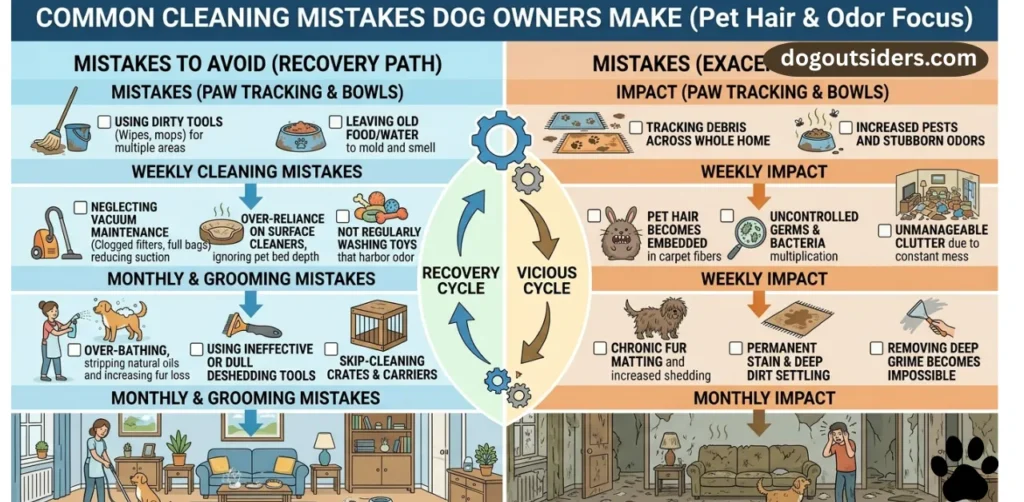
- ❌ Using regular cleaners on pet accidents. As covered above, only enzyme cleaners break down odor at the molecular level. Regular cleaners mask the smell temporarily — but your dog can still detect it.
- ❌ Vacuuming without a HEPA filter. Standard vacuum filters recirculate pet dander and fine particles back into the air. A HEPA-filter vacuum captures particles as small as 0.3 microns — significantly improving indoor air quality for both you and your dog.
- ❌ Washing dog bedding in cold water. Cold water doesn’t kill dust mites, bacteria, or the oils embedded in pet bedding. Always wash on a hot cycle (140°F minimum) for effective sanitization.
- ❌ Ignoring air quality. Pet dander is airborne — vacuuming alone doesn’t address it. A HEPA air purifier running in your main living spaces continuously removes dander, hair particles, and pet-related allergens from the air. According to the AVMA, pet dander is one of the leading triggers of indoor allergy symptoms in households with pets (Source: AVMA).
- ❌ Letting the dog’s outdoor hygiene slide. Dogs that spend significant time outdoors track in far more dirt, pollen, and bacteria than indoor dogs. Building a consistent entry routine — including understanding the hygiene implications of dogs spending extended time outside — directly reduces your indoor cleaning burden.
- ❌ Skipping the grooming step. If your cleaning routine doesn’t start with regular brushing, you’re managing the symptom (hair everywhere) rather than the source (excess shedding). Grooming is the foundation that makes every other habit easier.
A Clean Home and a Happy Dog Are Both Possible
Here’s the truth no one says out loud: you’re not losing the cleaning battle because you’re not trying hard enough. You’re losing it because you’ve been cleaning without a system.
The 6 best cleaning habits for dog owners in this guide give you that system. They’re not about perfection — they’re about building consistent, targeted routines that work WITH your dog’s natural daily patterns rather than against them.
Start with just two or three habits this week. Add the schedule. Notice how much less time you spend cleaning reactively when you build the right habits proactively.
Save this article to Pinterest so you always have the schedule and product guide on hand. And if you’re navigating other aspects of responsible dog ownership and home management, explore the resources available at dogoutsiders.com — there’s a lot more practical guidance waiting for you there.
Your home can smell fresh. Your floors can stay cleaner. And your dog doesn’t have to choose between the two.

Jahanzaib
Jahanzaib, Certified Professional Dog Trainer (CPDT-KA) and pet care lifestyle consultant with 7+ years of experience advising dog owners on home management, hygiene, and responsible pet ownership. Jahanzaib specializes in practical systems for integrating dog care into everyday home routines without sacrificing cleanliness or quality of life. All content is reviewed for accuracy against current veterinary and pet care guidelines before publication.
This article was reviewed for accuracy by a Certified Professional Dog Trainer (CPDT-KA) and cross-referenced against current AVMA and AKC pet care guidelines. Last Updated: June 2026.
Frequently Asked Questions
Build a systematic routine rather than cleaning reactively. The 6 best cleaning habits for dog owners — including regular grooming, enzyme cleaners for accidents, a paw-wiping entry routine, and a daily vacuum schedule — prevent mess from accumulating rather than chasing it after the fact. Consistency matters more than the total time you spend cleaning each week.
Vacuum high-traffic areas and furniture every 2–3 days at minimum. For hardwood or tile floors, a daily robot vacuum run works well. Weekly full-house vacuuming is the absolute minimum for dog owners — standard once-a-week schedules allow pet hair to embed deeper into carpet fibers, making it harder and more time-consuming to remove over time.
Use enzyme cleaners on accident areas — they break down odor-causing proteins at the molecular level, which regular cleaners cannot do. Supplement with baking soda on carpets, a HEPA air purifier running continuously, and washing dog bedding on a hot cycle every 1–2 weeks. Masking odor with sprays only works temporarily; eliminating the source is the only permanent solution.
Many common cleaners are not safe for dogs. Bleach, ammonia-based products, phenol disinfectants like Pine-Sol, and some essential oil sprays can cause respiratory irritation, GI issues, or liver damage. Safe alternatives include white vinegar and water, castile soap solutions, baking soda, and certified pet-safe enzyme cleaners. Always keep dogs out of cleaned areas until surfaces are completely dry.
Wash dog bedding every 1–2 weeks using a hot water cycle of at least 140°F. This temperature effectively kills bacteria, dust mites, and the oils embedded in pet fabric. Use a dog bed with a removable, machine-washable cover for convenience. Bedding washed in cold water may look clean but will not be properly sanitized — hot water is essential.
Daily vacuuming isn’t always necessary, but it depends on your dog’s coat and your home’s surfaces. Short-haired dogs on hardwood floors may only need every 2–3 days. Heavy-shedding breeds on carpet benefit from daily vacuuming or a daily robot vacuum run. Using a HEPA-filter vacuum ensures you’re capturing dander and fine particles rather than redistributing them into the air.
Baking soda is the most effective natural odor absorber — sprinkle on carpets and upholstery, leave for 15 minutes, then vacuum thoroughly. Activated charcoal bags also absorb airborne pet odors effectively and can be placed in rooms where your dog spends the most time. For persistent odor embedded in fabric or carpet, enzyme cleaners address the organic source that baking soda alone cannot fully eliminate.