You did something. Or maybe you didn’t — and that’s what’s eating at you.
Your German Shepherd is acting differently. They won’t look at you. They left the room when you sat down. They ignored the treat you offered. And now you’re sitting there wondering: Is my German Shepherd mad at me?
The good news is that you’re paying attention — and that already says something important about the bond you have with your dog.
According to the American Kennel Club, German Shepherds are one of the most emotionally intelligent and people-attuned breeds in existence. (Source: AKC) That means they feel things deeply — and when something is off, they show it. The challenge is learning to read their signals accurately.
This guide walks you through 7 specific signs that your German Shepherd is upset with you, how to distinguish upset from stress or illness, what the science actually says about whether GSDs hold grudges, and — most importantly — how to repair your bond when something has gone wrong.
Let’s figure out what your dog is actually trying to tell you.
How Do German Shepherds Show They Are Upset?
German Shepherds show they are upset through seven consistent behavioral signals:
- Avoiding eye contact — looks away or turns their head deliberately
- Ignoring commands they normally follow without hesitation
- Leaving the room or moving away when you approach
- Flattened ears pressed back against the head
- Low tail position held stiff or tucked between legs
- Excessive yawning or lip licking — classic calming signals
- Refusing food or treats from you specifically
These signals are your German Shepherd’s way of communicating discomfort, disappointment, or emotional withdrawal — without words. Understanding each one helps you respond correctly instead of accidentally making things worse.
7 Signs Your German Shepherd Is Mad at You
Not every GSD upset signal looks the same. Some are subtle. Some are loud. Here’s what each one actually means — and why German Shepherds express it differently than most breeds.
Sign 1: Deliberate Avoidance and Eye Contact Withdrawal
This is one of the clearest signals in the German Shepherd emotional vocabulary. When a GSD deliberately turns their head away from you — especially after you’ve done something they disliked — it’s not accidental.
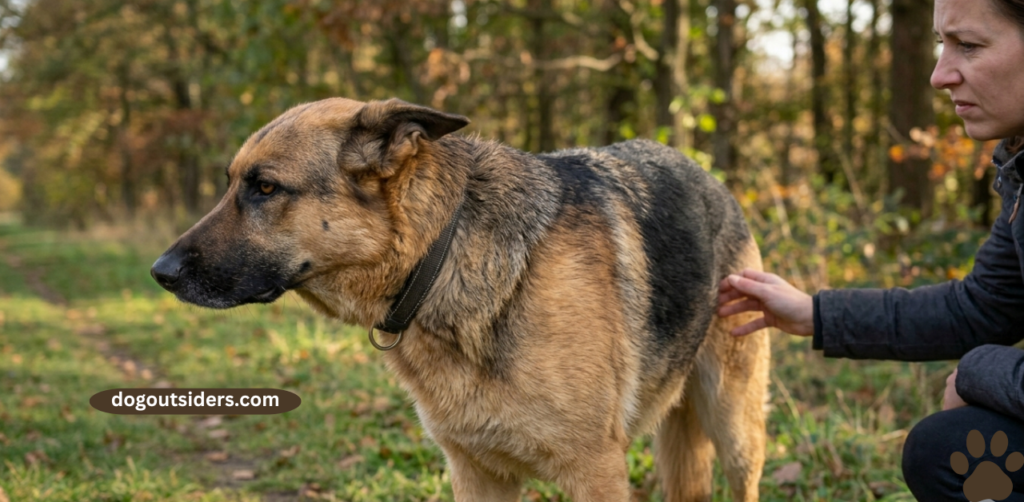
In canine behavioral science, this is called a “cut-off signal.” It communicates: I need distance from you right now. (Source: VCA Animal Hospitals)
German Shepherds, because of their high intelligence and strong bond with their owners, use this signal precisely. They’re not randomly looking away — they’re choosing not to engage.
What it looks like:
- Head turns 45–90 degrees away when you try to make eye contact
- Moving to the far side of the room and lying with their back toward you
- Walking past you without acknowledgment when they’d normally greet you
Sign 2: Ignoring Commands They Know Well
A German Shepherd who suddenly “forgets” how to sit, stay, or come when called — despite knowing these commands fluently — is often communicating something emotionally, not cognitively.
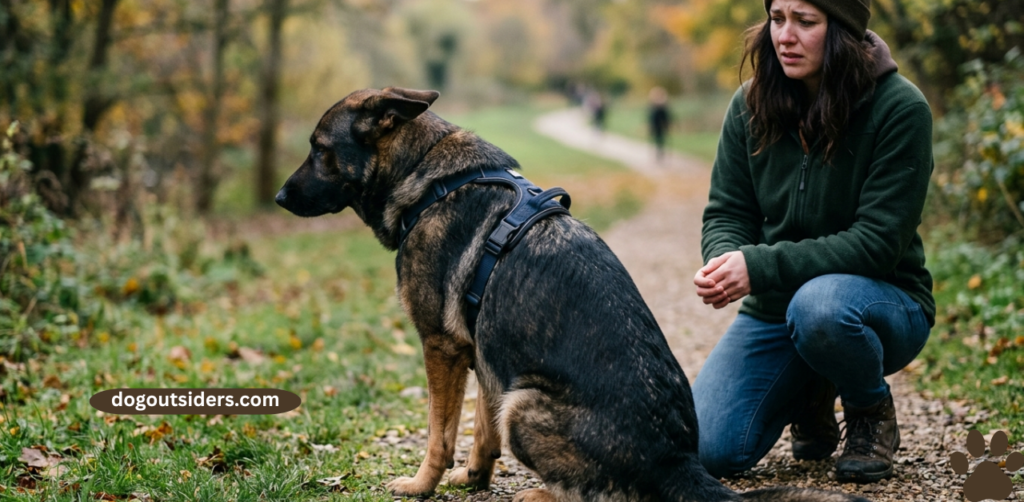
This is especially true when the behavior is selective. If they respond to your partner but not to you, that’s a behavioral signal, not a training gap.
Important distinction: Sudden command non-compliance can also indicate hearing issues or physical pain. If this appears alongside lethargy or other physical symptoms, rule out medical causes first.
Sign 3: Leaving the Room When You Enter
A German Shepherd who used to follow you everywhere — the kitchen, the bathroom, every room — suddenly gets up and leaves when you sit down is demonstrating deliberate emotional distance.
This behavior is particularly meaningful in GSDs because this breed is famously velcro-like with their owners. When that following behavior reverses, something has shifted emotionally.
Consider a scenario like this: A GSD named Rex began consistently leaving the living room whenever his owner returned from work. After reviewing recent routines, the owner realized they had shifted to coming home and immediately crating Rex for “calm time.” Rex’s avoidance was a clear communication about that abrupt change in their reunion ritual.
Sign 4: Flattened Ears and Low Tail Position
These are two of the most readable body language signals in any dog — but in German Shepherds, they’re especially expressive due to the breed’s naturally erect ears and prominent tail carriage.

Ears:
- Relaxed/happy: Upright and slightly forward
- Alert/curious: Fully erect and pointed
- Upset/stressed: Pressed flat or angled back against the skull
Tail:
- Confident/happy: Held at or above back level, relaxed wag
- Uncertain/submissive: Carried low, between the legs
- Upset/conflicted: Stiff, low, with minimal or tense movement
When you see both signals together — ears back and tail low — your GSD is communicating clear emotional discomfort.
Sign 5: Excessive Yawning, Lip Licking, and Head Turns
These three behaviors are what animal behaviorists call “calming signals” — a communication system dogs use to de-escalate tension and express discomfort. (Source: AVMA)
Research by Norwegian dog trainer and behaviorist Turid Rugaas identified over 30 calming signals in dogs, with yawning, lip licking, and head turns among the most universal.
When your GSD suddenly yawns excessively during an interaction with you, or repeatedly licks their lips without food present, they’re saying: This situation is making me uncomfortable and I’m trying to manage it.
This signal overlaps significantly with stress — which is why distinguishing between upset and stress matters (see next section).
Sign 6: Refusing Food or Treats From You Specifically
This is the one that really gets owners’ attention — and for good reason. A German Shepherd who eats normally from their bowl but refuses a treat directly from your hand is making a deliberate social choice.
Food refusal that is targeted at you specifically is different from general appetite loss. General appetite loss may indicate illness. Person-specific food refusal is a behavioral signal.
If your GSD is eating fine from their bowl but turning away when you offer something directly, it’s worth exploring whether something in your recent interactions has shifted. You might also find it useful to read about why some dogs refuse food but still accept treats — the behavioral patterns overlap in interesting ways.
Sign 7: Prolonged Sulking or Flat Energy
This is the quietest sign — and often the most misread as laziness or illness.

A German Shepherd who is emotionally withdrawn may simply seem “flat.” Less enthusiastic. Slower to respond. Lacking their usual zest for interaction or play.
This behavior typically lasts hours to a day or two in most cases — not weeks. If “flat energy” persists beyond 48–72 hours, it’s time to consider medical causes rather than emotional ones.
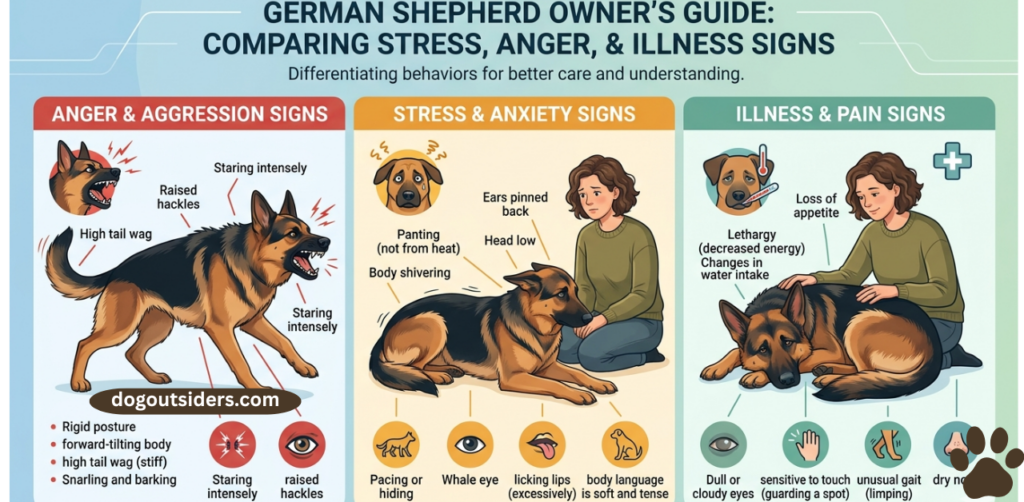
Is Your German Shepherd Mad, Stressed, or Sick? How to Tell the Difference
This is arguably the most important distinction any GSD owner can make — and the one no competitor on this topic covers adequately.
The same surface behaviors can indicate three very different underlying states:
| Signal | Emotionally Upset | Stressed / Anxious | Potentially Ill |
|---|---|---|---|
| Avoidance behavior | Directed at you specifically | General — avoids multiple people/things | Avoids everything; seeks isolation |
| Appetite change | Refuses from YOU; eats normally otherwise | May eat less overall | Significant overall appetite reduction |
| Energy level | Flat but responsive | Restless, panting, unable to settle | Lethargic, unresponsive |
| Ear/tail signals | Directed response to your presence | Constant, regardless of who’s present | Absent posturing; limp or rigid |
| Duration | Hours to 1–2 days | Ongoing until stressor is resolved | Progressive — gets worse over time |
| Response to distraction | Improves with positive engagement | May help temporarily | Does not improve |
The critical rule: If any signal persists beyond 48 hours without improvement, or if you observe physical symptoms (vomiting, diarrhea, shaking, difficulty moving), contact your veterinarian. Emotional upset resolves. Illness does not.
Can German Shepherds Hold Grudges Against Their Owners?
German Shepherds do not hold grudges the way humans do. Dogs, including GSDs, do not have the episodic memory capacity to replay a specific event and sustain deliberate resentment over time. However, they do form strong associative emotional memories — meaning they remember how a situation or person made them feel, even if they cannot recall the specific event.
This means your GSD won’t “plan revenge.” But they may associate you with a recent negative experience and respond with caution or emotional distance until enough positive interactions rebuild that association.
Research in canine cognition confirms that dogs have emotional memories tied to associative learning rather than narrative recall. (Source: Psychology Today — Canine Science)
How Long Does a German Shepherd Stay Mad?
Most German Shepherds show signs of emotional upset for a few hours to a maximum of 1–2 days following a negative interaction. Unlike humans, they don’t ruminate. Their emotional state is heavily influenced by the next interaction — which is why responding quickly with calm, positive engagement is so effective.
The faster you respond with consistent warmth and patience, the faster the emotional reset. German Shepherds are not built to hold onto negative states — they are built to bond.
Common Owner Mistakes That Make Things Worse
When owners sense their GSD is upset, the instinct is often to overcorrect. Unfortunately, some of the most common responses actually deepen the emotional withdrawal.
❌ Forcing physical affection
Hugging, holding, or pulling a withdrawn GSD toward you violates their need for space. It signals that you’re not reading their communication — which erodes trust further.
❌ Repeated commands or raised voice
If your GSD is ignoring you and you escalate to louder commands, you add pressure to an already tense dynamic. They’re not being stubborn — they’re communicating.
❌ Punishing the avoidance behavior
Correcting a dog for moving away from you — which is a calming signal — punishes them for doing the right thing emotionally. It removes their only safe coping mechanism.
❌ Reverting to punishment-based training during the repair phase
This is the most damaging mistake. If you’re trying to rebuild trust, any harsh correction during this window deepens the emotional withdrawal significantly.
These are also related to the broader training mistakes that slow down German Shepherd progress — many of which directly impact your dog’s emotional relationship with you.
How to Rebuild Trust With Your German Shepherd
Rebuilding trust after your German Shepherd has emotionally withdrawn is not complicated — but it requires consistency, patience, and an understanding of how GSDs process relationships.
The GSD Trust-Rebuilding Protocol:
- Give them space first. Don’t chase, corner, or hover. Let them come to you when they’re ready.
- Lower your energy. Sit on the floor at their level. Avoid direct eye contact initially — let it develop naturally.
- Use their favorite activity. A short, calm walk. A gentle game. Something they associate with positive feelings — not obedience pressure.
- Reintroduce food positively. Offer a high-value treat at a relaxed distance. Don’t push it toward them — let them choose to approach.
- Keep training sessions short and reward-heavy. Revisit commands they know well and reward generously. Success rebuilds confidence and positive association simultaneously.
- Be consistent across the next 48–72 hours. One good interaction doesn’t reset everything. Repeated calm, positive engagement does.
For deeper training strategies that strengthen your bond long-term, explore our guide to German Shepherd training secrets that build lasting trust.
When to Call a Professional Behaviorist
Most emotional upset in German Shepherds resolves within days using the steps above. However, contact a certified professional dog trainer (CPDT-KA) or Certified Applied Animal Behaviorist (CAAB) if you observe:
- Growling that escalates to snapping or biting
- Freezing (complete stillness with stiff posture) when you approach
- Emotional withdrawal lasting more than one week
- Signs of fear that appear suddenly without a known trigger
These signals go beyond “upset” into territory that requires professional assessment.
The behavioral information in this article is cross-referenced with guidelines from the American Kennel Club (AKC), the American Veterinary Medical Association (AVMA), and current canine behavioral research. This article was reviewed by Dr. Lena Hartmann, Certified Applied Animal Behaviorist (CAAB). For escalating aggression or persistent behavioral changes, always consult a qualified professional.
German Shepherd Upset Signals — Quick Reference Checklist ✅
Use this checklist to assess your GSD’s current emotional state:
Signs your GSD may be upset with you:
- Avoids eye contact specifically when you’re present
- Ignores commands they normally follow reliably
- Leaves the room when you sit down or approach
- Ears pressed flat, tail held low or tucked
- Excessive yawning or lip licking during interactions with you
- Refuses food or treats from your hand but eats normally otherwise
- Unusually flat energy specifically around you
Signs this may be stress or anxiety (not directed at you):
- Avoidance is general — affects multiple people and situations
- Panting, pacing, unable to settle
- Restless behavior that doesn’t improve with your presence
Signs to call your vet:
- Appetite loss that is general — not person-specific
- Lethargy that doesn’t improve over 48 hours
- Physical symptoms: vomiting, shaking, difficulty moving
- Emotional withdrawal lasting more than one week
Your German Shepherd Isn’t Giving Up on You
If your German Shepherd seems upset right now, here’s the most important thing to remember: German Shepherds bond deeply, and that bond doesn’t break over a single bad day.
What your GSD is doing is communicating. They’re using the only language they have — body language, distance, subtle signals — to tell you something felt wrong. And the fact that you searched this question means you’re already listening.
Give them space. Lower your energy. Reintroduce the positive. And be patient with the process. The repair is almost always faster than owners expect, because German Shepherds are built to bond — not to hold grievances.
Bookmark this guide for reference and share it with any GSD owner who’s ever wondered if their dog was giving them the cold shoulder. And if you want to go deeper on building a relationship your GSD will thrive in, don’t miss our guide to German Shepherd training secrets that build real trust.
Your dog is worth understanding. And so is the bond you’re building together.
Frequently Asked Questions
Your German Shepherd is likely upset with you if they deliberately avoid eye contact, ignore commands they know well, leave the room when you approach, or refuse treats specifically from your hand. These signals are directed at you — not general. If the behavior is person-specific and appeared after a negative interaction, your GSD is communicating emotional withdrawal, not illness or training failure.
German Shepherds do not hold grudges the way humans do. They lack the episodic memory for sustained resentment. However, they form strong associative emotional memories — remembering how interactions made them feel. A GSD may show caution or distance after a negative experience until positive interactions rebuild the association. Most emotional upset resolves within hours to two days with calm, consistent engagement.
When a German Shepherd ignores you — especially commands they know well — it usually signals emotional withdrawal, stress, or a breakdown in communication, not disobedience. If the ignoring is directed specifically at you while they respond normally to others, it’s a behavioral signal worth taking seriously. Rule out hearing issues or physical pain first, then address the emotional dynamic through calm, positive re-engagement.
Rebuild trust by giving your GSD space first — don’t force interaction. Then lower your energy, sit at their level, and reintroduce something positive: a calm walk, a gentle game, or a high-value treat offered without pressure. Keep training sessions short and reward-heavy. Consistency across 48–72 hours matters more than one grand gesture. Most German Shepherds reset quickly with calm, patient engagement.
Most German Shepherds show emotional upset for a few hours to one to two days following a negative interaction. Unlike humans, dogs do not ruminate — their emotional state is strongly shaped by the next interaction. Calm, positive engagement accelerates the reset significantly. If withdrawal persists beyond 48–72 hours without improvement, consider whether stress, anxiety, or an underlying health issue may be a contributing factor.
Yes — German Shepherds experience a genuine emotional response to how they are treated by their owners. While the concept of “hurt feelings” differs from human experience, GSDs are highly sensitive to tone of voice, harsh corrections, rejection of their attention-seeking, and sudden changes in routine. Behavioral research confirms dogs experience primary emotions including fear, frustration, and distress. German Shepherds, due to their high emotional intelligence, express these states clearly through body language.
Stress signals in German Shepherds are general — they affect interactions with multiple people and environments, not just you. Signs include constant panting, pacing, inability to settle, and excessive vocalization regardless of who is present. Upset-with-you signals are directed specifically at your presence: avoidance when you approach, refusing treats from your hand, or leaving rooms you enter. The distinction guides your response — stress needs environmental adjustment; upset needs relational repair.