You brought home a new puppy — and now your floors are paying the price.
It happens to almost every new puppy owner. You bought the pads, you placed them around the house, and somehow your puppy still manages to go everywhere except on the pad. That is exhausting, and it is completely normal.
Here is the good news: learning how to train your puppy to use a potty pad is not complicated. It just requires the right steps, the right timing, and a little consistency. This guide gives you all three — including a daily schedule, troubleshooting tips, and everything in between.
According to the American Kennel Club, most puppies can begin responding to potty pad training as early as 8 weeks old, though full reliability typically takes 4–6 months. For additional early training guidance, check out these early training tips for new puppy owners that apply across many breeds.
Let’s get started.
How to Train Your Puppy to Use a Potty Pad: Step-by-Step
This is the core method. Follow every step in order for the best results.
Steps 1–3: Setup, Introduction, and First Reward
Step 1: Choose one designated pad location.
Pick a single spot — ideally near the door or in a low-traffic corner. Do not move it once you choose it. Consistency in location is the foundation of pad training.
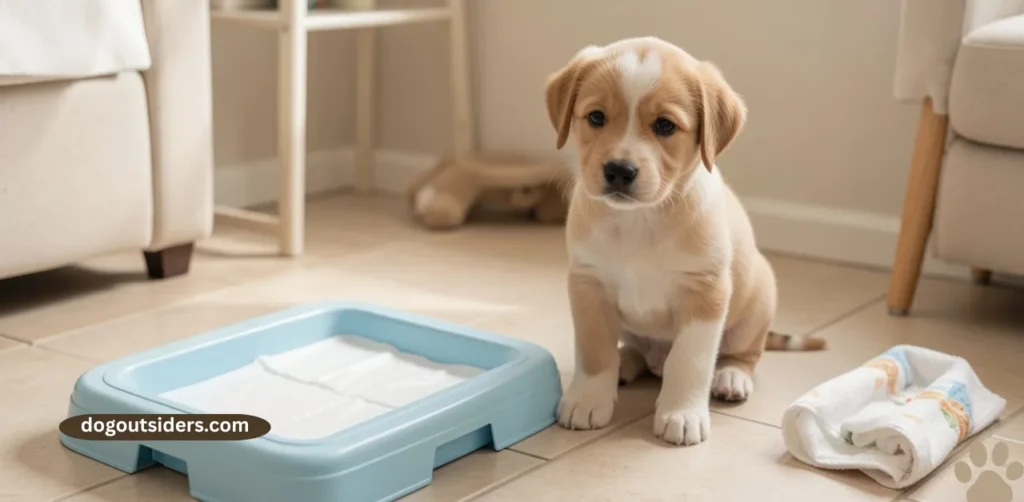
Step 2: Introduce your puppy to the pad immediately.
When you bring your puppy home, carry them directly to the pad before exploring the rest of the house. Let them sniff it for 30–60 seconds.
Step 3: Reward the moment they use it — within 3 seconds.
This is the step most owners miss. According to PetMD, the reward must happen within 3 seconds of the behavior for your puppy’s brain to connect the action with the praise. Use a small treat, enthusiastic verbal praise, and gentle petting immediately after they go.
- Keep treats within arm’s reach of the pad at all times
- Say the same praise phrase every time (e.g., “Good pad!”)
- Never delay the reward, even by 10 seconds
Steps 4–7: Repetition, Consistency, and Fading the Pads
Step 4: Take your puppy to the pad on a schedule.
Do not wait for accidents. Bring your puppy to the pad every 30–60 minutes, right after meals, and immediately after naps. Young puppies cannot hold their bladder for long — set a timer if you need to.
Step 5: Use a verbal cue consistently.
Each time you place your puppy on the pad, say a calm phrase like “Go potty.” Over time, this phrase signals what is expected. Be patient — this takes days of repetition to click.
Step 6: Confine your puppy’s space during training.
Use a puppy playpen or a small gated area with the pad at one end. Puppies naturally avoid going where they sleep and play, so a smaller space guides them toward the pad naturally.
Step 7: Gradually reduce the number of pads over time.
Once your puppy is using the pad reliably, begin reducing the total number of pads if you started with more than one. Eventually, move to a single pad near the door, which prepares them for outdoor transition.
Where to Put the Potty Pad and How to Set Up Your Space
Placement matters more than most owners realize.
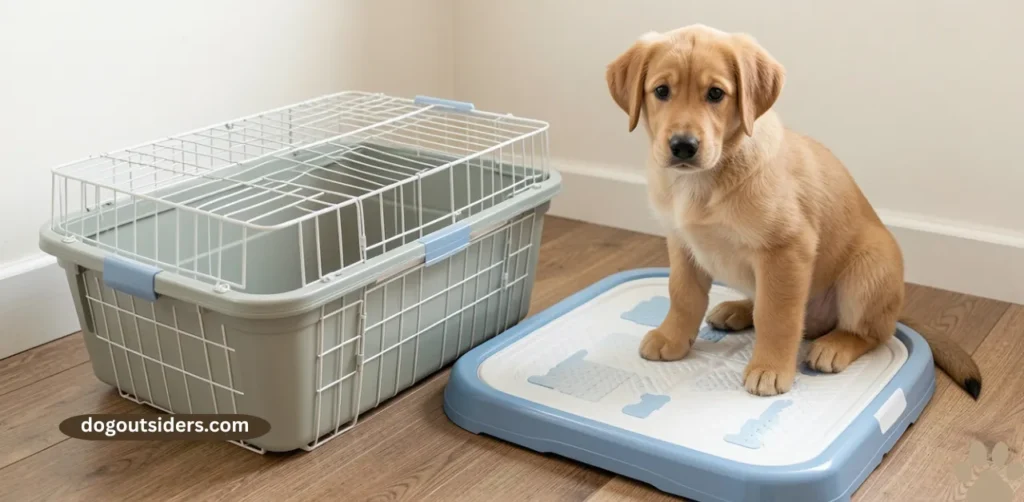
The most effective location for a potty pad is:
- Near the door you plan to use for outdoor bathroom breaks
- Away from food and water bowls (puppies avoid going near their eating area)
- In a low-traffic, accessible corner where your puppy can reach it quickly
Do not place the pad in the middle of a room. Puppies feel exposed and distracted in open spaces.
Apartment-Specific Potty Pad Setup Tips
Apartment living presents a real challenge — no yard, longer distances to outside, and limited floor space. However, you can absolutely train a puppy successfully in an apartment.
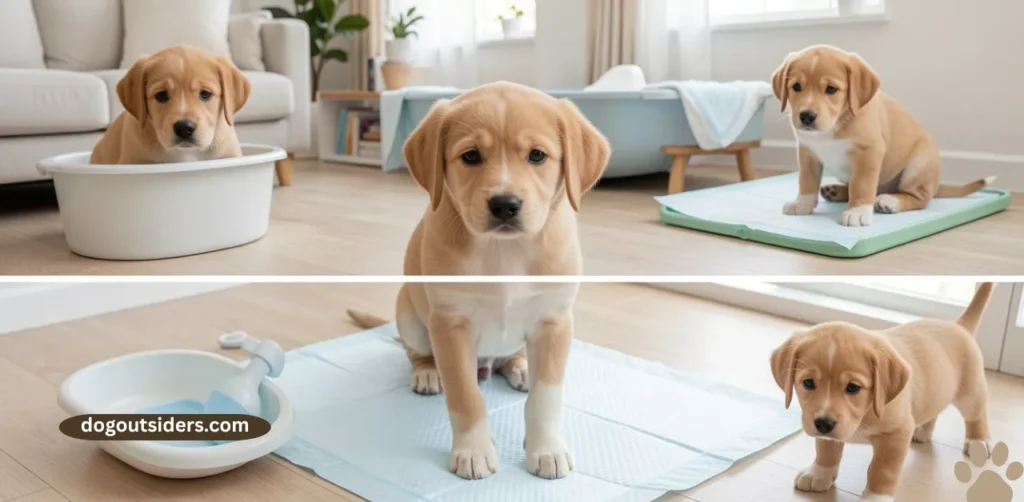
Here is what works best:
- Place one pad near the front door and one near your puppy’s sleeping area at first
- Use a puppy playpen to create a defined “bathroom zone”
- Consider a grass-top potty pad tray if you plan to eventually transition outside — it bridges the two environments
- Keep cleaning supplies close by and clean accidents with an enzymatic cleaner to eliminate scent markers
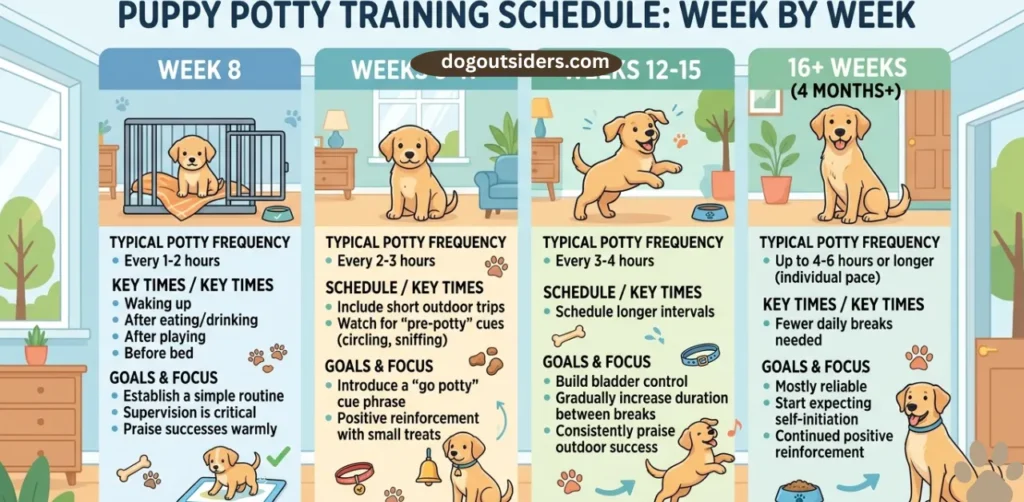
Many apartment owners find that building a consistent puppy training routine week by week makes the biggest difference in how quickly their puppy adapts.
Building a Puppy Potty Pad Schedule That Actually Works
Puppies thrive on routine. A consistent daily schedule reduces accidents faster than any other single strategy.
Sample Daily Potty Pad Schedule (8–12 Week Puppy)
| Time | Action |
|---|---|
| 7:00 AM | Wake up → carry to pad immediately |
| 7:30 AM | Breakfast → pad again 15 minutes after eating |
| 8:30 AM | Playtime → pad break midway through |
| 10:00 AM | Nap |
| 11:00 AM | Wake from nap → pad immediately |
| 12:00 PM | Lunch → pad 15 minutes after |
| 1:30 PM | Pad break before second nap |
| 3:00 PM | Wake → pad immediately |
| Every 60 min | Continue pad trips throughout afternoon |
| 6:00 PM | Dinner → pad 15 minutes after |
| 8:00 PM | Evening pad break |
| 10:00 PM | Final pad trip before bed |
Why this works: According to VCA Animal Hospitals, puppies aged 8–10 weeks can only hold their bladder for approximately 1–2 hours. Therefore, frequent scheduled trips are more effective than waiting for signals.
Nighttime Potty Pad Training: What to Do After Dark
Nighttime accidents are one of the most common complaints from new puppy owners — and they are also one of the least-discussed topics in most training guides.
Here is what to do:
- Place a pad directly next to or just inside your puppy’s crate or sleeping area at night
- Set a single alarm for 2–3 hours into the night for the first few weeks
- Keep nighttime interactions calm and quiet — no play, no talking, just pad and back to bed
- Gradually extend the time between night trips as your puppy grows
Most puppies can sleep through the night without accidents by 12–16 weeks with consistent training.
Why Your Puppy Keeps Missing the Potty Pad (And How to Fix It)
If your puppy is consistently going near the pad but not on it, the problem is almost always one of three things: pad size, placement, or scent.
Pad size: Many standard pads are too small for puppies who move around during elimination. Try a larger training pad or tape two standard pads together temporarily.
Placement: If your puppy walks past the pad to go elsewhere, the pad may not be close enough to the area they naturally prefer. Observe where accidents consistently happen and place the pad there first, then gradually move it.
Scent: Puppies are guided by smell. If you cleaned an accident spot with a regular cleaner, scent markers may remain and continue to attract your puppy back to the same wrong spot. Always use an enzymatic cleaner like Nature’s Miracle to fully eliminate odor.
For a broader look at what slows down training progress, see these common puppy training mistakes to avoid — many of them apply directly to potty pad training.
The 3 Most Common Potty Pad Mistakes (Checklist)
Use this checklist to audit your current approach:
- ☐ Moving the pad too often — Pick one spot and commit to it for at least 2 weeks before adjusting
- ☐ Delaying the reward — If you praise more than 3 seconds after your puppy goes, the lesson is lost. Be ready
- ☐ Punishing accidents — Scolding a puppy after an accident does not teach them where to go. It only teaches them to fear you. Clean it up and move on
Understanding how positive reinforcement techniques work will help you apply rewards correctly and avoid common setbacks in any kind of puppy training.
When and How to Transition Your Puppy From Pads to Outside
Many owners use potty pads as a bridge to outdoor bathroom training — especially during the early puppy weeks when outdoor exposure is limited due to vaccination schedules.
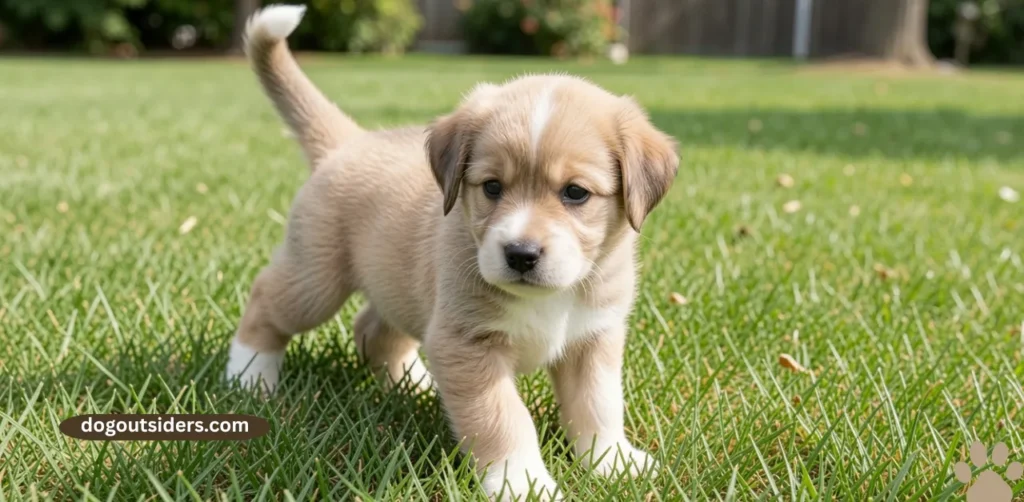
Here is a step-by-step transition method:
- Start moving the pad toward the door — Move it 1–2 inches per day until it is directly at your exit point
- Place a pad just outside the door — Let your puppy follow the familiar scent outside
- Reward outdoor elimination heavily — Extra treats, big praise, playtime — make outside feel like the jackpot
- Remove indoor pads one at a time — Do not remove all pads at once. Eliminate the ones farthest from the door first
- Keep one pad near the door as a backup — Maintain a safety net during the transition period for at least 2 weeks
According to the ASPCA, a gradual transition over 2–4 weeks is far more successful than an abrupt removal of indoor pads.
Do not worry if there are a few setbacks during this phase. Regression is normal and temporary. Stay consistent and your puppy will follow.
Conclusion:
You are doing better than you think. Potty pad training takes time, and every puppy moves at their own pace. The fact that you are looking for the right method means you are already ahead of the curve.
For more ways to support your puppy’s daily development, explore these daily habits that support your puppy’s growth and training — because a physically stimulated puppy is a more focused and trainable puppy.
Save this article so you can refer back to the schedule and checklist whenever you need a refresher. And if this guide helped you, share it with another new puppy owner who could use the same reassurance.
Frequently Asked Questions About Puppy Potty Pad Training
Place the pad in a consistent location and carry your puppy to it every 30–60 minutes, after meals, and after naps. Reward with a treat and praise within 3 seconds of them going on the pad. Repetition and timing are the two keys to success. Never punish accidents — simply redirect.
Most puppies begin using the pad consistently within 1–2 weeks of training. However, full reliability typically takes 4–6 months, depending on age and consistency. Puppies under 12 weeks have limited bladder control, so patience and frequent trips matter more than technique during the early weeks.
The most common reasons are a pad that is too small, a location that does not match where your puppy naturally wants to go, or residual scent from previous accidents nearby. Move the pad closer to the accident zone first, then gradually relocate it. Always clean accidents with an enzymatic cleaner to remove scent markers.
Place the pad near the door you use for outdoor trips, away from your puppy’s food and water bowls. Avoid open, high-traffic areas where your puppy may feel distracted or exposed. For apartment owners, placing one pad near the front door and one near the sleeping area works best during initial training.
Yes, but placement matters. Place the pad outside the crate, not inside — puppies instinctively avoid going where they sleep. Use the crate for rest periods, and bring your puppy directly to the pad immediately upon releasing them. This combination creates a clear bathroom routine faster than either method alone.
Begin transitioning away from pads once your puppy is using them reliably — usually around 12–16 weeks. Move the pad toward the door gradually, then outside, and reinforce outdoor elimination heavily. Remove indoor pads one by one over 2–4 weeks rather than all at once.
They can, if used indefinitely without a transition plan. However, when used as a temporary training bridge with a clear move-to-outside strategy, pads do not cause lasting confusion. The key is to begin outdoor training by 12–16 weeks and use the pad-to-door movement method to connect the two environments gradually.